Introduction
The human scalp is a complex ecosystem inhabited by a diverse community of microorganisms collectively known as the scalp microbiome. This microbiome consists of bacteria, fungi, viruses, and other microscopic organisms that live in harmony with their host. Far from being mere bystanders, these microorganisms play crucial roles in maintaining scalp health and, by extension, influencing hair growth. Hair follicles, responsible for producing hair, do not operate in isolation; their function is intricately linked to the environment created by the scalp microbiome. A balanced microbiome supports hair follicle health by protecting against pathogens, modulating immune responses, and maintaining the scalp’s natural barrier. Conversely, disruptions or imbalances in this microbial community—referred to as dysbiosis—can trigger inflammation, infections, and conditions that impair hair growth, such as dandruff and alopecia. Understanding the relationship between the scalp microbiome and hair growth opens new avenues for treating hair loss and scalp disorders, emphasizing the need for microbiome-friendly hair care practices and therapies.
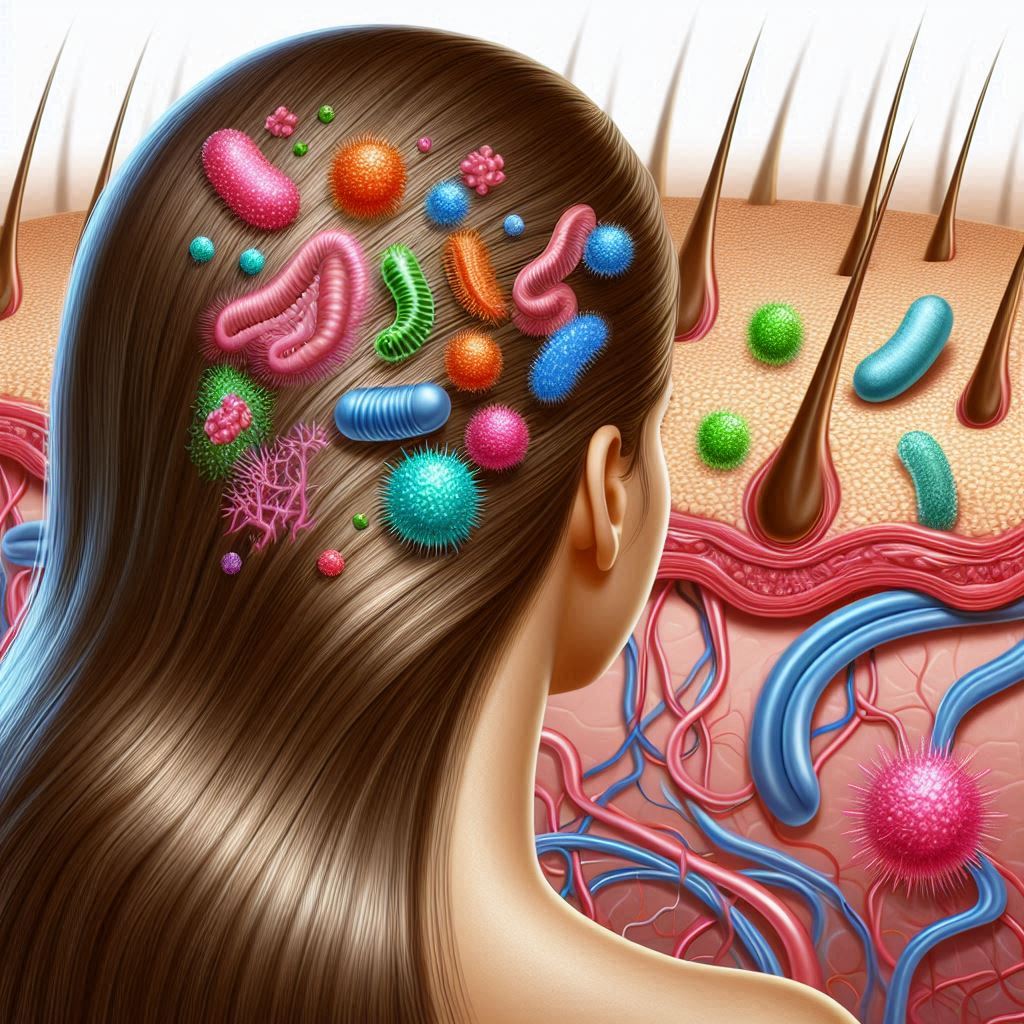
1. Composition of the Scalp Microbiome
The scalp microbiome is a highly diverse and dynamic community predominantly composed of bacteria and fungi, with smaller populations of viruses and other microorganisms. Among bacteria, the genus Cutibacterium (formerly Propionibacterium), particularly Cutibacterium acnes, is one of the most abundant residents. This bacterium plays a dual role: while it is involved in maintaining a healthy scalp environment by producing fatty acids that inhibit pathogenic microbes, overgrowth can contribute to conditions such as folliculitis. Another significant bacterial genus on the scalp is Staphylococcus, including species like Staphylococcus epidermidis, which acts as a protective commensal by competing against harmful bacteria and regulating the immune response. On the fungal side, the genus Malassezia dominates, with species like Malassezia globosa and Malassezia restricta commonly found on the scalp. These lipophilic yeasts metabolize sebum, influencing scalp oiliness and playing a key role in disorders such as dandruff and seborrheic dermatitis. The balance among these microbial populations is essential for a healthy scalp; variations in the abundance or diversity of these microbes can predispose individuals to scalp irritation and hair follicle dysfunction.
2. Role of the Scalp Microbiome in Hair Follicle Function
The scalp microbiome significantly influences hair follicle function through multiple mechanisms. First, the microbiome interacts with hair follicle stem cells, which govern the hair growth cycle, including the phases of growth (anagen), regression (catagen), and rest (telogen). Certain microbial metabolites can stimulate stem cell activity, promoting healthy hair regeneration. Additionally, the scalp microbiome modulates the immune environment around hair follicles. It helps maintain immune tolerance by educating immune cells to distinguish between harmful pathogens and beneficial commensals. This immune regulation prevents chronic inflammation, which is a known contributor to hair follicle miniaturization and hair loss. Furthermore, the microbiome acts as a physical and chemical barrier, producing antimicrobial peptides and fatty acids that inhibit the colonization of pathogenic organisms that might infect or damage hair follicles. Therefore, a balanced microbiome supports hair follicle health by creating a protective niche, fostering regenerative processes, and maintaining immune homeostasis critical for sustained hair growth.
3. Dysbiosis and Its Effects on Scalp and Hair Growth
Dysbiosis refers to an imbalance in the composition or function of the scalp microbiome that disrupts the natural harmony between microorganisms and the host. This imbalance can arise from several factors including excessive use of harsh hair products, poor scalp hygiene, environmental pollution, stress, diet, and underlying health conditions. When dysbiosis occurs, opportunistic pathogens such as certain strains of Staphylococcus aureus or Malassezia species can proliferate excessively, triggering scalp inflammation, irritation, and infection. These pathological changes compromise the integrity of the scalp barrier, leading to increased susceptibility to conditions such as seborrheic dermatitis, dandruff, and folliculitis. Importantly, inflammation resulting from dysbiosis can impair the hair follicle microenvironment, disrupting normal hair cycling and contributing to premature hair shedding or thinning. In some cases, chronic dysbiosis and inflammation may lead to scarring alopecia, where hair follicles are permanently damaged. Thus, maintaining a balanced microbiome is critical to preventing these adverse effects and preserving healthy hair growth.
4. Common Scalp Disorders Linked to Microbiome Imbalance
Several common scalp disorders are closely linked to microbial imbalance. Seborrheic dermatitis is a chronic inflammatory condition characterized by red, flaky, and itchy skin, often caused by an overgrowth of Malassezia yeasts combined with an inflammatory response. This disorder disrupts the scalp environment, leading to impaired hair follicle function and sometimes temporary hair loss. Dandruff, a milder form of seborrheic dermatitis, is similarly associated with Malassezia species and manifests as visible flaking. Psoriasis, an autoimmune skin disease, can also affect the scalp; although not directly caused by microbial imbalance, the altered scalp environment in psoriasis patients can shift microbiome composition, exacerbating symptoms and hair shedding. Fungal infections like tinea capitis result from dermatophyte fungi invading the scalp, leading to inflammation, scaling, and patchy hair loss. Bacterial infections, such as folliculitis caused by Staphylococcus aureus, can damage hair follicles and hinder hair growth. Understanding these disorders from a microbiome perspective has led to more targeted treatments aimed at restoring microbial balance and promoting scalp health.
5. The Immune Response and Inflammation in Scalp Health
The immune system plays a pivotal role in regulating the scalp microbiome and maintaining hair follicle health. The scalp’s immune environment is finely tuned to tolerate beneficial microbes while mounting defenses against pathogens. Specialized immune cells, including Langerhans cells and T cells, monitor microbial activity and respond by releasing cytokines and antimicrobial peptides to maintain balance. However, when dysbiosis occurs, the immune system can become overactivated, leading to chronic inflammation. This persistent inflammatory state damages hair follicles by disrupting the hair growth cycle, causing premature transition from the growth phase (anagen) to the resting phase (telogen), resulting in hair thinning or shedding. Inflammatory cytokines such as interleukin-1 (IL-1) and tumor necrosis factor-alpha (TNF-α) have been implicated in promoting follicular miniaturization and apoptosis of follicular cells. Thus, inflammation triggered by an imbalanced microbiome directly contributes to hair loss conditions such as alopecia areata and androgenetic alopecia, emphasizing the importance of immune regulation in scalp and hair health.
6. Factors Affecting the Scalp Microbiome
Various external and internal factors influence the composition and function of the scalp microbiome, impacting hair growth. Environmental factors such as pollution, UV radiation, and climate can alter microbial diversity and promote dysbiosis. For example, pollutants may encourage the growth of pathogenic bacteria or fungi that disrupt scalp homeostasis. Hair care products, including shampoos, conditioners, styling gels, and chemical treatments, can significantly affect the scalp microbiome by altering pH levels, stripping natural oils, or introducing antimicrobial agents. Overuse of harsh products can reduce beneficial microbial populations, leading to imbalance. Lifestyle factors like diet, stress, and hygiene habits also play essential roles; poor nutrition or high stress levels can weaken immune defenses and promote microbial imbalance. Genetics and age influence scalp physiology and microbiome stability, with microbial diversity generally declining with age, possibly contributing to age-related hair thinning. Understanding these factors is crucial for managing scalp health and optimizing hair growth.
7. Strategies to Support a Healthy Scalp Microbiome
Supporting a healthy scalp microbiome involves adopting practices that promote microbial balance and minimize disruption. Gentle cleansing with sulfate-free, pH-balanced shampoos helps maintain the scalp’s natural environment without stripping beneficial microbes. Incorporating probiotics and prebiotics in hair care formulations is an emerging strategy aimed at fostering beneficial microbial populations; these ingredients nourish good bacteria and inhibit pathogen overgrowth. Natural oils such as tea tree, coconut, and argan oil possess antimicrobial properties that can help manage microbial balance while providing hydration and reducing inflammation. Avoiding excessive use of chemical treatments and heat styling reduces damage to the scalp barrier and preserves microbiome integrity. Additionally, maintaining a balanced diet rich in vitamins, minerals, and antioxidants supports immune function and microbial health. Scalp massages can improve circulation and promote a favorable environment for microbial and follicle health. Together, these strategies enhance scalp resilience, reduce inflammation, and encourage optimal conditions for hair growth.
8. Future Directions and Research in Scalp Microbiome and Hair Growth
The study of the scalp microbiome and its influence on hair growth is a rapidly evolving field, with promising future directions. Advances in next-generation sequencing and metagenomic analysis allow for more detailed characterization of microbial communities, enabling personalized scalp care based on individual microbiome profiles. Researchers are exploring novel probiotic and microbiome-targeted therapies to prevent and treat hair loss and scalp disorders, moving beyond traditional antifungal or antibacterial treatments. Additionally, there is growing interest in understanding how microbial metabolites and signaling pathways affect hair follicle stem cells and cycling. Development of microbiome-friendly hair care products that support beneficial microbes without harsh chemicals is gaining momentum. Ultimately, integrating microbiome science into dermatology and trichology promises innovative, effective interventions to enhance hair growth, restore scalp health, and improve quality of life for those affected by hair disorders.
9. Microbial Metabolites and Their Impact on Hair Growth
Microorganisms inhabiting the scalp produce various metabolites that profoundly influence hair follicle health and hair growth cycles. These metabolic byproducts include short-chain fatty acids (SCFAs), lipids, enzymes, and antimicrobial peptides. SCFAs such as butyrate and propionate, produced primarily by Cutibacterium acnes, help maintain the acidic pH of the scalp, creating an environment unfavorable for pathogenic microbes. Additionally, these acids regulate inflammation by modulating immune responses and promoting tissue repair, thus supporting the integrity of hair follicles. Lipid metabolism by fungi like Malassezia generates free fatty acids that can either nourish or irritate the scalp depending on their concentration and the balance within the microbial community. Excessive fatty acid production can contribute to inflammation and follicular damage, while balanced levels help maintain the scalp’s lipid barrier. Enzymes secreted by microbes may also degrade or remodel the extracellular matrix around follicles, influencing hair cycling. The interplay of these metabolites underscores the complex, symbiotic relationship between scalp microbes and hair growth physiology.
10. The Role of Scalp pH in Microbiome and Hair Health
The pH of the scalp is a critical factor that shapes the composition and function of the microbiome, directly impacting hair health. The healthy scalp typically maintains a slightly acidic pH between 4.5 and 5.5, which supports beneficial bacteria and fungi while inhibiting pathogens. This acidity helps preserve the scalp’s protective acid mantle, essential for barrier function and moisture retention. Deviations from this optimal pH, whether due to environmental factors, hair care products, or underlying skin conditions, can disrupt microbial balance. An alkaline shift can promote the growth of harmful bacteria like Staphylococcus aureus and fungi such as Malassezia, leading to scalp inflammation and disorders like dandruff or seborrheic dermatitis. These conditions often result in itching, scaling, and compromised follicle health, ultimately hindering hair growth. Maintaining scalp pH within its natural acidic range through appropriate cleansing and conditioning is therefore vital for preserving a healthy microbiome and ensuring robust hair growth.
11. Scalp Microbiome and Hair Loss Disorders
Emerging research has increasingly linked scalp microbiome imbalances to various hair loss disorders, highlighting its potential as a therapeutic target. Androgenetic alopecia (pattern hair loss), the most common form of hair loss, shows evidence of altered microbial diversity, with increases in pathogenic bacteria and fungi that may exacerbate inflammation around hair follicles. Similarly, alopecia areata, an autoimmune hair loss condition, is associated with shifts in microbial communities that could influence immune responses contributing to follicle attack. Scalp folliculitis, characterized by inflammation and infection of hair follicles, often results from microbial dysbiosis, leading to localized hair thinning or loss. Additionally, chronic scalp inflammation caused by microbial imbalance may contribute to scarring alopecia, where permanent follicle destruction occurs. Understanding these links supports the development of microbiome-centered interventions, such as probiotics, prebiotics, or targeted antimicrobials, offering hope for improved management of hair loss conditions.
12. Integrating Microbiome Care into Hair Health Regimens
Incorporating scalp microbiome care into everyday hair health regimens is becoming an essential aspect of modern trichology. This integration involves using gentle, microbiome-friendly products that preserve the natural microbial balance rather than indiscriminately eradicating microbes. Shampoos and conditioners formulated without harsh sulfates or antibacterials help maintain the scalp’s microbiome integrity. Supplementing hair care with probiotics, either topically or through diet, can support the growth of beneficial microbes and enhance scalp immunity. Regular scalp cleansing combined with moisturizing treatments maintains an optimal environment for microbes and hair follicles alike. Lifestyle factors such as stress reduction, balanced nutrition, and avoiding excessive heat or chemical treatments also play significant roles. Personalized approaches that consider individual microbiome profiles may soon guide treatment selection, optimizing hair growth outcomes. Ultimately, a holistic strategy recognizing the scalp microbiome as a key player in hair health offers promising advancements in preventing and treating hair disorders.
Conclusion
The scalp microbiome plays an indispensable role in maintaining hair follicle health and promoting robust hair growth. This intricate community of bacteria, fungi, viruses, and other microorganisms works synergistically to protect the scalp, regulate immune responses, and support the hair growth cycle. A balanced microbiome maintains scalp homeostasis, while dysbiosis—an imbalance in microbial populations—can trigger inflammation, infections, and hair loss disorders such as dandruff, seborrheic dermatitis, and alopecia. Numerous internal and external factors including environment, hygiene, diet, and hair care practices influence this delicate balance. Embracing strategies that nurture the scalp microbiome, such as using gentle, microbiome-friendly products, incorporating probiotics, and maintaining overall scalp health, offers promising avenues for preventing and treating hair and scalp conditions. Ongoing research into the scalp microbiome’s complex interactions with hair follicles opens new frontiers for personalized, effective treatments that enhance hair growth and quality. Ultimately, recognizing and supporting the microbiome’s role is vital for achieving long-term scalp and hair health.
SOURCES
Barnard, E., Shi, B., Kang, D., & Li, H. (2016). The human skin microbiome. Advances in Experimental Medicine and Biology, 902, 61–71.
Byrd, A. L., Belkaid, Y., & Segre, J. A. (2018). The human skin microbiome. Nature Reviews Microbiology, 16(3), 143–155.
Clavaud, C., Jourdain, R., Bar-Hen, A., Groenewald, M., de Hoog, G. S., & Guillot, J. (2013). Dandruff is associated with disequilibrium in the proportion of the major bacterial and fungal populations colonizing the scalp. PLoS ONE, 8(3), e58203.
Findley, K., & Grice, E. A. (2014). The skin microbiome: A focus on pathogens and their association with skin disease. PLoS Pathogens, 10(7), e1004436.
Grice, E. A., & Segre, J. A. (2011). The skin microbiome. Nature Reviews Microbiology, 9(4), 244–253.
Nagata, M., Funada, Y., Nagai, Y., & Kobayashi, T. (2020). The scalp microbiome and its influence on hair follicle health. Journal of Dermatological Science, 97(2), 82–89.
Prohic, A., Jovovic Sadikovic, T., Krupalija-Fazlic, M., & Kuskunovic-Vlahovljak, S. (2019). Malassezia species in healthy skin and in dermatological conditions. International Journal of Dermatology, 58(6), 643–650.
Sanford, J. A., & Gallo, R. L. (2013). Functions of the skin microbiota in health and disease. Seminars in Immunology, 25(5), 370–377.
HISTORY
Current Version
AUG, 05, 2025
Written By
BARIRA MEHMOOD