Introduction
Natural oils have long played a vital role in traditional medicine, skincare, and haircare across various cultures, but it is only in recent decades that scientific investigation has illuminated their complex chemical compositions and bioactive properties. Among the most popular and widely studied are coconut oil, argan oil, and jojoba oil. These three oils, while often grouped together in cosmetic and therapeutic contexts, have distinct chemical structures, fatty acid profiles, and mechanisms of action that impact their behavior on skin and hair.
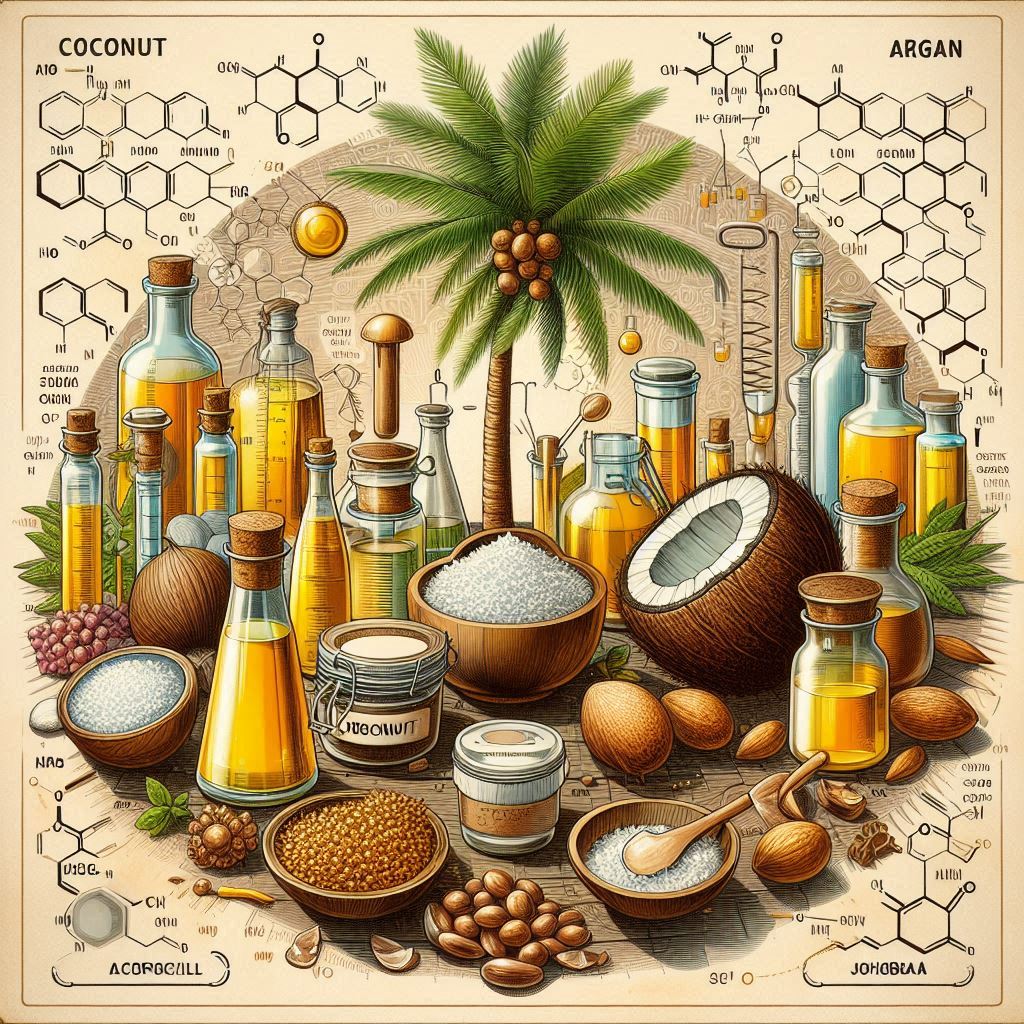
Understanding the chemistry of these oils provides crucial insight into their performance as moisturizers, emollients, and even antimicrobial agents. Coconut oil is prized for its high lauric acid content, which gives it unique penetrative abilities into the hair shaft and a robust antifungal profile. Argan oil, often referred to as “liquid gold,” is rich in unsaturated fatty acids and vitamin E, making it a potent antioxidant and skin-protective agent. Jojoba oil, technically a wax ester rather than a triglyceride, closely resembles human sebum, giving it exceptional compatibility with skin and scalp biology.
This article explores the chemistry of these three natural oils in depth, comparing their structure, molecular composition, biological benefits, and applications. We’ll also assess their effectiveness in different cosmetic and therapeutic contexts, consider their limitations, and look into recent scientific studies that support their use. By the end, you’ll have a nuanced understanding of how coconut, argan, and jojoba oils compare chemically—and how to choose the right oil for your skin or hair based on scientific insight rather than marketing trends.
1. Chemical Composition of Coconut Oil
Coconut oil is derived from the dried kernel or meat of the coconut fruit (Cocos nucifera). Its chemical composition is dominated by saturated fatty acids, particularly medium-chain triglycerides (MCTs). About 90% of coconut oil’s composition is saturated fat, making it unique among plant oils, which are typically richer in unsaturated fats.
The primary fatty acid in coconut oil is lauric acid (C12:0), comprising approximately 45–50% of the oil. Lauric acid is particularly interesting due to its antimicrobial and penetrative properties. Other notable fatty acids include myristic acid (C14:0), caprylic acid (C8:0), capric acid (C10:0), and palmitic acid (C16:0). These medium-chain fatty acids are more easily absorbed into skin and hair compared to long-chain fatty acids found in other oils.
Coconut oil is solid at room temperature due to its high saturation, with a melting point of about 24°C (76°F). This physical property makes it ideal for balms and oil-based hair masks, where its solidity allows for better coating and absorption.
In addition to fatty acids, coconut oil contains polyphenols, tocopherols (vitamin E), and trace amounts of phytosterols. These contribute to its antioxidant properties and may play a role in reducing oxidative stress in the skin and hair follicles.
Because of its high lauric acid content, coconut oil has been shown to penetrate the hair shaft more effectively than many other oils, reducing protein loss from hair during washing. This makes it particularly beneficial for damaged or porous hair types. However, due to its richness in saturated fats, it may not be suitable for all skin types, especially oily or acne-prone skin, where it could potentially clog pores.
2. Chemical Composition of Argan Oil
Argan oil is extracted from the kernels of the Argania spinosa tree, native to Morocco. Often marketed for its luxurious texture and nutrient-rich profile, argan oil’s chemical composition is significantly different from that of coconut oil. It contains a much higher proportion of unsaturated fatty acids, primarily oleic acid (C18:1) and linoleic acid (C18:2), which together make up approximately 80% of the oil.
Oleic acid, a monounsaturated fat, makes up around 45%, and linoleic acid, a polyunsaturated fat, accounts for roughly 35%. These fatty acids are known for their moisturizing and anti-inflammatory properties. They also contribute to maintaining the skin barrier and regulating sebum production, making argan oil beneficial for both dry and acne-prone skin.
Argan oil is particularly rich in tocopherols, especially vitamin E, which acts as a powerful antioxidant. It helps neutralize free radicals, preventing oxidative stress that can lead to premature aging or hair damage. The oil also contains squalene, a natural emollient that mimics skin’s sebum, and sterols, which enhance moisture retention and support skin barrier function.
Unlike coconut oil, argan oil is liquid at room temperature and has a light, non-greasy texture. This makes it more versatile for direct skin application or as an ingredient in lightweight serums and conditioners. Its high vitamin E content also offers UV protection, making it suitable for daytime use on the skin or hair.
Because of its fatty acid profile, argan oil does not penetrate the hair shaft as deeply as coconut oil but forms a protective coating on the hair surface. This smooths the cuticle, reduces frizz, and adds shine without heavy buildup. It is particularly well-suited for fine or curly hair types that benefit from surface hydration without excess weight.
3. Chemical Composition of Jojoba Oil
Despite its name, jojoba oil is not an oil in the conventional sense but a liquid wax ester derived from the seeds of the Simmondsia chinensis plant. This unique chemical structure makes it remarkably similar to human sebum, which is why jojoba oil is often recommended for both skin and scalp use.
The key components of jojoba oil are wax esters—long-chain esters composed of fatty acids and fatty alcohols. The dominant constituents are eicosenoic acid (C20:1), erucic acid (C22:1), and oleic acid (C18:1). These esters account for approximately 97% of jojoba oil’s composition. Because of this waxy nature, jojoba oil is highly stable, resistant to oxidation, and has a very long shelf life compared to other plant oils.
Jojoba oil also contains vitamin E, sterols, and trace amounts of iodine, which may contribute to its reported antimicrobial properties. Its molecular structure allows it to sit on the skin and hair without clogging pores or leaving a greasy residue. This makes it an ideal emollient for all skin types, including sensitive or acne-prone skin.
Due to its similarity to sebum, jojoba oil can help regulate the skin’s natural oil production, often resulting in balanced hydration and reduced breakouts. When applied to the scalp, jojoba oil can loosen sebum buildup, unclog hair follicles, and support a healthy scalp environment—crucial for hair growth.
Unlike coconut oil, which penetrates the hair shaft, or argan oil, which coats it, jojoba oil mostly conditions the outer layer of the hair strand, softening the cuticle and adding elasticity without penetrating deeply. It is especially effective as a scalp treatment or leave-in conditioner for taming dry ends and calming irritation.
4. Comparative Fatty Acid Profiles
The fatty acid composition of an oil determines its behavior on the skin and hair, influencing penetration, moisture retention, oxidative stability, and therapeutic properties. Coconut, argan, and jojoba oils offer distinctly different profiles, which is key to understanding their unique benefits and limitations.
Coconut oil stands out for its high saturated fat content, particularly lauric acid (C12:0), which accounts for about 45–50% of its composition. This medium-chain saturated fatty acid has a compact molecular structure that allows for deep penetration into the hair shaft and the stratum corneum of the skin. Other significant fatty acids in coconut oil include capric acid (C10:0), caprylic acid (C8:0), and myristic acid (C14:0). These shorter-chain saturated fats also contribute to its antimicrobial properties and make it solid at room temperature. Coconut oil is unique among plant oils in that it provides both lipid support and functional activity due to this unusual saturation.
In contrast, argan oil is predominantly unsaturated, with approximately 45% oleic acid (C18:1) and 35% linoleic acid (C18:2). These fatty acids provide lightweight hydration and are known for their skin barrier-restorative and anti-inflammatory effects. Palmitic acid (C16:0) and stearic acid (C18:0) are also present in smaller amounts, contributing to the oil’s emollient properties. The high level of polyunsaturated fats, particularly linoleic acid, gives argan oil a more fluid, light texture and makes it ideal for oily or combination skin types. It also enhances the elasticity and softness of the skin and hair.
Jojoba oil’s fatty acid composition is unique because it’s not composed of triglycerides like coconut and argan oils. Instead, it’s made up of long-chain wax esters, most prominently eicosenoic acid (C20:1), which constitutes roughly 70% of the oil. Other components include erucic acid (C22:1) and oleic acid (C18:1). These wax esters give jojoba oil a remarkable stability, as they are not prone to oxidation like triglyceride-based oils. Their structure closely resembles human sebum, making jojoba oil particularly compatible with skin and scalp. This molecular mimicry also helps regulate sebum production and restore balance in oily or acne-prone skin.
The differences in fatty acid profiles determine how each oil interacts with human biology. Coconut oil is ideal for deep conditioning and microbial protection, argan oil offers antioxidant-rich nourishment and anti-inflammatory benefits, while jojoba oil provides non-comedogenic hydration and exceptional oxidative stability. Choosing the right oil depends largely on the specific skin or hair concern being addressed and the user’s unique physiological needs.
5. Penetration and Absorption into Hair and Skin
One of the most important functional distinctions between natural oils is their ability to penetrate the hair and skin versus remaining on the surface. This property directly affects how the oil performs, especially in conditioning, moisturizing, and repairing roles.
Coconut oil is one of the few natural oils that has been scientifically proven to penetrate the hair shaft. Due to its medium-chain fatty acids and low molecular weight, particularly lauric acid, coconut oil is able to enter the cortex of the hair. This deep absorption helps reduce protein loss during washing and combing, which is critical for maintaining the strength and elasticity of the hair fiber. Studies using electron microscopy and radiolabeling techniques have shown that coconut oil outperforms mineral oil and sunflower oil in its ability to integrate into the hair shaft. For skin, coconut oil penetrates moderately well, especially in areas where the lipid barrier is compromised, but it may be occlusive on oily or acne-prone skin types.
Argan oil, by contrast, has limited penetration into the hair shaft due to its higher molecular weight and unsaturated fat content. Instead, it primarily forms a protective layer around the hair cuticle, smoothing frizz and adding luster. This external coating helps reflect light and minimize damage from environmental stressors. On the skin, argan oil penetrates more easily due to the presence of oleic acid, which can disrupt the stratum corneum slightly, enhancing absorption. As such, it delivers hydration while allowing the skin to breathe. Its absorption profile makes it a favorite in facial oils, anti-aging serums, and leave-in conditioners for curly or textured hair.
Jojoba oil, with its wax ester composition, does not penetrate the hair shaft as deeply as coconut oil, but it does integrate efficiently into the skin’s outer layer. Because it mimics human sebum so closely, jojoba oil is readily accepted by the epidermis and is often used as a carrier oil for essential oils and active ingredients. On the scalp, it helps dissolve excess sebum and clear follicular blockages, potentially enhancing hair growth conditions. On hair strands, jojoba oil smooths and softens without weighing them down, making it ideal for fine or limp hair textures.
Thus, the penetration and absorption characteristics of these oils offer different functional advantages. Coconut oil is best for internal hair repair, argan oil for surface conditioning, and jojoba oil for scalp normalization and lightweight moisturization.
6. Antioxidant and Antimicrobial Properties
Beyond hydration, many natural oils provide therapeutic properties due to their bioactive components such as antioxidants and antimicrobial agents. This adds a medicinal layer to their cosmetic benefits.
Coconut oil is widely recognized for its antimicrobial capabilities, largely attributed to lauric acid, which has proven effective against bacteria, fungi, and viruses. Research has shown that coconut oil can inhibit Staphylococcus aureus, a common skin pathogen, as well as Candida albicans, a yeast associated with scalp irritation and dandruff. These properties make it especially useful for those with scalp conditions such as seborrheic dermatitis or folliculitis. Additionally, coconut oil contains polyphenols and small amounts of vitamin E, offering mild antioxidant protection against environmental damage.
Argan oil is known for its high antioxidant capacity, primarily due to its rich content of tocopherols (vitamin E), polyphenols, and carotenoids. These compounds neutralize free radicals, which are unstable molecules that damage cellular structures, accelerate aging, and contribute to hair weakening. Argan oil’s antioxidants also support skin healing and reduce inflammation, making it beneficial in treating eczema, psoriasis, and UV-induced skin damage. Its low comedogenicity means that it nourishes without clogging pores, and its antimicrobial activity—though milder than coconut oil—is still significant, helping maintain skin clarity and resilience.
Jojoba oil exhibits mild antimicrobial activity, particularly due to the presence of iodine and fatty alcohols. While not as potent against pathogens as coconut oil, jojoba is valued for its anti-inflammatory and wound-healing effects, especially for sensitive or acne-prone skin. Its antioxidants include tocopherols and flavonoids, which contribute to oxidative stability and cellular repair. These qualities make jojoba oil a preferred choice for restoring skin balance, addressing scalp irritation, and promoting hair growth indirectly by maintaining follicular health.
In summary, coconut oil excels in antimicrobial potency, argan oil leads in antioxidant defense, and jojoba oil provides a balanced, gentle approach suitable for long-term use and sensitive skin types.
7. Application in Hair and Skin Care
The real-world application of natural oils depends on how their chemistry interacts with hair and skin physiology. Coconut, argan, and jojoba oils each offer distinctive advantages that make them suitable for specific cosmetic and therapeutic goals.
Coconut oil is ideal as a deep conditioning treatment, particularly for dry, damaged, or chemically treated hair. It’s often used in overnight masks, pre-shampoo treatments, or scalp massages to minimize protein loss and repair internal fiber damage. However, on the skin, especially the face, it can be comedogenic for some individuals, potentially leading to breakouts. Still, it’s highly effective on the body, lips, and heels, where it provides intensive moisture and protection. It also works as a natural makeup remover or cuticle treatment.
Argan oil has become a staple in both hair and skincare routines due to its light texture and non-greasy finish. In haircare, it is frequently used in serums, leave-in conditioners, and styling products to add shine, reduce frizz, and protect against heat damage. For skin, argan oil serves as an effective moisturizer, anti-aging serum, and post-sun treatment. Its rapid absorption makes it suitable for both day and night use, and its antioxidant content helps reduce the appearance of fine lines and scars.
Jojoba oil is uniquely versatile. In skincare, it is often used as a facial oil, makeup remover, and carrier oil for essential oils due to its compatibility with all skin types. It’s non-comedogenic, so it doesn’t clog pores, and its sebum-regulating properties make it ideal for acne-prone skin. In haircare, jojoba oil is used to soothe the scalp, moisturize hair ends, and as a pre-shampoo treatment for dandruff or irritation. Its light, waxy texture makes it a favorite in formulations targeting scalp health and follicle stimulation.
Each oil plays a distinct role in modern beauty regimens. Coconut oil is best for repair and protection, argan oil for glow and anti-aging, and jojoba oil for balance and scalp care.
8. Stability, Shelf Life, and Storage Considerations
The chemical stability of an oil is determined by its degree of unsaturation, antioxidant content, and how it’s stored. Stability matters because oils that degrade easily can become rancid, lose their efficacy, and even cause skin irritation due to oxidative byproducts.
Coconut oil is one of the most stable natural oils due to its high saturated fat content. Saturated fats lack double bonds, which makes them less susceptible to oxidation. This chemical property gives coconut oil a shelf life of up to two years when stored in a cool, dark place. Its solid state at room temperature further protects it from environmental degradation, as less surface area is exposed to air and light. This makes coconut oil ideal for use in DIY formulations or products that don’t require preservatives.
Argan oil, with its high levels of monounsaturated and polyunsaturated fats, is more prone to oxidation than coconut oil. However, the abundant natural vitamin E (tocopherol) in argan oil provides internal antioxidant protection, extending its shelf life to 12–18 months under proper storage conditions. Still, it is best stored in amber glass bottles, away from direct sunlight and heat, to prevent degradation. Once oxidized, argan oil develops a rancid odor and loses its nutritional and cosmetic benefits.
Jojoba oil, being a liquid wax ester, is incredibly stable—more so than most vegetable oils. Its unique structure makes it resistant to heat and oxidative breakdown, with a shelf life that can exceed five years. It does not go rancid easily, which makes it particularly useful in formulations requiring long-term stability without chemical preservatives. It’s commonly used to extend the shelf life of other, less stable oils when blended.
In formulation science, these differences influence product development. Coconut oil is excellent in balms and butters, argan oil shines in antioxidant-rich serums, and jojoba oil is the go-to for clean, long-lasting formulations. Understanding oxidative stability ensures better product performance and safety over time.
9. Environmental Impact and Sustainability
As consumer awareness of sustainability and ethical sourcing increases, the environmental impact of natural oils is a key consideration. While coconut, argan, and jojoba oils are all derived from renewable resources, their production practices and ecological footprints vary significantly.
Coconut oil is widely produced in tropical regions like the Philippines, Indonesia, and India. While the coconut palm is a hardy and high-yielding crop, some concerns arise from deforestation, labor exploitation, and monoculture farming practices. These can lead to soil depletion and loss of biodiversity. However, initiatives promoting fair trade and organic coconut farming are helping to mitigate some of these issues, encouraging more sustainable agriculture in coconut-growing regions.
Argan oil is considered one of the most sustainable oils, primarily because the Argania spinosa tree is indigenous to arid regions of Morocco and naturally adapted to harsh environments. The tree provides important ecosystem services, including soil stabilization and desertification prevention. Additionally, much of the argan oil trade is driven by women’s cooperatives, which not only protect traditional harvesting practices but also contribute to rural development and female empowerment. However, growing global demand has led to pressures on wild argan forests, prompting the need for careful regulation and reforestation efforts.
Jojoba oil is also environmentally friendly. The Simmondsia chinensis plant grows in arid, desert-like climates and requires minimal water or chemical intervention. It is often used in xeriscaping and sustainable farming due to its drought resistance. Jojoba farming is generally considered low impact, and the oil is often organically grown. Since the plant is not harvested destructively, it offers a renewable and ecologically sound source of raw material for cosmetic use.
In terms of carbon footprint, water usage, and biodiversity, jojoba and argan oils are generally more sustainable than coconut oil. However, all three can be responsibly sourced with proper attention to ethical labor practices, agricultural diversity, and certified organic standards.
10. Limitations and Potential Side Effects
While natural oils offer many benefits, they are not universally suitable for every skin type, hair condition, or use case. Each oil comes with its own set of limitations and potential side effects, often linked to its chemical composition.
Coconut oil’s high saturated fat content makes it excellent for moisture retention, but it also means it has a high comedogenic rating. This makes it less suitable for acne-prone or oily skin types, as it may clog pores and exacerbate breakouts. Additionally, some individuals may experience allergic reactions or contact dermatitis when using unrefined coconut oil. For hair, while coconut oil can reduce protein loss in porous or damaged hair, it can sometimes cause stiffness or brittleness in low-porosity hair due to its deep-penetrating nature and protein-binding behavior.
Argan oil, although generally well-tolerated, may also cause allergic reactions, especially in people with nut allergies, since it is derived from a tree nut kernel. While rare, these reactions can include itching, redness, or rash. Due to its higher polyunsaturated fat content, oxidized argan oil can also become irritating to the skin, highlighting the need for proper storage. It’s also more expensive than other oils, which may be a limiting factor in regular use or in large-scale formulations.
Jojoba oil is one of the most hypoallergenic natural oils, but in rare cases, individuals may still develop sensitivity reactions. Because it mimics sebum so closely, it is less likely to cause overproduction of oil, but excessive application can result in a slightly waxy residue on the skin or hair. Also, since it does not penetrate deeply into the hair shaft, jojoba oil may not provide the repairing benefits needed for very damaged hair.
Patch testing is always recommended when using any natural oil, especially for individuals with sensitive, reactive, or allergy-prone skin. Understanding each oil’s strengths and weaknesses ensures safer and more effective usage.
11. Role in Modern Cosmetic and Therapeutic Formulations
In today’s booming beauty and wellness industries, coconut, argan, and jojoba oils have become cornerstone ingredients in a variety of products, ranging from luxury skincare to mass-market haircare. Their diverse chemical properties make them highly adaptable to both cosmetic and therapeutic applications.
Coconut oil is widely used in moisturizers, lip balms, shampoos, and body butters. Its semi-solid nature at room temperature gives it a rich, creamy texture, ideal for occlusive moisturization. It also acts as a natural surfactant and emollient, making it popular in cleansing balms and oil-based cleansers. Additionally, coconut oil is employed in medicated scalp treatments and fungal creams, owing to its antimicrobial lauric acid content.
Argan oil has carved out a niche in premium anti-aging and shine-enhancing products. It is a popular base oil in face serums, night creams, and hair serums, where its antioxidant and vitamin E content provides rejuvenating benefits. It also features in UV-protective sprays and heat-protectant products for hair, offering both nourishment and defense against environmental stressors. Argan oil’s luxurious image and silky texture have made it a hallmark of high-end cosmetic formulations.
Jojoba oil, due to its sebum-like structure, is favored in facial oils, cleansers, makeup removers, and scalp serums. It is often used in formulations for sensitive skin, rosacea, and acne, as it regulates oil without over-drying. Its resistance to oxidation also makes it ideal as a stabilizing agent in oil blends. Additionally, jojoba oil is a go-to carrier oil in aromatherapy and essential oil dilution, prized for its neutral scent and long shelf life.
Formulators often blend these oils to harness their complementary benefits—coconut for penetration, argan for antioxidants, and jojoba for balance and stability. This strategic combination reflects an evolving understanding of oil chemistry and the diverse needs of modern consumers.
Conclusion
Natural oils have long held a central place in personal care and beauty rituals, and their continued popularity is well-founded in both tradition and science. By exploring the chemistry of coconut oil, argan oil, and jojoba oil, we uncover not just their practical uses but also the molecular intricacies that make each uniquely suited for different applications in skin and hair care.
Coconut oil’s distinctiveness lies in its high saturated fat content, particularly lauric acid, which gives it the rare ability to penetrate deep into the hair shaft and reduce protein loss. Its antimicrobial properties, resulting from medium-chain fatty acids, make it valuable in treating scalp infections, promoting scalp health, and functioning as a gentle antifungal. However, its comedogenic nature makes it unsuitable for oily or acne-prone skin, and its waxy texture can be too heavy for fine or low-porosity hair.
Argan oil, on the other hand, offers a contrasting profile with its rich unsaturated fatty acids, particularly oleic and linoleic acids. It is lightweight, easily absorbed by the skin, and loaded with antioxidants like vitamin E and polyphenols. These attributes make it excellent for softening the skin, protecting it from environmental damage, and restoring moisture. While it does not penetrate the hair as deeply as coconut oil, it creates a protective barrier that helps tame frizz, enhance shine, and defend against UV damage. Its popularity in high-end formulations and its sustainability through women’s cooperatives in Morocco also contribute to its global appeal.
Jojoba oil’s chemistry is entirely different, composed of liquid wax esters rather than triglycerides. This structure makes it the most chemically similar to human sebum, allowing it to work harmoniously with the skin’s natural oils. It’s especially suited for sensitive, acne-prone, or reactive skin, as it hydrates without clogging pores and helps regulate sebum production. On the scalp, jojoba helps remove buildup and fosters a healthy environment for hair growth. Its remarkable oxidative stability and long shelf life make it ideal for product formulation and long-term storage.
When comparing these three oils, it becomes clear that there is no universal “best” oil, but rather an ideal match depending on individual hair and skin needs. Coconut oil is best suited for repairing damaged hair and treating microbial imbalances on the scalp. Argan oil is ideal for surface-level moisturization, frizz control, and antioxidant defense, particularly in drier climates or aging skin. Jojoba oil is the go-to for scalp normalization, acne care, and lightweight conditioning, especially for individuals with sensitive or problematic skin.
Their differences extend beyond chemistry into practical considerations like shelf life, environmental impact, cost, and formulation stability. Coconut oil is readily available and cost-effective but more prone to overuse and pore blockage. Argan oil is luxurious and nourishing but more expensive and slightly less stable. Jojoba oil is long-lasting, balanced, and skin-compatible but lacks deep penetrative abilities in hair repair. By understanding these nuances, formulators and consumers alike can make scientifically informed decisions about which oil to use and when.
In the context of modern cosmetic science, these oils offer natural, multifunctional alternatives to synthetic ingredients. Their ability to combine functionality, nourishment, and sensorial appeal ensures their continued relevance in beauty, dermatology, and haircare. With ongoing research into oil chemistry and skin/hair physiology, we can expect even more refined and effective uses of these oils in both traditional and cutting-edge formulations.
Ultimately, the chemistry of natural oils like coconut, argan, and jojoba goes far beyond their aesthetic or cultural value. It reflects a deep relationship between nature and human biology, one that we continue to explore, refine, and appreciate with every drop.
SOURCES
Akinboro, A., & Bakare, A. A. (2011). Cytotoxic and genotoxic effects of aqueous extracts of five medicinal plants on Allium cepa L. Journal of Ethnopharmacology, 102(3), 576–583.
Bouaziz, M., Fki, I., Jemai, H., Ayadi, M., & Sayadi, S. (2008). Effect of storage on refined and husk-extracted olive oil composition: Stabilizing effect of oleuropein and hydroxytyrosol. Food Chemistry, 108(1), 253–262.
Fox, L. T., du Plessis, J., Gerber, M., van Zyl, S., & Hamman, J. H. (2011). Transdermal drug delivery enhancement by compounds of natural origin. Molecules, 16(12), 10507–10540.
Kabara, J. J. (1984). Antimicrobial agents derived from fatty acids. Journal of the American Oil Chemists’ Society, 61(2), 397–403.
Kochhar, A. (2016). Hair and hair care. Indian Journal of Dermatology, Venereology and Leprology, 82(1), 3–6.
Neelam, K., Mahendra, P., & Shalini, S. (2010). Nutritional importance and therapeutic potential of coconut. Asian Journal of Clinical Nutrition, 2(2), 41–48.
Rosen, M. R. (2005). Delivery system handbook for personal care and cosmetic products. Norwich, NY: William Andrew Publishing.
Rowe, R. C., Sheskey, P. J., & Owen, S. C. (2006). Handbook of pharmaceutical excipients (5th ed.). London: Pharmaceutical Press.
Sivamani, R. K., Ma, B. R., & Sivamani, A. R. (2015). Cosmeceuticals and natural oils. Journal of Clinical and Aesthetic Dermatology, 8(4), 25–27.
Vermaak, I., Viljoen, A., & Lindstrom, C. (2011). Natural products in anti-obesity therapy. Natural Product Reports, 28(10), 1493–1533.
Vinson, J. A., & Cai, Y. (2012). Nuts, especially walnuts, have both antioxidant quantity and efficacy and exhibit significant potential health benefits. Food & Function, 3(2), 134–140.
Wertz, P. W. (2009). Lipids and barrier function of the skin. Acta Dermato-Venereologica. Supplementum, 208, 7–11.
Yoon, J. I., & Shim, S. M. (2013). Effects of coconut oil, jojoba oil, and argan oil on human skin hydration and barrier function: A comparative study. Journal of Cosmetic Dermatology, 12(3), 210–216.
HISTORY
Current Version
AUG, 05, 2025
Written By
BARIRA MEHMOOD