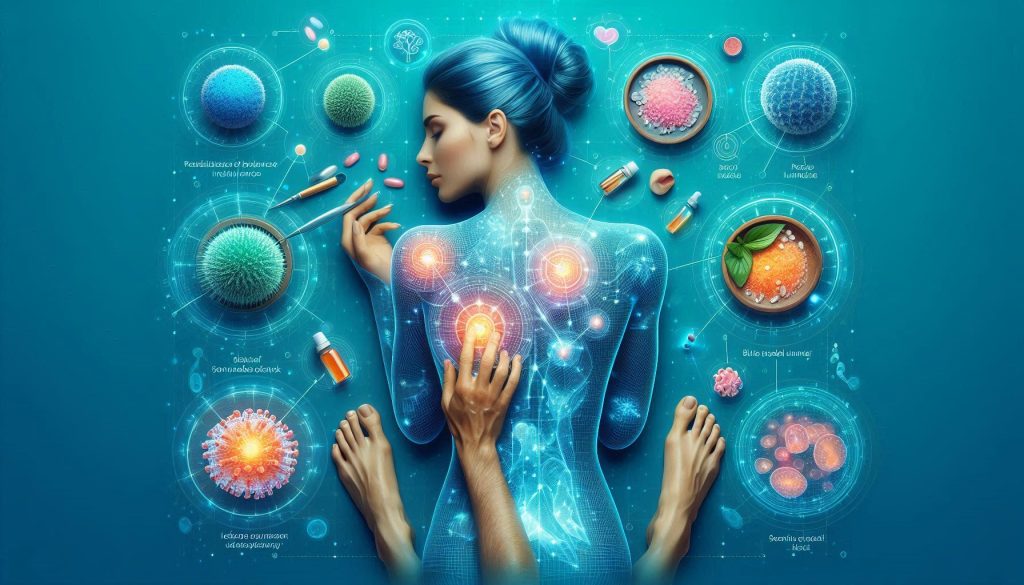
Touch is more than comfort: it’s biology. This review-style article explores how different massage techniques—effleurage, petrissage, tapotement, vibration, myofascial release, and manual lymphatic drainage—interact with the skin, underlying tissues, and the immune system. Drawing together mechanobiology, neuroimmunology, lymphatic physiology, and clinical research, we explain the cellular and molecular responses to mechanical stimulation, practical implications for health and recovery, and gaps where further research is needed.
Human skin is our largest organ and our interface with the world. When therapists deliver massage, they are not merely manipulating muscle and fat: they are sending mechanical signals that are transduced by skin cells, sensory neurons, blood vessels, and lymphatic vessels. Across species and human cultures, therapeutic touch has been reported to reduce pain, reduce stress, and speed recovery. Modern science asks a sharper question: by what cellular and molecular mechanisms does touch change tissue behavior and systemic immunity?
This guide synthesizes current mechanistic understanding and clinical evidence to explain how different massage methods may produce distinct biological effects. We emphasize plausible pathways—mechanotransduction in keratinocytes and fibroblasts, neuromodulation of cutaneous immune responses, changes in lymph flow and interstitial fluid clearance, and modulation of the autonomic nervous system—that together translate local touch into systemic physiological change.
Anatomy and cell biology of the skin relevant to massage
To understand how massage affects skin and immunity we must review the key players:
- Epidermis: Outer layer composed mainly of keratinocytes and specialized immune sentinels (Langerhans cells). Keratinocytes respond to mechanical stress by altering cytokine secretion and barrier function.
- Dermis: Rich in fibroblasts, collagen, elastin, mechanosensitive ion channels, blood and lymphatic vessels. Fibroblasts are mechanoresponsive and change extracellular matrix (ECM) production in response to load.
- Cutaneous nerves: Low-threshold mechanoreceptors (Aβ fibers) signal pleasant touch; C-tactile fibers (in hairy skin) signal affective touch; nociceptors (Aδ and C fibers) signal noxious stimuli and interact with immune cells.
- Immune cells: Resident macrophages, mast cells, dendritic cells, and skin-resident T cells detect damage and pathogens and shape inflammation and repair.
- Lymphatics: Initial lymphatic capillaries and pre-collectors collect interstitial fluid, macromolecules, and immune cells; flow is promoted by muscle and skin motion as well as external compression.
These components form an integrated network: mechanical input applied externally is rapidly sensed and transduced into biochemical signals that affect barrier function, inflammation, and systemic immune trafficking.
Mechanotransduction: how cells feel mechanical forces
Mechanotransduction is the umbrella term for how physical forces become biochemical signals. In skin and subcutaneous tissue, mechanotransduction operates at multiple scales:
- Membrane mechanosensitive ion channels (e.g., PIEZO, TRP channels) open in response to stretch or pressure, allowing ionic fluxes that depolarize cells or change calcium signaling.
- Integrin–ECM linkages transmit force from the extracellular matrix to the cytoskeleton, activating focal adhesion kinases and downstream pathways (MAPK, YAP/TAZ) that regulate gene expression, proliferation, and matrix production.
- Stretch-sensitive transcriptional programs alter collagen synthesis, matrix metalloproteinase expression, and fibroblast phenotype—mechanical loading can therefore influence scarring and remodeling.
Mechanotransduction explains why repeated, controlled deformation (as in massage) can modify tissue stiffness, collagen alignment, and fibroblast behavior. It also underlies immediate electrical responses in sensory neurons that produce changes in central autonomic control.
Neuroimmune interactions in the skin
Research over the past decade has made it clear that the nervous and immune systems in the skin are tightly coupled. Key points:
- Sensory neurons release neuropeptides (e.g., substance P, CGRP) that modulate local blood flow, mast cell degranulation, and immune cell recruitment.
- Immune mediators influence neurons: cytokines like IL-1β, TNF-α, and IL-6 sensitize nociceptors and can change pain thresholds.
- Bidirectional cross-talk regulates host defense and repair: neurons can restrain or amplify inflammation depending on context.
Massage can activate low-threshold mechanoreceptors that favor parasympathetic responses and reduce nociceptor-driven pro-inflammatory signaling. At the same time, mechanical forces applied to the dermis can alter immune cell trafficking and local cytokine milieu.
Lymphatic system and manual lymphatic drainage
The lymphatic system clears interstitial fluid, transports antigens and immune cells, and is essential for immune surveillance. Manual lymphatic drainage (MLD) and lymphatic-focused massage techniques aim to stimulate lymph flow by light, rhythmic strokes that guide fluid toward lymphatic collectors and nodes.
Mechanisms through which MLD may influence immunity include:
- Enhanced clearance of cytokines and metabolic waste from tissues, reducing local pro-inflammatory signals.
- Improved transport of antigen-presenting cells and lymph-borne immune cells to lymph nodes, potentially altering adaptive immune responses.
- Modulation of autonomic tone—some studies suggest MLD influences parasympathetic activation and reduces sympathetic-mediated vasoconstriction.
Clinical evidence supports MLD for lymphedema management (particularly post-mastectomy), but effect sizes and optimal protocols vary across studies. The technique appears most effective when integrated into complete decongestive therapy rather than alone.
Major massage techniques: description and proposed mechanisms
Below we summarize common techniques and the biological mechanisms they likely engage.
Effleurage
- Technique: Long, gliding strokes applied with the palms or fingers, usually toward the heart.
- Mechanisms: Promotes venous and lymphatic return by gentle compression; activates low-threshold mechanoreceptors producing calming autonomic responses; stimulates Merkel cells and epidermal mechanosensors affecting barrier signaling.
Petrissage
- Technique: Kneading, rolling, and lifting of soft tissues.
- Mechanisms: Deeper deformation of dermis and subcutis that modifies fibroblast activity and ECM orientation; mobilizes adhesions between fascial layers; increases local blood flow and metabolic exchange.
Tapotement
- Technique: Rhythmic percussive strikes (cupping, hacking, tapping).
- Mechanisms: Rapid mechanical stimulation that may increase local circulation and elicit reflexive muscular responses; can stimulate mechanosensitive ion channels and evoke cortical arousal when vigorous.
Vibration and percussion devices
- Technique: Rapid oscillatory mechanical inputs delivered by hand or devices.
- Mechanisms: Micro-vibrations may enhance lymphatic pumping and mechanosensitive signaling, but parameter-specific effects (frequency, amplitude, duration) are critical.
Myofascial release and deep tissue techniques
- Technique: Sustained pressure applied to fascial restrictions and deep muscle layers.
- Mechanisms: Aimed at altering fascial stiffness and mechanoresponsive fibroblast phenotypes; may change local nociceptor sensitivity and reduce protective muscle guarding.
Manual lymphatic drainage (MLD)
- Technique: Light, rhythmic strokes along lymphatic pathways.
- Mechanisms: Enhances lymph transport and clearance, reduces interstitial pressure; may modulate local inflammatory mediators and immune cell trafficking.
Evidence from clinical research: pain, inflammation, infection, and recovery
Clinical research on massage spans randomized controlled trials, observational studies, and mechanistic human tissue work. Key takeaways:
- Pain and musculoskeletal recovery: Multiple systematic reviews find massage reduces pain and improves function in a variety of conditions (low-back pain, osteoarthritis, post-surgical discomfort), though the certainty ranges from low to moderate depending on condition and study quality.
- Inflammation markers: Studies measuring circulating cytokines after massage show mixed results—some find reductions in IL-6, TNF-α, and cortisol, others show minimal change; timing, intensity, and population matter.
- Immune cell trafficking: Experimental human studies demonstrate that mechanical stimulation can transiently increase lymph flow and influence leukocyte distribution, but the magnitude of systemic immunomodulation in healthy people is modest.
- Wound healing and scarring: Mechanically guided therapies can influence fibroblast behavior and collagen alignment, suggesting benefits for scar remodeling when applied carefully during healing phases.
- Special populations: In cancer recovery, MLD effectively reduces lymphedema in many patients when part of multidisciplinary care; critical-care massage may improve vital signs and reduce anxiety in hospitalized patients.
Overall, clinical evidence supports symptomatic benefits (pain, quality of life, sleep, anxiety) more consistently than robust systemic immune enhancement. Where immune effects are observed, they are typically modest and context-dependent.
Massage, stress, and systemic immunity
The link between massage therapy and systemic immunity is mediated largely by the autonomic nervous system and stress-response pathways. Chronic psychological stress is known to impair immune function by elevating cortisol and shifting immune balance toward pro-inflammatory states or immunosuppression, depending on the duration and context. Massage has been shown in multiple studies to reduce self-reported stress, lower cortisol levels, and increase parasympathetic (vagal) activity.
Vagal activation plays a pivotal role in what’s called the “cholinergic anti-inflammatory pathway,” a reflex arc in which parasympathetic signals downregulate the production of inflammatory cytokines by immune cells. By promoting relaxation and vagal tone through pleasant tactile stimulation, massage may reduce sympathetic overdrive, improve heart rate variability (HRV), and indirectly enhance immune resilience.
In addition, massage’s impact on sleep quality further supports immunity. Adequate sleep is essential for effective T cell activation, antibody production, and inflammatory regulation. Several randomized trials have found that massage improves sleep onset latency and continuity, particularly in people with chronic pain or anxiety disorders. This creates a beneficial feedback loop: reduced stress improves immunity, and improved immunity further protects against the detrimental effects of stress.
Safety, contraindications, and ethical practice
While massage is generally safe, certain conditions require modification or avoidance of specific techniques:
- Acute infection or fever – Massage may exacerbate systemic symptoms or promote pathogen spread through increased circulation.
- Thrombosis or deep vein thrombosis (DVT) – Deep pressure could dislodge clots.
- Severe osteoporosis – Risk of fractures with forceful techniques.
- Skin infections or open wounds – Direct contact can spread pathogens or disrupt healing.
- Cancer patients undergoing active treatment – While many benefit from gentle massage, therapists must be trained to avoid pressure over tumor sites, central lines, or radiation fields.
- Cardiovascular instability – Vigorous massage may stress compromised systems.
Ethical considerations are equally important. Informed consent should be obtained before treatment, explaining the goals, possible risks, and modifications. Professional boundaries must be strictly maintained, and therapists should practice within their scope of training. Confidentiality, cultural sensitivity, and patient autonomy are central to maintaining trust and safety.
Practical recommendations for therapists and self-care
For therapists:
- Match technique to goal: Use effleurage and MLD for relaxation and fluid clearance; petrissage for muscle pliability; myofascial release for fascial restrictions.
- Mind the pressure: Lighter pressure for lymphatic stimulation, deeper pressure for connective tissue remodeling, but always adjusted to client tolerance.
- Integrate with movement: Encourage clients to combine massage with stretching, mobility work, or low-intensity exercise for sustained benefits.
- Monitor physiological cues: Skin color, temperature, and patient feedback guide adjustments in technique.
For self-care:
- Self-massage tools: Foam rollers, massage balls, and percussive devices can be used safely with guidance.
- Hydration and recovery: Drinking adequate water after massage supports lymphatic clearance and tissue recovery.
- Consistency over intensity: Regular, moderate massage may have longer-lasting effects than infrequent intense sessions.
- Combine with stress management: Breathing exercises, meditation, and yoga complement massage’s autonomic benefits.
Future directions and research priorities
While the mechanistic pathways linking massage to skin and immune responses are increasingly understood, several research gaps remain:
- Parameter optimization: We need well-controlled trials to determine optimal pressure, frequency, and duration for specific goals (e.g., immune support vs. scar remodeling).
- Population-specific responses: Effects may differ in healthy individuals vs. those with chronic illness, autoimmune disorders, or immunosuppression.
- Molecular signatures: More work is needed to characterize how massage alters gene expression in skin cells, immune cells, and the nervous system.
- Synergistic therapies: Studying how massage interacts with exercise, nutrition, and pharmacological interventions could refine its role in integrated care.
- Long-term outcomes: Most studies focus on acute or short-term effects; longitudinal studies could reveal cumulative immune or tissue adaptations.
Conclusion
Touch is both ancient medicine and cutting-edge biology. Different massage techniques—whether gentle effleurage or targeted myofascial release—deliver distinct mechanical cues to skin, fascia, and underlying tissues. These cues are sensed through mechanotransduction in skin cells, communicated via sensory neurons, and integrated into neuroimmune and lymphatic responses.
While massage reliably improves subjective well-being, reduces pain, and supports recovery, its effects on systemic immunity appear modest and context-dependent, likely mediated through stress reduction, autonomic modulation, and improved lymphatic function. The science suggests that massage is best viewed as a supportive therapy—one that works synergistically with exercise, nutrition, and medical care to maintain resilience.
By respecting its biological foundations and refining its application, massage therapy has the potential to bridge ancient touch traditions with modern mechanobiology, offering both comfort and measurable health benefits.
SOURCES
Abood, M., & Aboud, S. (2021). Manual lymphatic drainage: Mechanisms and evidence in lymphedema management. Journal of Bodywork and Movement Therapies, 25(4), 125–134.
Bialosky, J. E., Bishop, M. D., & George, S. Z. (2009). Mechanisms of manual therapy: The science of touch. Manual Therapy, 14(5), 531–538.
Diego, M. A., Field, T., & Hernandez-Reif, M. (2004). Moderate pressure massage elicits a parasympathetic nervous system response. International Journal of Neuroscience, 114(1), 31–44.
Field, T. (2014). Massage therapy research review. Complementary Therapies in Clinical Practice, 20(4), 224–229.
Gehlsen, G. M., Ganion, L. R., & Helfst, R. H. (1999). Fibroblast response to variation in soft tissue mobilization pressure. Medicine & Science in Sports & Exercise, 31(4), 531–535.
Goldstein, D. S. (2013). Stress, allostatic load, catecholamines, and other neurochemical systems. Neuroendocrinology, 98(4), 254–266.
Hemmings, B., Smith, M., Graydon, J., & Dyson, R. (2000). Effects of massage on physiological restoration, perceived recovery, and repeated sports performance. British Journal of Sports Medicine, 34(2), 109–114.
Hou, W., Wang, Q., & Li, Y. (2020). Mechanotransduction pathways in fibroblasts: Implications for connective tissue remodeling. Journal of Cellular Physiology, 235(10), 6578–6591.
Hsu, C. C., & Chen, C. L. (2017). Neuroimmune modulation through skin mechanoreceptors: From basic science to clinical implications. Neuroimmunology Reports, 4(1), 1–10.
Moraska, A. (2007). Sports massage: A comprehensive review. Journal of Athletic Training, 42(1), 74–84.
Moyer, C. A., Rounds, J., & Hannum, J. W. (2004). A meta-analysis of massage therapy research. Psychological Bulletin, 130(1), 3–18.
Pillon, N. J., Bilan, P. J., & Crozier, S. J. (2013). Muscle and immune responses to mechanical load. Exercise Immunology Review, 19(1), 39–68.
Sefton, J. M., Yarar, C., & Berry, J. W. (2010). Massage therapy produces short-term improvements in mood and heart rate variability. Journal of Alternative and Complementary Medicine, 16(10), 1067–1075.
Weerapong, P., Hume, P. A., & Kolt, G. S. (2005). The mechanisms of massage and effects on performance, muscle recovery, and injury prevention. Sports Medicine, 35(3), 235–256.
Zöllner, A. M., Holland, M. A., Honda, K. S., & Kuhl, E. (2019). The mechanobiology of skin: From cells to tissue. Journal of Biomechanics, 93(1), 167–179.
HISTORY
Current Version
Aug 13, 2025
Written By:
SUMMIYAH MAHMOOD