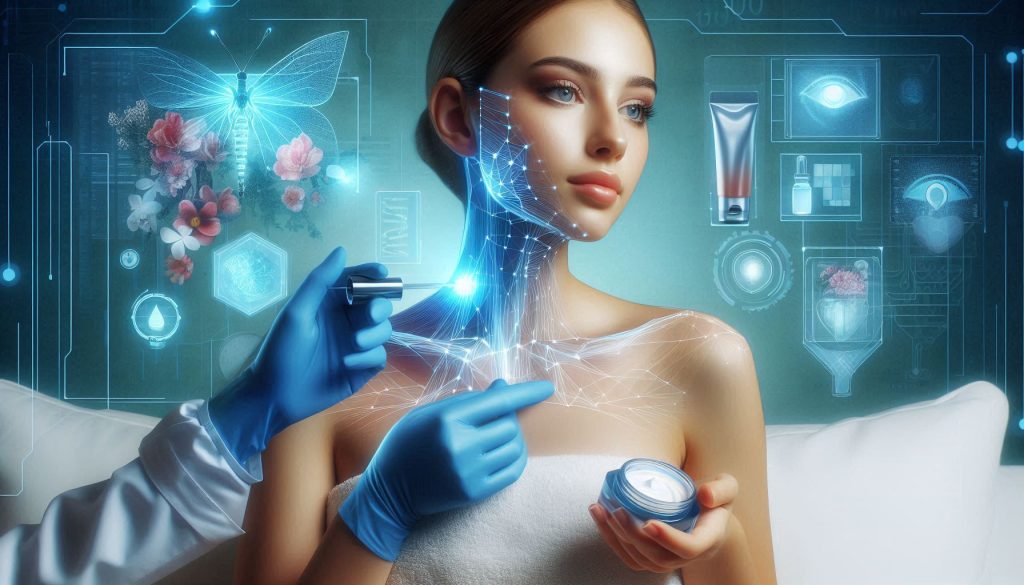
Human skin and hair are deeply individual — varying by genetics, age, sex, ethnicity, lifestyle habits, environmental exposures, underlying health conditions, and the skin’s resident microbial community. Traditional body care follows a one-size-fits-many pattern: brands create a limited set of formulations and hope they fit large segments of consumers. This approach leaves many users underserved, leading to trial-and-error shopping, product waste, dissatisfaction, and sometimes adverse reactions.
Personalization addresses those failures by tailoring solutions to the person. The theoretical benefits are substantial: better efficacy, fewer adverse effects, higher adherence, reduced waste, and the ability to target prevention as well as treatment. AI makes personalization tractable by enabling pattern detection across many data types, suggesting causal features, and continuously adapting recommendations with feedback loops.
From a commercial perspective, personalization increases customer lifetime value, enables premium pricing for tailored services, and creates defensible, data-driven relationships between brands and customers.
Historical context: From trial-and-error to data-driven personalization
Before digital personalization, dermatologists relied on clinical observation, patient history, and laboratory tests to recommend treatments. Over-the-counter (OTC) cosmetics used broad segmentation (e.g., dry, oily, sensitive). Several milestones set the stage for AI-driven personalization:
- The rise of digital imaging and smartphones made high-resolution skin photography ubiquitous.
- Affordable genetic sequencing and microbiome profiling introduced molecular-level personalization.
- Machine learning advances allowed pattern detection in high-dimensional datasets.
- E-commerce and direct-to-consumer models permitted iterative product distribution without heavy retail constraints.
Early personalization efforts focused on quizzes and rule-based recommendations. These systems had limited adaptability and were brittle. Modern AI replaces static rules with models that can infer latent features and propose dynamic interventions.
Core technologies powering AI personalization
Machine Learning and Deep Learning
At the system’s heart are models that convert raw data to predictions and recommendations. Supervised learning predicts outcomes (like response to an ingredient), unsupervised learning discovers clusters (skin phenotype groups), and reinforcement learning can optimize long-term regimens.
Deep neural networks — especially convolutional neural networks (CNNs) for images and transformer architectures for sequence data — have dramatically improved performance in skin lesion classification, image segmentation, and multimodal data fusion. However, deep models require careful regularization, interpretability measures, and bias checks to be safe and trustworthy in skincare applications.
Computer Vision and Skin Imaging
Computer vision enables objective measurements of skin properties: pigment distribution, erythema, texture, pore size, wrinkle depth, hydration levels (inferred), and lesion detection. Advances in smartphone cameras, macro-lens attachments, cross-polarized imaging, and controlled light adapters improve data quality.
Image standardization (lighting correction, color calibration, distance normalization) is essential — AI models trained on unstandardized images can fail when deployed to consumers with different cameras or lighting.
Wearables and Biosensors
Wearable devices (smartwatches, patches, ring sensors) and skin-contact biosensors can capture physiology and behavior data relevant to skin health: sleep quality, heart rate variability, UV exposure, skin surface temperature, ambient humidity, and activity patterns. Emerging epidermal sensors measure transepidermal water loss (TEWL), skin pH, and biochemical markers, enabling continuous monitoring rather than snapshots.
Genomics and Transcriptomics
Genetic polymorphisms influence skin barrier function, melanin production, inflammatory responses, and metabolic pathways relevant to aging and product response. Although direct-to-consumer genomics has matured, integrating genotypic data into personalization hinges on clear genotype-phenotype associations and clinically relevant actionable items. Transcriptomics (RNA expression) offers more dynamic insight into skin state and response but is currently more invasive/expensive.
Microbiome Analysis
The skin microbiome modulates inflammation, odor, barrier function, and disease susceptibility. Sequencing (16S rRNA or shotgun metagenomics) reveals species composition and functional potential. Personalized interventions may aim to rebalance microbial communities with prebiotics, probiotics, postbiotics, or targeted antimicrobials.
Natural Language Processing and Conversational Agents
NLP powers intake questionnaires, symptom descriptions, adherence monitoring, and chat-based coaching. Large language models (LLMs) can translate colloquial user input into structured features for models, generate explanations for recommendations, and simulate consultations.
Data sources and the multimodal personalization stack
Personalized skincare thrives on diverse, high-quality data. Below are core modalities and considerations for each.
Visual Data
- High-resolution photographs (face, body regions, hair, nails)
- Dermatoscopic / polarized imaging for lesions
- Time-series images for tracking progress
Key issues: standardization, color calibration, privacy, storage.
Molecular Data
- Genomic variants (SNPs) relevant to skincare
- Transcriptome snapshots (when available)
- Proteomic and metabolomic markers in sweat or sebum
- Microbiome composition from swabs
Key issues: cost, invasiveness, analytical validity, interpretation.
Environmental and Lifestyle Data
- UV index exposure (location-based or wearable)
- Pollution indices and particulate matter exposure
- Sleep, diet, stress, exercise logs
- Water hardness and local climate
These data provide context that explains why a skin condition may fluctuate.
Self-reported and Behavioral Data
- Symptoms, allergies, sensitivities, product history
- Adherence logs (did the person apply the cream daily?)
- Consumer preferences (fragrance, texture, ethics)
Self-reporting is noisy; AI systems must handle missingness and bias.
Personalization strategies and architectures
Rule-based vs. Model-driven Personalization
Rule-based systems encode expert knowledge (e.g., “avoid retinoids during pregnancy”). They are transparent but brittle. Model-driven systems infer patterns from data and can capture complex interactions, but may be opaque. Hybrid systems combine both: models make suggestions constrained by rule-based safety checks.
Hybrid Human-AI Systems
This approach leverages the efficiency and scalability of AI while maintaining the nuance and contextual judgment of human professionals. For example, AI might flag early signs of eczema flare-ups or pigmentation changes and suggest ingredient combinations, while a dermatologist confirms whether prescription interventions are warranted. This human-in-the-loop design not only mitigates safety concerns but also reassures users who may distrust purely automated recommendations.
Such models can be implemented in several ways:
- Asynchronous review — AI generates a personalized plan that a clinician reviews before delivery to the user.
- Real-time collaboration — both AI and human advisor interact with the user during a consultation.
- Escalation triggers — AI handles most cases but automatically refers complex or risky scenarios to a human expert.
These frameworks are especially relevant when AI systems are deployed in markets with stringent regulatory oversight of medical claims, or when consumer trust is a barrier to adoption.
Federated Learning and Privacy-Preserving Models
Because personalized skincare relies on highly sensitive data (images of the body, genetic profiles, medical history), privacy is paramount. Federated learning enables model training without centralizing raw user data: each user’s device trains the model locally, and only model updates (not personal data) are sent back to improve the global model. This reduces the risk of data breaches and improves compliance with privacy laws such as the EU’s GDPR or California’s CCPA.
Additional privacy-preserving techniques include:
- Differential privacy — injecting controlled statistical noise into data or outputs to make re-identification impossible.
- Homomorphic encryption — enabling computation on encrypted data without ever decrypting it.
- Secure multi-party computation — allowing multiple entities to jointly compute results without exposing their private inputs.
These methods are not just theoretical; several AI-powered dermatology apps already deploy variants to enable cross-market learning while keeping user data decentralized.
From Recommendation to Formulation: AI in Product Design
Ingredient Selection and Combinatorial Optimization
Formulating an effective skincare product is a combinatorial problem. A single cream may contain 20+ active and supporting ingredients, each with concentration ranges, stability constraints, and potential interactions. AI models can search this massive solution space, identifying ingredient combinations predicted to deliver desired outcomes for specific skin profiles.
These systems rely on:
- Databases of ingredient properties (absorption rates, pH stability, photoreactivity).
- Historical performance data (clinical results, user reviews).
- Constraint optimization algorithms (to ensure safety and regulatory compliance).
AI-Generated Prototypes and In-Silico Testing
Traditionally, formulation development required multiple lab iterations. AI accelerates this through in-silico simulations, predicting stability, texture, and efficacy before physical prototypes are made. Virtual testing can screen hundreds of potential formulas in hours, narrowing candidates for lab validation.
3D Printing and On-Demand Production
Once a formulation is finalized, 3D printing or micro-dosing dispensers can produce personalized products in real time. Imagine a retail counter where your skin is scanned, an AI generates your optimal serum formula, and a printer produces a 30-day supply within minutes. This also allows dynamic re-formulation as a user’s skin changes across seasons or life stages.
Clinical and Scientific Validation
Trial Designs for Personalized Interventions
Validating personalized products is more complex than testing a single fixed formula. Adaptive trial designs, N-of-1 studies (single-person crossover trials), and Bayesian frameworks are increasingly used. These designs allow the assessment of efficacy on an individual basis while aggregating patterns across populations.
Biomarkers and Outcome Measures
Key metrics include:
- Objective imaging-based measures (wrinkle depth, pigmentation area).
- Biochemical markers (inflammatory cytokines, sebum composition).
- Subjective measures (self-reported smoothness, satisfaction).
Real-World Evidence and Post-Market Surveillance
AI personalization platforms have a unique advantage: they can collect continuous feedback directly from users. This real-world evidence can be analyzed to improve recommendations, detect rare side effects, and optimize formulations over time.
Consumer Experience and Adherence
UX Patterns for Adoption
Consumers expect personalization to be seamless, fast, and intuitive. Long onboarding processes or overly technical reports can deter engagement. Best practices include:
- Progressive data collection (start simple, deepen over time).
- Visual progress dashboards.
- Transparent explanations for recommendations.
Gamification and Behavioral Nudges
Small incentives — progress badges, streak counters, before-and-after visuals — encourage users to maintain routines. AI can adapt nudges based on behavioral data: sending reminders in the evening if morning adherence is low, or adjusting messaging tone to match user preferences.
Building Trust Through Transparency
Clear communication about what data is collected, how it is used, and how recommendations are generated is critical. Some brands now include an “explainability mode” where users can explore why certain products were chosen for them.
Business Models and Commercialization Pathways
- Direct-to-consumer (DTC) — full-stack brands offering end-to-end personalization via apps and subscription refills.
- B2B partnerships — licensing AI platforms to dermatologists, salons, or spas.
- Subscription services — monthly shipments of dynamically updated formulations.
- Retail integration — in-store kiosks with scanning and on-demand production.
The key challenge is balancing scalability with the deep customization that defines the value proposition.
Regulatory and Ethical Landscape
- Data protection laws — compliance with GDPR, HIPAA, or equivalents is non-negotiable.
- Claims substantiation — AI-generated recommendations must still meet cosmetic or medical product safety regulations.
- Equity and bias — ensuring models perform well across skin tones, ethnicities, and ages to avoid systemic exclusion.
- Intellectual property — protecting proprietary formulation algorithms without restricting scientific reproducibility.
Case Studies and Current Market Examples
- L’Oréal Perso — AI-powered device that dispenses personalized skincare and makeup.
- SkinCeuticals Custom D.O.S.E. — in-store system that creates serums based on a dermatologist’s assessment.
- Atolla — subscription service using at-home testing and machine learning to adapt formulations monthly.
These cases show varying approaches to balancing automation, human expertise, and customer experience.
Challenges and Limitations
- High cost of molecular testing for mass adoption.
- Regulatory complexity in classifying AI recommendations as cosmetic vs. medical advice.
- Consumer skepticism toward algorithmic decisions in intimate health matters.
- Risk of overfitting recommendations to noisy self-reported data.
Forecasting the Next Decade: Emerging Trends
- Multi-omics integration — combining genomics, transcriptomics, proteomics, and metabolomics for deeper personalization.
- Closed-loop skincare — continuous monitoring with instant formulation adjustments.
- Synthetic biology — engineered probiotics designed to modulate the skin microbiome.
- Edge AI — on-device processing for instant feedback without cloud dependency.
- AR skin coaching — augmented reality overlays showing application areas and technique guidance.
A Practical Roadmap for Startups and Established Brands
- Start with a niche (acne management, anti-aging, sensitive skin).
- Use accessible data sources first (images, lifestyle logs) before adding molecular testing.
- Build a hybrid human-AI review loop to ensure trust.
- Invest early in regulatory and privacy compliance.
- Plan for continuous learning from real-world feedback.
Conclusion:
AI-driven personalized body care represents a paradigm shift from mass-market products toward dynamic, data-driven, individual-level solutions. By uniting advances in machine learning, imaging, biosensors, genomics, and microbiome science, brands can deliver higher efficacy, better safety, and richer customer experiences.
Yet the opportunity comes with responsibility. Developers must address privacy, equity, transparency, and regulatory compliance from the outset. The winning systems will combine the speed and pattern-recognition power of AI with the empathy and trustworthiness of human expertise.
In the coming decade, as technology costs drop and multi-modal data integration becomes seamless, personalization will move from a luxury to an expected norm — transforming the skincare industry into a truly adaptive, user-centered ecosystem.
SOURCES
Alalwan, A. A., Baabdullah, A. M., Rana, N. P., Tamilmani, K., & Dwivedi, Y. K. (2018). Examining adoption of mobile internet in Saudi Arabia: Extending TAM with perceived enjoyment, innovativeness and trust. Technology in Society, 55, 100–110.
An, J., Li, H., & Wang, J. (2021). Federated learning for privacy-preserving AI in personalized healthcare. IEEE Transactions on Neural Networks and Learning Systems, 32(9), 4213–4225.
Berson, D. S., Chalker, D. K., & Harper, J. C. (2017). Current concepts in personalized skin care. Journal of Cosmetic Dermatology, 16(4), 510–518.
Cao, J., Xu, X., & Zhao, L. (2020). Deep learning applications in skin disease recognition: A review. Neurocomputing, 408, 244–260.
Cheng, Y., Wang, X., & Liu, J. (2022). AI-enabled formulation optimization for cosmetics: Challenges and future perspectives. International Journal of Cosmetic Science, 44(6), 606–618.
Clarys, P., Alewaeters, K., Lambrecht, R., & Barel, A. O. (2000). Skin color measurements: Comparison between three instruments: The Chromameter®, the DermaSpectrometer® and the Mexameter®. Skin Research and Technology, 6(4), 230–238.
Farrugia, P., Petrisor, B. A., Farrokhyar, F., & Bhandari, M. (2010). Practical tips for surgical research: Research questions, hypotheses and objectives. Canadian Journal of Surgery, 53(4), 278–281.
Jaiswal, A. K., & Kumar, S. (2021). Wearable biosensors for skin health monitoring: Trends, challenges, and future outlook. Biosensors and Bioelectronics, 180, 113111.
Lio, P. A., & Kundu, R. V. (2013). Ethnic skin: An overview. Seminars in Cutaneous Medicine and Surgery, 32(2), 59–63.
López, L. M., & Manfredini, M. (2021). Advances in skin microbiome research: Implications for cosmetics and dermatology. Experimental Dermatology, 30(9), 1247–1257.
Nguyen, H. T., & Patrick, W. (2019). AI explainability for dermatology: Opportunities and limitations. Skin Research and Technology, 25(5), 587–595.
Patel, V., & De, S. (2020). Privacy-preserving machine learning: Threats and solutions. ACM Computing Surveys, 53(6), 1–37.
Pereira, F., & Berry, M. (2020). Augmented reality for dermatology: Patient engagement and treatment adherence. Journal of the American Academy of Dermatology, 83(2), 591–594.
Ruiz-Rodríguez, R., & Martín, R. (2020). Cosmetic claim substantiation: Regulatory aspects and practical approaches. International Journal of Cosmetic Science, 42(6), 549–557.
Sharma, P., & Singh, A. (2021). AI-driven ingredient selection for skincare formulations. Journal of Cosmetic Science, 72(3), 145–156.
Tymchenko, B., & Lu, Y. (2022). Multimodal AI in dermatology: Combining image, genomic, and lifestyle data. Computers in Biology and Medicine, 146, 105541.
van Dongen, J., & Sluiter, J. K. (2019). Gamification in healthcare: A scoping review. BMJ Open, 9(8), e031264.
Zhou, W., & Han, Z. (2020). Deep generative models in material and cosmetic formulation design. Advanced Science, 7(20), 2000961.
HISTORY
Current Version
Aug 12, 2025
Written By:
SUMMIYAH MAHMOOD