Introduction
The way we choose hair products is undergoing a radical transformation, thanks to the integration of artificial intelligence (AI) into the beauty and personal care industry. Where once consumers relied on trial-and-error, generic advertising, or limited in-store consultations to determine what shampoo, conditioner, or styling product might suit their unique needs, today’s buyers are turning to intelligent digital tools for more precise, personalized guidance. AI has ushered in an era of hyper-customization, enabling users to make informed choices based on their individual hair type, scalp condition, environmental influences, and lifestyle preferences. With the ability to process vast amounts of data in seconds, AI has replaced guesswork with insight and revolutionized how people engage with haircare.
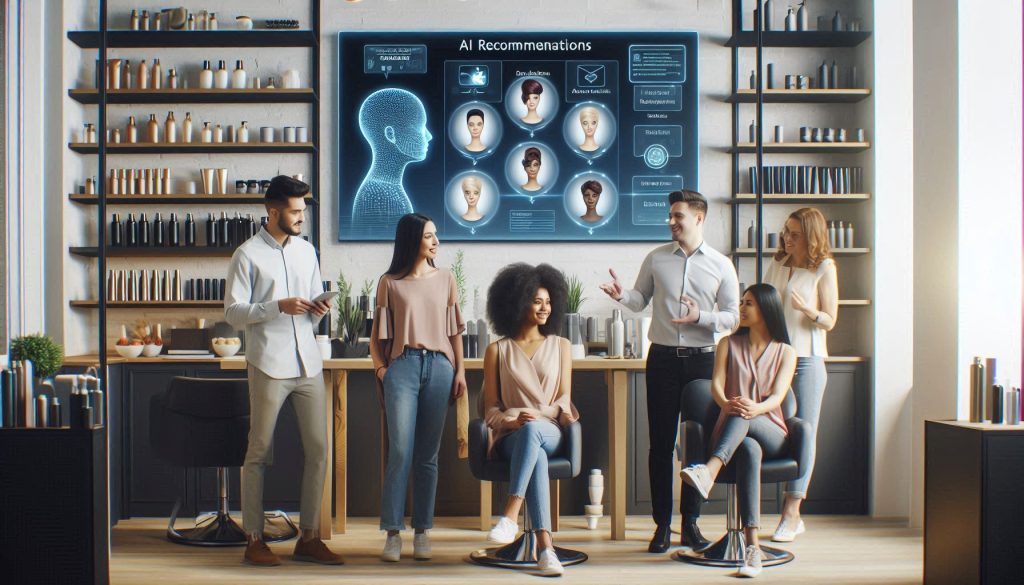
This transformation is not a matter of novelty—it’s an industry-defining shift. Recent reports show that AI-powered beauty solutions are being embraced at an unprecedented pace, with the global AI in haircare market expected to reach $1.2 billion by 2025. Consumers are increasingly demanding personalized experiences, with over 66% expressing a preference for AI-based product recommendations. In fact, more than 85% of haircare customers say they are open to using AI for product suggestions, and 60% are willing to pay more for personalized regimens. The impact is visible across every touchpoint: diagnostics, recommendations, styling, and even the supply chain. Companies large and small are racing to adopt AI platforms to gain a competitive edge, boost efficiency, and deliver a more satisfying customer journey. As this technology matures, the way we choose hair products is becoming faster, smarter, and more aligned with our individual identities than ever before.
1. AI-Powered Diagnostics: Scalp, Strand, and Style Analysis
One of the most groundbreaking ways AI is changing how we choose hair products is through its use in diagnostic tools that analyze hair and scalp conditions with clinical precision. Traditionally, people would determine their hair type—straight, wavy, curly, oily, dry—through subjective observation, guesswork, or inconsistent guidance from stylists. However, AI-powered diagnostic platforms have brought objective, data-driven insight to this process. Using advanced machine learning and computer vision, these tools can assess a range of hair and scalp characteristics, such as strand thickness, curl pattern, density, oil production, scalp sensitivity, moisture retention, and even the presence of split ends or dandruff. The analysis is conducted through smartphone cameras or specialized in-store devices, making once-exclusive professional knowledge accessible to everyday users.
Companies like Perfect Corp have developed AI tools that evaluate hair in real-time, classifying hair types across multiple dimensions and instantly generating recommendations. Their technology can distinguish among ten curl patterns and nine levels of thickness, enabling users to better understand their hair’s needs. In Asia-Pacific countries, particularly the Philippines and Thailand, AI-powered tools like Unilever’s BeautyHub PRO and Dove’s Scalp + Hair Therapist have gained popularity, offering selfie-based analysis to provide hyper-personalized product suggestions. These diagnostic solutions are also being adopted in clinical environments, with nearly half of dermatologists now using AI for scalp evaluation. This not only reduces diagnostic time but also increases accuracy, with studies reporting up to an 88% accuracy rate in AI-based scalp assessments.
Beyond convenience, AI diagnostics address a long-standing problem in haircare: one-size-fits-all solutions. Everyone’s hair reacts differently to stress, humidity, water hardness, and even seasonal changes. AI platforms incorporate this complexity by factoring in geographic data, lifestyle behaviors, and even hormonal influences. Apps like Fiora and Traya, emerging especially in South Asian markets, analyze users’ selfies and quiz responses to recommend products tailored to ethnic and regional hair profiles. With AI reducing diagnostic errors by up to 80%, the era of vague labels and blind purchases is coming to an end. AI-powered diagnostics are empowering consumers with a clearer, scientifically informed understanding of their hair, and that’s fundamentally reshaping how they select their products.
2. Virtual Try-On and Augmented Reality Experiences
Another major innovation brought by AI into the haircare space is the virtual try-on experience, which merges artificial intelligence with augmented reality (AR) to help users visualize how different hair colors, styles, or cuts would look on them—before committing to a change. For decades, changing your hair color meant taking a risk. You could flip through magazines, hold up swatches in a mirror, or look at before-and-after photos, but none of these methods could show how that deep auburn or icy blonde would look with your exact skin tone, facial features, or lighting. Now, AI-powered AR tools can do just that—instantly and with surprising realism.
Using live video feed or uploaded selfies, these virtual try-on tools detect facial contours, hairline, lighting, and movement in real time to apply hairstyles and hair colors with remarkable accuracy. L’Oréal’s Virtual Hair Color Try-On platform is one of the most prominent examples. It can simulate more than 200 shades with near-perfect color fidelity, allowing users to see how their look changes as they move their head or change lighting conditions. Other companies, such as Madison Reed and Sally Beauty, use similar technology to help online and in-store customers preview color options and choose products with confidence. The technology isn’t just visually impressive—it’s also good for business. Brands that have deployed these tools report a 20% boost in hair color sales and significant reductions in return rates.
These tools are particularly helpful for consumers who are exploring bold or unconventional changes, such as going from dark brown to platinum blonde or trying pastel hues. Instead of relying on stylists or risking a purchase, users can “try on” the shade virtually, assess how it complements their features, and then make an informed decision. Furthermore, these virtual consultations often integrate AI product recommendation engines that guide users to the exact dye or toner required to achieve the look they previewed. In doing so, AI not only enhances the user experience but also deepens customer trust and loyalty. Virtual try-on tools also promote accessibility, helping people who may feel intimidated walking into salons or those who prefer to explore style options in private. This democratization of professional-level insight is making haircare more inclusive, diverse, and user-driven.
3. Recommendation Engines and Personalized Regimens
One of the most powerful features of AI in haircare is its ability to generate customized recommendations based on a variety of inputs—from images and surveys to environmental data and personal habits. AI recommendation engines are becoming the personal stylist we never knew we needed. These platforms gather detailed information about the user’s hair texture, concerns, styling goals, and even location-based climate factors to recommend the best products, routines, and tools. For example, someone living in a humid city with fine, color-treated hair might be advised to use a volumizing sulfate-free shampoo, a UV-protectant conditioner, and a frizz-control serum tailored to their hair chemistry.
Leading the way in this domain are platforms like Function of Beauty, which uses a quiz-based model to deliver custom-formulated products based on user inputs. Others, like Revieve’s AI Haircare Advisor, integrate camera-based diagnostics with data-driven suggestions. GHD’s CurlFinder takes it a step further, using AI to ask the right questions about curl goals, density, and texture before recommending the perfect styling tool from their line. In emerging markets, especially in India, AI startups like Traya are offering deeply personalized regimens that even take into account diet, stress levels, and hormonal patterns.
The appeal of this personalization is undeniable. Studies show that consumers are more satisfied with products tailored to their needs, and many are even willing to pay a premium for the right match. A recent study found that 60% of users were more likely to purchase an AI-recommended product, and 66% preferred personalized regimens to generic ones. For brands, this means higher conversion rates, lower returns, and improved customer retention. But beyond the numbers, what AI personalization achieves is trust: consumers feel understood, and that emotional resonance builds long-term brand relationships. No longer are shoppers overwhelmed by shelves full of confusing labels and vague promises; instead, they’re guided by data and supported by tailored advice that speaks directly to their needs.
4. Smart Tools and AI-Enhanced Devices
While AI diagnostics and recommendations are reshaping decision-making, smart devices and AI-enhanced tools are transforming the actual styling process. These new-age devices do more than straighten, curl, or dry—they think, learn, and adapt. Smart tools embedded with sensors and AI software can read hair texture, moisture levels, and heat tolerance in real time, adjusting performance to minimize damage and maximize results. This is a far cry from traditional styling tools that apply the same settings to every hair type, often leading to dryness, breakage, or inconsistent results.
Take the Dyson Airwrap i.d., for instance, which pairs with a mobile app to personalize heat settings, offer guided tutorials, and log styling preferences. It may not be full artificial intelligence in the purest sense—critics argue it’s more automation than “thinking”—but the personalized adaptability it offers is powered by algorithms trained on user data. Similarly, GHD’s smart stylers learn from how you use them, adjusting heat based on section thickness or hair density. These innovations help users avoid common styling pitfalls and provide salon-quality results at home.
AI is also streamlining product development and innovation. By analyzing consumer feedback, social media trends, and usage data, companies can create new tools and formulations much faster than before. GHD, for example, has shortened its product development cycle from three years to one by leveraging AI insights. AI also contributes to sustainability in manufacturing, reducing energy usage by 40% and packaging waste by 25%, according to recent reports. These efficiency gains are being passed along to consumers in the form of smarter, more effective, and more eco-conscious hair products.
Perhaps most importantly, these smart tools make haircare more accessible. AI can now guide users through routines once reserved for professionals, offering step-by-step styling advice, product usage tips, and progress tracking. In this way, AI becomes not just a decision-making aid, but a daily companion—supporting users in achieving their hair goals with greater ease and confidence than ever before.
5. AI in Manufacturing and Supply Chain Optimization
Artificial intelligence isn’t just changing how consumers choose hair products—it’s transforming how those products are made, stocked, and delivered. Behind the scenes, AI-driven systems are making haircare manufacturing and supply chains faster, smarter, and more responsive to consumer demand. Traditionally, the beauty industry relied on slow, linear product development cycles, manual inventory tracking, and broad production runs based on forecasts and trends. Now, AI enables dynamic, real-time decision-making across every step of the supply chain, from raw material sourcing to distribution.
Using machine learning algorithms, companies can now predict product demand with far greater accuracy. AI systems analyze customer behavior, purchase history, seasonal patterns, and even social media conversations to forecast which haircare products are likely to be popular. This means brands can reduce overproduction and minimize waste—crucial in an industry where shelf life, packaging, and sustainability are growing concerns. Additionally, predictive analytics helps companies plan launches and restocks more efficiently, ensuring that popular items are readily available and reducing out-of-stock issues that frustrate consumers.
AI also enables smarter manufacturing. For example, real-time data from production lines can be monitored using AI-powered quality control systems, which catch defects, packaging errors, or formula inconsistencies before the product ever leaves the factory. This not only improves product quality but also helps manufacturers adjust formulations or packaging to meet evolving consumer needs. Companies are also leveraging AI to create small-batch, custom-formulated hair products at scale—something that would have been unthinkable just a decade ago. With AI in the driver’s seat, custom shampoo, conditioners, and treatments can be created, labeled, and shipped within days, tailored to the exact specifications of each customer.
From a logistics perspective, AI optimizes delivery routes and warehouse management. Systems powered by AI can determine the fastest, most cost-effective way to get products from factories to fulfillment centers and finally to consumers—whether that’s in-store or through direct-to-consumer platforms. This flexibility has proven especially valuable in the post-pandemic world, where supply chains are under constant pressure. Overall, AI’s impact on the backend of the haircare industry is just as transformative as its role on the consumer-facing side, making it possible to offer personalized, high-quality products at scale and speed.
6. Global Market Trends and AI Adoption in Haircare
The global haircare industry is undergoing a major shift, with AI at the center of innovation and growth. Around the world, brands are racing to incorporate AI into their business models as consumers demand more personalized, convenient, and efficient beauty solutions. From New York to Tokyo, AI is no longer a luxury or a novelty—it’s quickly becoming a necessity for companies that want to stay competitive in an increasingly tech-savvy market.
According to industry research, the AI in haircare market is valued at over $1.17 billion as of 2024, and projections show it will continue to grow steadily in the coming years. In the United States, major players like Procter & Gamble, Unilever, and L’Oréal have already invested heavily in AI development, integrating it into diagnostics, product recommendations, and customer service. For example, L’Oréal has not only developed virtual try-on and skin/hair analysis tools but also acquired tech startups like Modiface to strengthen its AI and AR capabilities. Meanwhile, Unilever’s BeautyHub and Dove’s AI-powered therapist tools are gaining traction across Asia-Pacific, a region seeing explosive growth in AI adoption.
Emerging markets are playing an increasingly important role in shaping AI haircare trends. In countries like India, Indonesia, and the Philippines, mobile-first consumers are flocking to apps that offer AI-based hair diagnostics and recommendations. These markets are also home to unique hair types and care concerns that global brands are only beginning to address. AI allows these brands to localize and personalize offerings more effectively than ever before. In India, for instance, companies like Traya and Myra have gained popularity by using AI to deliver personalized regimens for hair fall, dryness, and oil imbalance—common issues in tropical climates with hard water.
Consumer attitudes toward AI in beauty are also evolving. A growing number of people are not only comfortable with AI involvement in their haircare routines but actively seek it out. Reports suggest that over 68% of consumers prefer haircare brands that offer AI-driven personalization, and around 60% say they are more likely to purchase from a brand that offers AI recommendations. As younger, tech-native generations become primary beauty consumers, these numbers are expected to climb even higher. The demand for inclusive, personalized, and digital-first haircare experiences is now a global phenomenon, and AI is the tool enabling brands to deliver on that promise.
7. Ethics, Privacy, and Inclusive AI in Haircare
As AI becomes more deeply integrated into our daily routines, important ethical questions arise, particularly in industries like haircare where data about personal appearance, health, and identity are involved. One of the most pressing concerns is data privacy. To generate accurate diagnostics and recommendations, AI systems often require users to upload selfies, provide personal details, and share lifestyle information. This raises questions about how that data is stored, protected, and used. Companies must ensure their AI platforms are transparent, secure, and compliant with data protection laws such as GDPR or CCPA.
Another key issue is bias and inclusivity. AI systems are only as good as the data they are trained on. If the algorithms behind hair diagnostic tools are trained primarily on data from people with straight, light-colored hair, the results may be inaccurate or less effective for people with coily, textured, or dark hair. Unfortunately, this kind of bias has historically been common in the beauty industry, and AI threatens to replicate or even amplify these blind spots if developers are not intentional about diversity. Thankfully, this issue is gaining attention, and several companies are now making inclusivity a priority. For example, startups like Myavana focus specifically on textured hair and have built databases and AI models designed to serve women of color more accurately. Their mission is to map hair diversity in a way that AI platforms can understand and respond to appropriately.
Ethics also intersects with the idea of beauty standards. By suggesting ideal styles or products, AI systems may unintentionally reinforce narrow definitions of beauty. This is especially problematic when platforms suggest changes that align with Eurocentric beauty ideals, such as promoting straight hair over natural curls or recommending color lightening over rich, dark tones. Developers and brands must consider how to build algorithms that support, rather than override, the user’s sense of self and identity. That means training AI to celebrate a wide spectrum of beauty and ensuring that its recommendations are affirming, not corrective.
Transparency is crucial. Consumers deserve to know how AI recommendations are generated, whether there are commercial partnerships influencing the results, and what kind of data the system is using to draw conclusions. Brands that are open about these processes are more likely to build trust. Ethical AI in haircare is not just about avoiding harm—it’s about actively doing good, supporting diverse identities, and empowering users to feel confident in their natural beauty.
8. The Future of AI in Haircare: What’s Next?
Looking ahead, the role of AI in haircare is poised to grow even more sophisticated and widespread. As technology evolves, we can expect AI tools to become more proactive, more intelligent, and more integrated into daily life. Rather than simply reacting to user inputs, future AI systems may begin to anticipate needs based on behavior, environment, and hair history. Imagine an app that warns you when a dry spell in your city could affect your scalp, or a device that tells you your split ends are returning before they’re visible to the eye. This kind of predictive AI is already being tested in related industries and could soon become a standard in haircare.
We’re also likely to see the rise of fully integrated haircare ecosystems—where diagnostics, recommendations, shopping, delivery, and styling guidance are all housed within a single intelligent platform. These ecosystems may use voice assistants, smart mirrors, or even wearable devices to deliver continuous feedback and support. Smart showers could adjust water temperature and pressure based on your hair condition. AI-powered robots might one day assist with salon treatments, ensuring perfect dye application or safe heat styling. As futuristic as it sounds, the foundation for this world is already being laid today.
Another area ripe for innovation is DNA-based and microbiome-focused haircare, where AI could work in tandem with biotechnology to recommend products based on genetic factors or scalp microbiota. With advancements in biotechnology and personal health monitoring, AI could play a major role in bringing science-backed, customized treatments to everyday users. Similarly, sustainability will continue to drive development, with AI helping brands reduce waste, create biodegradable packaging, and optimize the lifecycle of every product.
However, the most exciting potential lies in the ability of AI to empower consumers. As algorithms grow smarter and more inclusive, they will give users the tools not only to look their best but to feel confident, seen, and in control of their own beauty journey. AI will not replace human intuition or creativity—but it will enhance it, guiding people through the complexities of modern haircare with clarity and ease. Whether you’re embracing your natural curls, exploring new styles, or managing specific scalp concerns, the future of haircare will be shaped by intelligent systems designed to support your unique self.
9. AI and Consumer Empowerment: From Passive Buyers to Informed Participants
AI is fundamentally shifting the relationship between brands and consumers by turning users from passive buyers into informed, empowered participants in their own beauty journeys. Previously, most consumers had limited access to professional guidance when choosing hair products. Decisions were often influenced by advertising, packaging, or the recommendations of friends and influencers. Now, with the support of AI tools, users are equipped with data-driven insights about their own hair needs. This creates a more active role for the consumer, where they are not just purchasing a product—they are making informed decisions rooted in scientific analysis and personal preference.
AI empowers users to track their hair progress over time. Many haircare platforms now include diagnostic updates that allow users to monitor changes in scalp health, hair strength, or breakage. This type of longitudinal insight encourages consumers to engage with their hair in a way that is more holistic and proactive. For instance, an app may detect an increase in dryness over a period of weeks and suggest hydration-boosting products, or recommend adjusting a routine based on weather or seasonal changes. This creates a feedback loop in which consumers are constantly learning about what works—and what doesn’t—rather than relying on static routines or trends.
Moreover, AI tools are offering greater autonomy to underrepresented communities. People with curly, coily, or kinky hair, who have often been underserved or misrepresented in the mainstream beauty industry, can now use AI tools designed with their hair types in mind. By focusing on inclusivity in their algorithms, platforms such as Myavana and Fiora are helping to level the playing field, offering professional-grade guidance to people who may not have had access to it before. This democratization of knowledge is one of AI’s most empowering contributions to the haircare industry.
In essence, AI allows consumers to take ownership of their hair health, style, and identity. Instead of feeling overwhelmed by marketing claims or frustrated by trial-and-error, they are guided by real, actionable information. This transformation is fostering a deeper connection between users and the products they choose—one built on trust, transparency, and self-empowerment.
10. Collaboration Between AI and Professionals in the Hair Industry
While AI is transforming the consumer experience, it’s also becoming a valuable ally to professional hairstylists, dermatologists, and trichologists. Rather than replacing experts, AI is enhancing their ability to deliver better, faster, and more personalized services. This collaboration between human professionals and AI technologies is creating a hybrid model of haircare that blends intuition, experience, and data.
In salons, AI diagnostic tools are being used to quickly assess hair and scalp conditions before consultations. Stylists can use AI-generated reports to discuss treatment plans with clients, recommend specific products, and monitor changes over time. This makes consultations more efficient and accurate, while also improving client trust. For example, a stylist can show a client a digital analysis of their scalp and explain why a specific treatment is necessary—something that builds confidence and improves the perceived value of the service.
AI also enhances education and training within the professional community. Platforms that simulate hair conditions or demonstrate new styles using AR and AI are being used in training academies and virtual classrooms. Stylists can learn how different hair types respond to various products or tools, or visualize how certain colors appear under different lighting conditions. This speeds up the learning curve and helps professionals stay current with trends, technologies, and best practices.
Medical professionals are also embracing AI in their work. Dermatologists and trichologists now use AI-assisted platforms to diagnose scalp disorders or hair loss conditions more accurately and efficiently. These tools help detect early signs of issues such as alopecia, fungal infections, or seborrheic dermatitis, improving patient outcomes through early intervention and personalized care plans.
Crucially, the collaboration between AI and professionals preserves the human touch that is so central to beauty services. AI can provide the data, but it’s the stylist or dermatologist who interprets that data with empathy, cultural awareness, and creativity. The future of haircare lies in this synergy—where AI and experts work hand in hand to deliver results that are both scientifically sound and deeply personal.
11. Challenges and Limitations of AI in Haircare
Despite its many benefits, AI in haircare is not without its challenges. As powerful as these tools may be, they are still evolving, and there are important limitations that users, developers, and brands must acknowledge. One of the biggest concerns is accuracy. While AI-based diagnostics and recommendations have improved significantly, they are not infallible. Poor lighting, low-quality images, or incomplete data can lead to inaccurate assessments. A misread scalp condition or incorrect curl classification could lead to ineffective or even harmful product suggestions.
Another limitation is accessibility. While AI tools are becoming more common, they often require smartphones, stable internet connections, or digital literacy that not all users have. This creates a digital divide where some populations—particularly older adults, rural users, or people in lower-income communities—may be left behind. If the goal of AI in haircare is to democratize beauty, then solutions must be designed with inclusivity in mind, ensuring tools are usable across devices, languages, and education levels.
Furthermore, the rapid integration of AI in haircare has outpaced regulation. There are few industry-wide standards for AI beauty diagnostics, leaving room for inconsistency and questionable practices. Some platforms may prioritize sponsored products in their recommendations without disclosing this to users, blurring the line between personalized advice and marketing. Without proper oversight, there’s a risk that consumers may place undue trust in algorithms that are not fully transparent.
There is also the issue of human judgment and nuance. AI systems, no matter how advanced, cannot fully replace the expertise of a seasoned stylist or the subtle cues picked up during a face-to-face consultation. For example, AI may recommend a keratin treatment based on dryness levels, but it may not consider whether the user prefers to maintain their natural curl pattern or has ethical concerns about certain ingredients. Contextual understanding is still an area where human professionals excel, and it’s important not to overestimate what AI can do without human input.
Lastly, maintaining and updating AI systems requires continuous data collection and machine learning improvements. This means that companies must invest heavily in keeping their algorithms relevant, accurate, and inclusive. As the field matures, balancing innovation with responsibility will be key to ensuring AI continues to serve users in a meaningful and ethical way.
Conclusion:
As we reflect on how AI is changing the way we choose hair products, one thing becomes clear: we are witnessing a fundamental evolution in the beauty and haircare industry. From personalized diagnostics and virtual try-ons to predictive recommendations and smart styling tools, AI is reshaping not just how we shop for products, but how we understand, treat, and care for our hair. This transformation is rooted in data, guided by personalization, and powered by technological innovation that is increasingly accessible to consumers around the world.
AI has enabled brands to move beyond the outdated one-size-fits-all approach, instead offering solutions that celebrate individuality and diversity. It empowers consumers to make confident, informed decisions and gives professionals new tools to enhance their services. It streamlines supply chains, improves sustainability, and opens doors for underserved communities to access personalized care like never before. But it also challenges us to think critically about ethics, privacy, and inclusion—ensuring that this technology is used not just for convenience or profit, but for the betterment of everyone it touches.
The future of AI in haircare is not about replacing humans with machines—it’s about collaboration, customization, and care. With continued innovation and a commitment to transparency and inclusivity, AI has the potential to make haircare more empowering, efficient, and equitable than ever. Whether you’re battling dandruff, embracing your curls, experimenting with color, or simply seeking the healthiest version of your hair, AI is here to support your journey—one strand at a time.
SOURCES
L’Oréal. (2023). Beauty tech: L’Oréal’s AI and AR innovations. L’Oréal Group.
Myavana. (2024). Personalized haircare powered by AI. Myavana Inc.
Perfect Corp. (2023). AI beauty tech transforms consumer experience. Perfect Corp.
Procter & Gamble. (2024). How P&G uses AI to personalize beauty. Procter & Gamble.
Revieve. (2023). AI haircare advisor: Revolutionizing personalization. Revieve Ltd.
Traya. (2024). Science-backed haircare solutions for Indian hair. Traya Health.
Unilever. (2024). Dove’s AI-powered scalp and hair therapist launched in Southeast Asia. Unilever PLC.
Statista. (2024). AI in the beauty industry: Global market trends and projections. Statista Research Department.
Journal of Cosmetic Science. (2023). Advances in artificial intelligence for hair and scalp diagnostics. Journal of Cosmetic Science, 74(2), 115–128.
International Journal of Dermatology. (2024). Machine learning applications in trichology: A clinical review. International Journal of Dermatology, 63(5), 551–560.
Mintel. (2024). AI and beauty: Consumer attitudes and expectations. Mintel Market Intelligence.
Business of Fashion. (2023). How tech is transforming haircare. Business of Fashion Media Group.
GlobalData. (2024). Personalized beauty: How AI is redefining the global haircare market. GlobalData Reports.
HISTORY
Current Version
AUG, 15, 2025
Written By
BARIRA MEHMOOD