Introduction
In recent years, the beauty industry has witnessed a significant transformation, with personalized hair care emerging as a prominent trend. This shift reflects a broader movement towards customization and individualization, driven by advancements in technology, scientific research, and changing consumer expectations. Personalized hair care goes beyond the traditional one-size-fits-all approach, offering products and routines tailored to an individual’s unique hair type, concerns, and goals. This essay delves into the science behind personalized hair care, explores the marketing strategies that have propelled its rise, and examines the implications for both consumers and the industry at large.
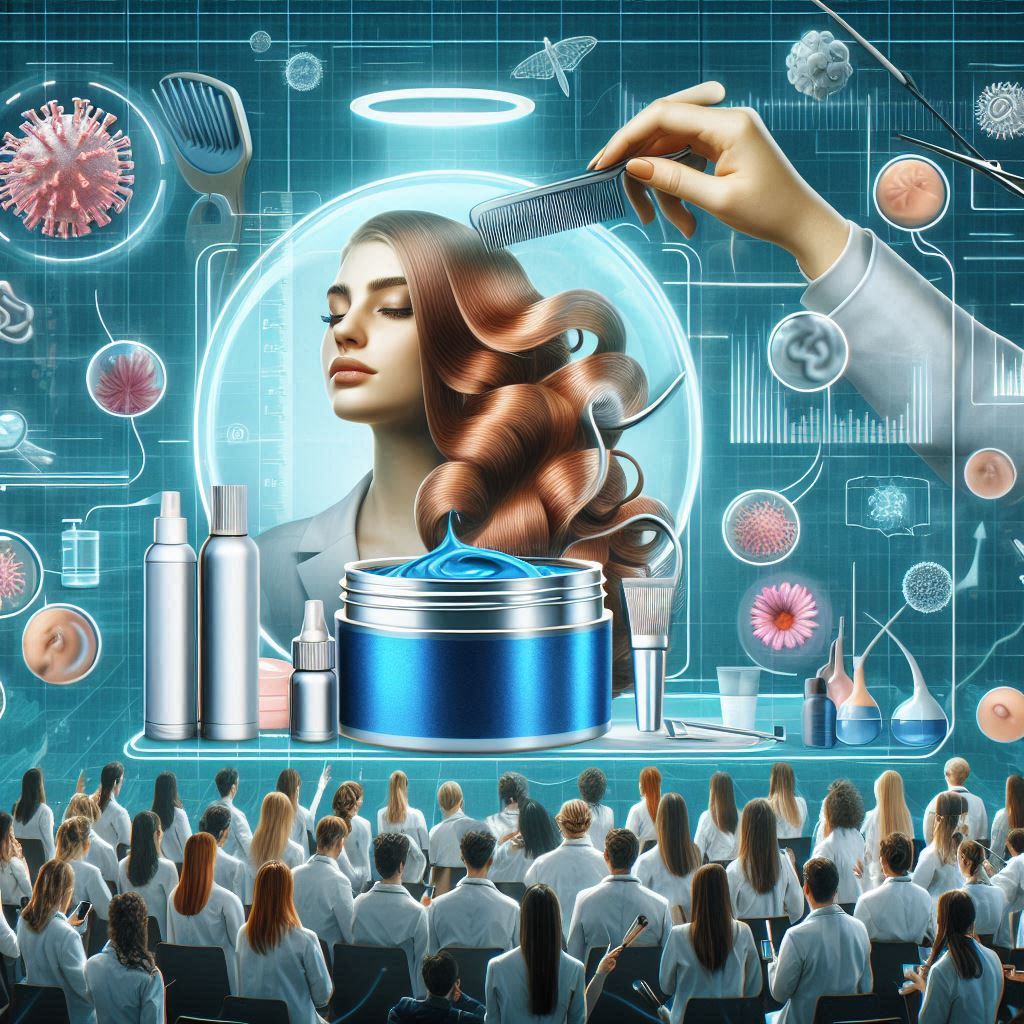
1. The Science of Hair: Understanding Individual Needs
The foundation of personalized hair care lies in a deeper, scientific understanding of what makes every person’s hair unique. Hair is not a simple structure—it’s a complex biological system shaped by multiple factors including genetics, hormonal changes, age, environment, nutrition, and lifestyle. The shape of the follicle determines whether someone’s hair is straight, wavy, curly, or coily. Sebum production impacts oiliness, while porosity and density dictate how the hair absorbs and retains moisture. For decades, hair care products have followed a generic classification system—normal, oily, dry, or color-treated. However, this classification is no longer sufficient for modern consumers who expect customized solutions.
Recent scientific advancements in trichology (the study of the hair and scalp) have opened the door for more personalized care. Through scalp and hair strand analysis, professionals can measure moisture levels, elasticity, damage, protein content, and even mineral buildup from hard water. Some companies take personalization even further by offering DNA-based analysis to identify genetic markers related to hair loss, frizz tendency, or scalp health. A customer may find out, for example, that they’re genetically predisposed to sensitivity to certain ingredients or have naturally fragile cuticles that require strengthening treatments.
Environmental exposure also plays a significant role in hair health. UV radiation, humidity, pollution, and water quality (especially exposure to hard water with heavy metals like calcium and magnesium) impact the structure and appearance of hair. Personalized hair care now incorporates environmental profiling, recommending products based on the local climate or pollution levels. For example, someone living in a humid city might receive anti-frizz serums and lightweight moisturizing products, while a person in a cold, dry climate may get nourishing oils and deep conditioners. These science-backed approaches empower consumers to choose routines and ingredients that work with their biology—not against it.
2. Technological Innovations Driving Personalization
Technology is at the heart of the personalized hair care revolution. Over the past decade, artificial intelligence (AI), machine learning, mobile apps, and at-home diagnostic tools have been integrated into product development and consumer consultations. These innovations have enabled brands to collect vast amounts of data about consumers’ hair types, preferences, goals, and habits—then translate this data into hyper-personalized products and routines.
One of the most significant technological advances in this space is AI-driven questionnaires and diagnostic tools. Brands like Prose, Function of Beauty, and Strands collect consumer data through detailed online surveys that ask about hair texture, styling habits, scalp condition, geography, diet, and even stress levels. Algorithms then analyze the responses to formulate shampoos, conditioners, masks, and oils tailored to each consumer. These platforms also use machine learning to improve their recommendations over time by incorporating user feedback and product performance.
Another trend is the use of smart diagnostic devices. Tools like scalp analyzers and microscopic cameras examine the scalp for signs of dryness, buildup, irritation, or clogged follicles. Some brands use AI-powered hairbrushes that measure hair strength, breakage, and frizz levels, syncing with mobile apps to track progress and recommend new products. These devices offer consumers an in-depth, data-rich view of their hair’s condition, similar to how fitness trackers provide health insights.
Moreover, at-home testing kits have become increasingly popular. These allow customers to send samples of their hair or swab their cheek for DNA to receive a personalized genetic hair profile. The results might identify specific nutrient deficiencies, hormone imbalances, or sensitivities to particular cosmetic ingredients. Brands then formulate personalized regimens or supplements to support optimal hair growth and scalp function. Technology is also improving supply chain agility, allowing some companies to produce and ship customized products within days, bringing salon-grade personalization directly to the doorstep.
3. Marketing Strategies: From Mass Appeal to Individual Attention
While science and technology make personalized products possible, marketing strategies make them desirable. The rise of personalized hair care has coincided with a dramatic shift in consumer expectations: today’s beauty buyers want to feel seen, heard, and catered to. Successful brands have moved away from mass-market messaging and instead prioritize individual attention, inclusivity, and community-driven storytelling.
Personalization has created a golden opportunity for direct-to-consumer (DTC) marketing models. Companies like Function of Beauty, Prose, and eSalon allow consumers to engage directly with the brand, bypassing traditional retail channels. Through sleek digital interfaces, consumers fill out quizzes or upload selfies to receive product recommendations. These interactions generate first-party data, which the brand uses not only to refine its products but also to tailor email campaigns, upsell suggestions, and loyalty programs.
The power of user-generated content (UGC) also cannot be overstated. Personalized haircare brands encourage customers to share their hair journey on social media platforms like Instagram, TikTok, and YouTube. These real testimonials—often accompanied by visible before-and-after transformations—carry more authenticity than conventional advertising. Influencers and micro-influencers are also recruited to document their personalized product experiences, often highlighting the brand’s detailed quiz process, ingredient transparency, and customized packaging. These elements reinforce the idea that each customer is treated as a “one of one,” not just another sale.
Another effective strategy has been the use of personal branding elements. For example, some brands print the customer’s name on their product bottles or allow them to choose a fragrance. This creates emotional attachment and brand loyalty, turning functional items into personalized beauty experiences. At the same time, brands emphasize ingredient transparency, publishing full breakdowns of what’s in each product and why. This appeals to the modern consumer’s desire for control and informed decision-making, especially in a post-pandemic world where health consciousness has increased.
4. Consumer Experiences: Real-World Applications and Results
As the trend of personalization in hair care has grown, so too has the body of consumer feedback, offering a wealth of insight into what works, what doesn’t, and where expectations meet reality. Many users report tangible improvements in their hair’s texture, manageability, and overall health after switching to customized regimens. Testimonials from women with natural curls, for example, highlight how sulfate-free, customized conditioners have helped reduce breakage and enhance curl definition. Others with color-treated hair note that customized moisture-protein balances preserve vibrancy longer than store-bought alternatives.
Additionally, many consumers feel more empowered and confident using products designed specifically for them. There’s a psychological benefit to using a shampoo that has your name on the bottle and was created based on your own hair goals and environmental conditions. This emotional connection adds to the perception of value and uniqueness, setting personalized products apart from off-the-shelf options. Consumers also appreciate the ability to give feedback and modify their formulations over time, effectively turning the product into a “living formula” that evolves with their needs.
However, personalization is not without its challenges. Some customers express disappointment when results do not meet expectations or when the customization feels too generic. Others critique the relatively high price points—often two to three times higher than mass-market products. There are also concerns about subscription traps, where customers receive regular shipments without fully understanding cancellation policies. Despite these criticisms, satisfaction remains high among those who find a product line that aligns well with their needs.
Importantly, consumer reviews suggest that the most successful personalized haircare experiences come from brands that combine technology with strong customer service, allowing users to adjust their formulas and communicate openly about their results. These brands treat personalization as an ongoing relationship, not a one-time purchase, reinforcing loyalty and satisfaction in the long run.
5. The Future of Personalized Hair Care: Innovation on the Horizon
The personalized hair care industry is still in its relative infancy, and yet it is evolving at an extraordinary pace. Future innovations are expected to blur the line even further between beauty, biotechnology, and wellness. In the years ahead, we can expect a growing focus on precision beauty, where hyper-personalized products not only match hair texture or climate but respond in real time to changing conditions in an individual’s environment, lifestyle, or biology.
One of the most exciting areas of development is the integration of real-time biometric data into hair care recommendations. Just as wearable health devices track heart rate and sleep patterns, future smart devices may be able to monitor scalp hydration, pH levels, temperature, and even hormonal fluctuations. These data points could then be used to adjust product usage recommendations or trigger formula changes—creating a truly dynamic hair care routine that shifts with a person’s daily condition.
Another likely direction is the fusion of supplements and topical products. Companies are already starting to combine ingestible and topical solutions to target hair health from the inside out. Nutraceuticals designed for scalp circulation, keratin production, and stress regulation can be paired with customized shampoos and serums to deliver more holistic results. As research continues to link gut health and hormonal balance with hair loss and hair growth, the demand for integrated health-beauty products is expected to rise.
Artificial intelligence will also play a bigger role in formulation efficiency and sustainability. With better predictive models, companies can reduce waste by only producing what is needed, formulating faster, and minimizing unnecessary packaging. Cloud-based platforms will allow users to track hair progress over months or years, giving feedback to brands that improves their algorithms and recommendations. Ultimately, personalization may extend beyond the individual to encompass ethical, cultural, and sustainability preferences as part of a broader vision for ethical consumerism.
6. Ethical and Sustainability Concerns in Personalized Hair Care
While personalization offers numerous benefits, it is not without ethical and sustainability challenges. One of the main concerns relates to the environmental impact of small-batch, made-to-order production models. While these processes reduce overproduction, they often require more packaging, energy, and carbon emissions per unit than mass manufacturing. This paradox can contradict the eco-conscious image that many personalized hair care brands project.
Moreover, the use of biotechnology, DNA testing, and customer profiling raises questions around data privacy and consent. As brands collect increasingly detailed personal and biological data, it is essential that they maintain transparency and ethical standards. Consumers must be assured that their information—whether related to health, genetics, or lifestyle—is protected, anonymized, and not shared or sold without consent. Regulatory frameworks for data privacy in beauty tech are still catching up with innovation, making ethical governance a top priority for forward-thinking brands.
The issue of inclusivity and representation also comes into play. Some personalized brands claim to offer solutions for “all hair types,” but fail to adequately serve the needs of Black, Indigenous, and People of Color (BIPOC) communities. Effective personalization must account for diverse hair textures, cultural practices, and scalp concerns rooted in ethnicity and heritage. Brands that truly embrace personalization must involve diverse voices in product development, marketing, and leadership—ensuring that their AI models and ingredient selections reflect the full spectrum of global beauty needs.
On the sustainability front, leading personalized brands are making strides toward offering biodegradable formulas, recyclable or refillable packaging, and carbon-neutral shipping options. As customers become more environmentally conscious, personalized hair care brands must demonstrate accountability, not just personalization. For example, allowing customers to refill existing bottles rather than ordering new ones can significantly reduce waste. Similarly, offering waterless formulas that activate at home can lower shipping weight and environmental costs. Personalization, to be meaningful, must also be responsible.
7. The Economic Impact and Market Disruption of Personalized Hair Care
The rise of personalized hair care is not just a trend—it represents a significant disruption in the traditional beauty market. While major conglomerates once dominated hair care through mass production and distribution, nimble startups leveraging direct-to-consumer models and data-driven personalization are capturing a growing share of the market. The appeal of tailor-made products has led to significant investments and acquisitions in the beauty tech space, signaling confidence in its long-term potential.
From an economic perspective, personalized hair care commands premium pricing, often two to five times higher than traditional products. Consumers are willing to pay more for products that promise to work better, save time, and address their specific needs. This premium model allows startups to achieve high margins despite limited scale. At the same time, it puts pressure on legacy brands to rethink their value propositions and invest in personalization technology or acquire companies that already offer it.
Large retailers such as Sephora and Ulta have also begun embracing personalization as part of their in-store experience. Interactive diagnostic kiosks and apps now help customers build custom routines or receive ingredient-based recommendations. As a result, personalization is no longer just a DTC phenomenon—it is reshaping retail spaces as well.
The ripple effect of personalization extends to supply chains and manufacturing. Traditional manufacturing lines, designed for batch runs of millions of identical units, are being replaced or supplemented with micro-manufacturing capabilities that can mix and bottle small, unique formulas at scale. Cloud-based platforms connect consumer data to formulation labs and logistics hubs, allowing unprecedented flexibility and customization. This is a major shift in how beauty products are conceptualized, produced, and delivered.
Furthermore, personalization has become a powerful competitive differentiator. In a saturated market filled with nearly identical shampoos and conditioners, offering a made-for-you experience allows brands to stand out and create deeper relationships with consumers. The sense of involvement—from answering the quiz to seeing your name on the bottle—transforms the act of buying shampoo into an emotionally satisfying, almost luxurious ritual.
Conclusion:
The evolution of personalized hair care represents far more than a fleeting trend—it is a symbol of a broader cultural and technological shift toward individual empowerment, scientific precision, and ethical awareness. What began as a niche offering for beauty enthusiasts has now transformed into a movement that redefines how consumers interact with hair care products—and how brands must respond.
Personalized hair care brings together disciplines once considered separate: genetics, dermatology, artificial intelligence, environmental science, and digital marketing. The result is a powerful model that not only improves the effectiveness of products but also resonates emotionally with consumers who crave authenticity, identity, and value. The success of personalization lies not just in better hair, but in better communication between brand and user, between formula and body, and between science and self-image.
As technology continues to advance, personalization will only become more dynamic, responsive, and inclusive. However, its future will also be shaped by how well it addresses its own ethical and environmental responsibilities. To thrive in the long term, personalized hair care must ensure that transparency, privacy, sustainability, and inclusivity are not afterthoughts, but core features of its promise to consumers.
In a world increasingly shaped by algorithms, climate change, and individual choice, the rise of personalized hair care is not just about better shampoo—it’s a story of how science meets marketing, and how innovation meets identity. It reflects a future in which beauty is no longer dictated by trends or celebrity endorsements, but co-created between the consumer and the brand, tailored strand by strand, person by person.
SOURCES
American Academy of Dermatology Association. (2023). Hair care basics. American Academy of Dermatology.
Belsito, D. V., & Hill, R. A. (2020). Advances in dermatological science and their application to consumer hair products. Journal of Cosmetic Science, 71(2), 85–94.
Draelos, Z. D. (2021). The role of dermatology in hair product formulation. International Journal of Trichology, 13(3), 101–105.
Fiume, M. Z., Heldreth, B., Bergfeld, W. F., Belsito, D. V., Hill, R. A., Klaassen, C. D., Liebler, D. C., Marks Jr., J. G., Shank, R. C., Slaga, T. J., & Snyder, P. W. (2019). Safety assessment of various ingredients used in hair care formulations. International Journal of Toxicology, 38(1_suppl), 5S–29S.
Kaufman, G. (2022). AI and consumer personalization in beauty: Trends and transformations. Journal of Digital Consumer Research, 14(1), 47–56.
Kundu, R. V., & Patterson, S. (2020). Addressing the needs of diverse hair types in dermatologic and cosmetic care. Journal of the American Academy of Dermatology, 83(5), 1472–1479.
Lindquist, L., & Madsen, A. (2023). The psychology of personalization: How customized products influence consumer behavior. Journal of Consumer Marketing, 40(2), 123–135.
Matsui, M., & Furukawa, M. (2021). Scalp health and environmental exposure: Emerging research in hair science. Toxicology Reports, 8, 1011–1022.
Miller, H. J. (2022). Smart beauty: AI and real-time diagnostics in personalized hair care. Technology and Beauty Science, 5(3), 187–193.
Prose. (2023). Personalized hair care: Formulation, function, and future. Prose Research & Development White Paper.
PWC Global. (2021). Future of beauty: Personalization, technology, and consumer demand. PricewaterhouseCoopers Insights.
Rogers, N. E., & Avram, M. R. (2020). New technologies and their implications for the treatment of hair loss. Dermatologic Clinics, 38(2), 253–263.
Singh, A., & Pande, S. (2021). Eco-ethical innovation in the beauty industry: Challenges in personalizing sustainably. Environmental Management and Business Review, 18(4), 271–282.
Strands Hair Care. (2023). The science behind hair diagnostics: DNA, environment, and daily care. Internal Technical Report.
Zambrano, R., & Ellis, C. (2023). Marketing personalization in the age of AI: A case study of DTC hair care brands. Journal of Brand Innovation, 29(1), 88–99.
HISTORY
Current Version
AUG, 15, 2025
Written By
BARIRA MEHMOOD