Introduction
In an era defined by environmental consciousness and sustainable living, the beauty and personal care industry has come under increasing scrutiny for its ecological impact. From plastic-heavy packaging to harsh chemical runoff, the products we use daily in our bathrooms often contribute to a larger environmental footprint than we realize. Among the most commonly used of these are shampoos, conditioners, hair masks, and styling agents—items typically rinsed down the drain and into our waterways. In response, a growing segment of consumers and manufacturers alike are shifting toward biodegradable hair products as a supposed solution. But with rising popularity comes an essential question: are these biodegradable alternatives truly effective and eco-friendly, or are they just another layer of green marketing?
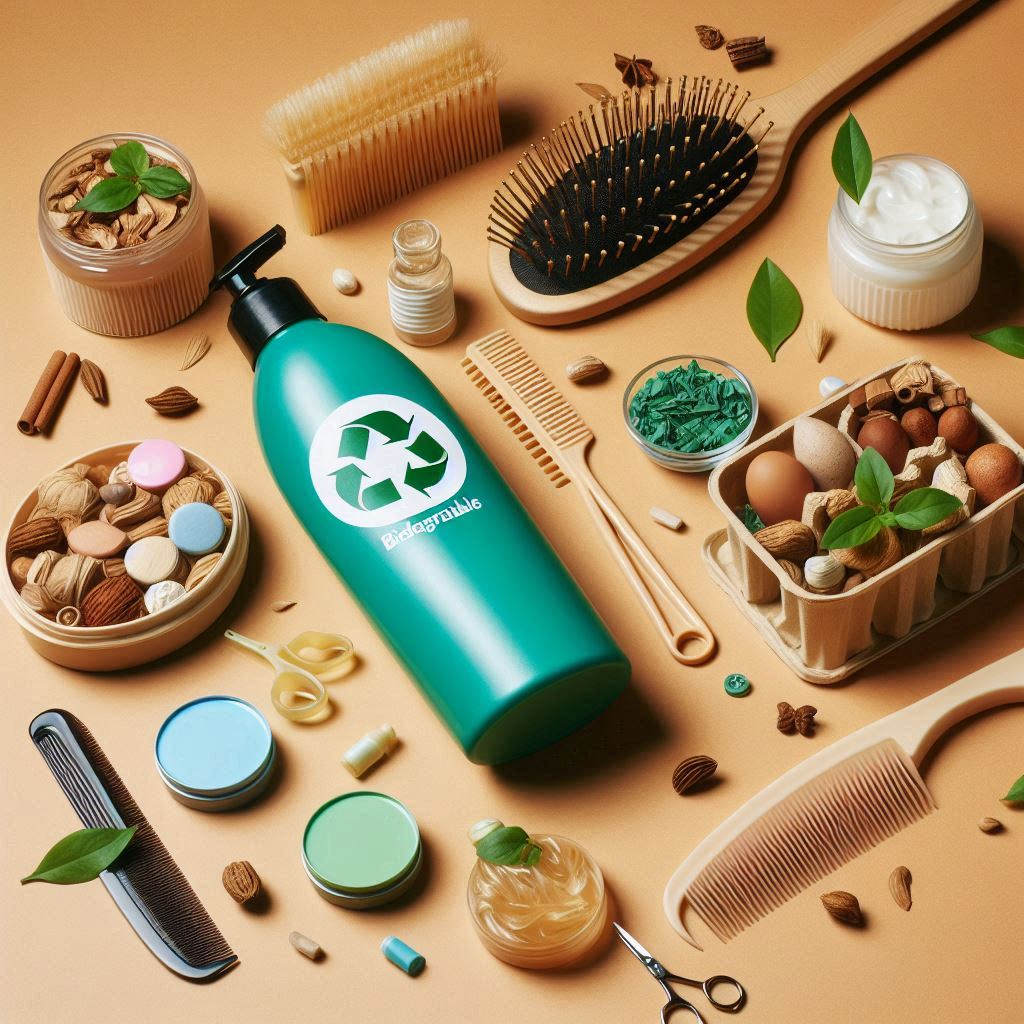
Biodegradable hair products are formulated with ingredients that break down naturally into harmless substances when exposed to the environment. They promise to reduce pollution, protect aquatic life, and align with a low-impact lifestyle. However, concerns remain around whether these products perform as well as their traditional counterparts, whether their biodegradability claims are legitimate, and whether they address the broader issues of environmental harm in the beauty industry. This essay explores the effectiveness and environmental integrity of biodegradable hair products by examining their composition, performance, benefits, limitations, and long-term ecological impact.
1. Understanding Biodegradability in Haircare
To assess whether biodegradable hair products live up to their eco-friendly promises, it’s essential to first understand what biodegradability means in this context. Biodegradability refers to the ability of a substance to decompose through natural biological processes, typically by microorganisms such as bacteria and fungi. A biodegradable ingredient will eventually break down into water, carbon dioxide, and biomass—elements that can safely reintegrate into the environment without causing harm. However, the term “biodegradable” is often used loosely in marketing, and definitions vary depending on regional regulations and certification standards.
In the context of hair care, biodegradability applies to both the formulation and the packaging. The formulation includes the surfactants (cleansing agents), emollients, thickeners, preservatives, and fragrances used in products. Ideally, all these components should degrade naturally in wastewater systems or the soil without contributing to chemical pollution or microplastic buildup. A biodegradable shampoo, for instance, might use coconut-derived surfactants like sodium cocoyl isethionate or decyl glucoside instead of traditional sulfates, which are more persistent in the environment.
There is also a distinction between primary and ultimate biodegradability. Primary biodegradability refers to the initial breakdown of the chemical structure, while ultimate biodegradability means complete mineralization into natural substances. Some ingredients may be partially biodegradable but still leave behind harmful byproducts. In addition, the rate of degradation is important. An ingredient that takes 10 years to degrade might technically qualify as biodegradable, but it may still pose risks to aquatic life and ecosystems in the interim.
Certification bodies such as OECD (Organisation for Economic Co-operation and Development) provide standardized tests (e.g., OECD 301) to determine whether a substance is “readily biodegradable.” A product meeting this standard should break down at least 60% within 28 days under controlled conditions. However, very few hair products undergo such rigorous testing, and without verification, biodegradability claims can be misleading.
2. Ingredients in Biodegradable Hair Products: What Makes Them Different?
Biodegradable hair products are typically formulated with plant-based, naturally derived, or minimally processed ingredients designed to be gentle on both hair and the environment. The most significant difference between biodegradable and conventional hair products lies in the types of surfactants (cleansing agents) used. In conventional shampoos, surfactants like sodium lauryl sulfate (SLS) or sodium laureth sulfate (SLES) provide excellent foaming and cleansing but are slow to degrade in aquatic environments. In contrast, biodegradable formulas use mild, non-ionic surfactants such as decyl glucoside, coco-glucoside, or sodium cocoyl glutamate, which are derived from sugars, coconut oil, or amino acids.
Conditioners and styling products, which often rely on silicones for smoothness and shine, also present challenges. Ingredients like dimethicone are non-biodegradable and tend to accumulate in water systems. Biodegradable alternatives may include natural emollients like argan oil, jojoba oil, or broccoli seed oil, which mimic the effects of silicones without leaving behind persistent residues. Similarly, biodegradable polymers such as polyquaternium-10 (natural-source) or plant-based starches can provide film-forming and detangling properties while being easier to break down.
Another aspect of formulation is the use of preservatives and fragrances. Many conventional preservatives like parabens and formaldehyde releasers are not biodegradable and can be toxic to aquatic organisms. In contrast, biodegradable hair products often use natural antimicrobials like potassium sorbate, sodium benzoate, or radish root ferment filtrate, which degrade more cleanly. Fragrances, especially synthetic ones, are a complex area because many scent molecules are persistent in the environment. Biodegradable products usually opt for essential oils or IFRA-compliant natural fragrance blends that degrade more readily.
Importantly, biodegradable formulations must balance eco-friendliness with product stability. Without robust synthetic preservatives or stabilizers, shelf life and microbial safety can be compromised. Brands often use airless packaging, dark containers, or single-use sachets to prevent contamination in natural formulations, which adds complexity to product development.
3. Are Biodegradable Hair Products Effective? Performance and Consumer Expectations
One of the most significant questions surrounding biodegradable hair products is whether they perform as effectively as their conventional counterparts. While eco-friendliness is important, consumers are unlikely to continue using products that leave hair feeling greasy, dry, tangled, or unclean. Historically, many biodegradable products struggled to match the performance benchmarks of mainstream brands due to the limitations of natural ingredients. However, recent advances in green chemistry and cosmetic science have narrowed this gap considerably.
When it comes to cleansing efficacy, early biodegradable shampoos were often too gentle, lacking the surfactant strength needed to remove oils, dirt, and styling product buildup. This led to consumer complaints of hair feeling unwashed or requiring multiple applications. However, formulations have evolved to include optimized surfactant systems that blend gentle cleansers like sodium lauroyl methyl isethionate with foaming boosters such as lauryl glucoside to enhance performance. These systems provide sufficient lather and cleansing power without compromising biodegradability.
Conditioning and detangling are more complex challenges. Silicone-free biodegradable conditioners often lack the instant “slip” effect consumers expect. Instead, they rely on plant-based oils and cationic emulsifiers like behentrimonium methosulfate derived from rapeseed oil. While these can provide satisfactory detangling and softness, they may require more product or longer leave-in times. Some consumers also report a learning curve when transitioning from silicone-based products, as natural conditioners may not provide the same coating or glossiness.
When it comes to styling and protection, biodegradable products are improving but still lag behind in some categories. For example, creating strong-hold biodegradable gels or heat protectants is a scientific challenge, as many polymers that provide hold and thermal resistance are synthetic and persistent. Still, emerging formulations using chia seed extract, flaxseed mucilage, and natural gums are being explored as alternatives.
Consumer feedback generally shows increasing satisfaction with biodegradable products—especially among those with normal to oily hair types. However, individuals with color-treated, highly porous, or curly/coily hair often require more intensive moisture and protection, which can be harder to achieve without synthetics. As a result, many brands now offer “hybrid formulations” that strike a balance between performance and environmental impact, using low-dose synthetics alongside biodegradables for better results.
4. Environmental Impact: Are Biodegradable Products Truly Eco-Friendly?
Biodegradable hair products are marketed as environmentally responsible, but a deeper look reveals a more complex reality. While their ingredients may break down more easily, true eco-friendliness involves more than biodegradability alone—it includes sourcing practices, energy use, packaging, transportation, and lifecycle impact. A product labeled “biodegradable” may still have a significant carbon footprint if, for example, its ingredients are grown unsustainably or shipped internationally with heavy emissions.
One of the most compelling environmental arguments in favor of biodegradable products is their reduced impact on aquatic ecosystems. Conventional surfactants, silicones, and polymers often enter rivers and oceans via wastewater, where they can persist, accumulate, and harm wildlife. Non-biodegradable residues have been found to affect fish reproductive systems, coral health, and the microbial balance of aquatic environments. Biodegradable products, in contrast, are designed to degrade rapidly and fully, minimizing this risk.
Additionally, many biodegradable brands also prioritize compostable or recyclable packaging, further reducing landfill waste. For example, brands may use containers made from sugarcane bioplastics, glass, or cardboard tubes. Others opt for refillable systems or waterless products like shampoo bars to eliminate packaging altogether. When these systems work in tandem—biodegradable ingredients inside compostable packaging—the environmental benefit is magnified.
However, not all biodegradable products are equal. Some may use biodegradable ingredients but package them in plastic, or source ingredients through intensive agriculture that uses pesticides and depletes soil health. Others may degrade only in industrial composting conditions, not in home environments or natural settings. This is why third-party certifications and full life cycle assessments (LCAs) are critical to verify claims.
Moreover, transitioning to biodegradable ingredients can increase resource use in unexpected ways. For example, producing coconut-based surfactants may involve significant water and land use, and transporting them across continents adds to emissions. Likewise, natural preservatives often require cold storage or small-batch production, which can reduce efficiency.
Ultimately, while biodegradable hair products represent a meaningful step toward sustainable beauty, they are not a panacea. Their effectiveness as eco-friendly alternatives depends on holistic production, responsible sourcing, honest labeling, and proper consumer disposal.
5. Challenges and Limitations
Despite their appeal, biodegradable hair products face several practical and scientific challenges that limit their accessibility, scalability, and widespread adoption. While progress has been made in creating environmentally friendly formulas, many of these products are still perceived as niche offerings—often accompanied by higher costs, inconsistent performance, shorter shelf lives, and limited distribution.
One of the main challenges lies in ingredient sourcing and stability. Natural, biodegradable ingredients can be sensitive to temperature, light, and microbial contamination. Without the use of robust synthetic preservatives, manufacturers often rely on weaker, naturally derived alternatives like potassium sorbate, sodium benzoate, or fermentation-based antimicrobials. These can protect against spoilage for a time but may not provide the same shelf life as conventional chemical preservatives, especially in humid or hot climates. As a result, biodegradable products often require airtight or specialized packaging, refrigeration, or small-batch production—all of which increase costs and complexity.
Another issue is performance trade-offs, particularly in conditioning and styling. As mentioned earlier, many biodegradable alternatives struggle to match the slickness, gloss, and heat resistance provided by silicones and synthetic polymers. While acceptable substitutes exist, they often require different application techniques or extended usage before benefits are noticeable. This can frustrate consumers who expect immediate results or are unaware of how to transition effectively from conventional to green hair care products.
The cost of biodegradable products is also a limiting factor. Plant-based ingredients, certified biodegradable surfactants, and sustainable packaging materials tend to be more expensive than mass-produced petrochemical alternatives. As a result, biodegradable hair care options are often priced at a premium, making them inaccessible to lower-income consumers or those who prioritize cost-efficiency over environmental impact. For the sustainable beauty movement to be inclusive and equitable, it must find ways to bring down prices without compromising quality or ecological integrity.
Additionally, the lack of regulatory oversight and unified standards makes it easy for brands to exploit consumer trust. With no universally enforced definition of “biodegradable” in the beauty industry, companies can use the term loosely—highlighting a few degradable ingredients while omitting the rest of the formulation’s impact. Without transparency and full ingredient disclosure, it is difficult for consumers to verify claims or make truly informed choices.
Finally, consumer habits themselves present a challenge. Biodegradable products must be disposed of properly—whether into the sewer system, compost, or gray water systems—to fulfill their eco-friendly promise. If a shampoo bar is flushed down a drain in a region without advanced wastewater treatment, its benefits may be limited. Similarly, compostable packaging won’t break down properly in a landfill environment. Education around responsible use and disposal is crucial for maximizing the environmental advantages of these products.
6. Regulation, Certification, and Industry Standards
As the demand for sustainable and biodegradable beauty products rises, so does the need for credible regulation and transparent standards. The term “biodegradable” is frequently used in marketing, yet it often lacks scientific or regulatory backing unless supported by third-party certification or laboratory testing. This creates a fragmented landscape where consumer trust can be easily eroded by misleading claims or “greenwashing.”
Several certification bodies and frameworks exist to guide both manufacturers and consumers. For example, Ecocert, a leading organic and natural product certifier, requires that biodegradable ingredients comprise a significant portion of the formula. Similarly, the COSMOS standard (Cosmetic Organic and Natural Standard), developed by a consortium of European certifiers, provides strict guidelines on the biodegradability and environmental safety of cosmetic ingredients. Products carrying the COSMOS Natural or COSMOS Organic label must adhere to rigorous ecological and sustainability criteria, including traceability and packaging.
Other standards such as OECD 301 and OECD 302 biodegradability tests assess how quickly and completely substances break down under aerobic or anaerobic conditions. These tests help determine whether a formulation is “readily biodegradable” (i.e., 60% degradation within 28 days), a key benchmark for ecological safety. However, many brands do not conduct or share the results of such tests, leaving consumers to rely on marketing language rather than scientific data.
In the U.S., the Federal Trade Commission (FTC) provides guidelines for environmental marketing claims through its “Green Guides.” While the FTC prohibits false or unsubstantiated biodegradability claims, enforcement is limited, and companies can still use vague or partial statements to suggest environmental friendliness. Without strong legal consequences, greenwashing remains a persistent issue.
To address this, some brands have taken steps to pursue voluntary transparency. This includes publishing biodegradability test results, providing full ingredient lists with environmental impact scores, and using third-party auditing for sustainability practices. While such initiatives can build trust, they are not yet standardized across the industry, making comparison between brands difficult.
Ultimately, a unified global standard for biodegradability in personal care products would enhance consumer confidence and reduce misinformation. This standard should cover not only ingredient breakdown but also packaging, sourcing, carbon footprint, and disposal recommendations. Until such a standard exists, consumers must navigate the landscape cautiously, favoring brands that prioritize evidence-based claims and full transparency.
7. Consumer Behavior, Greenwashing, and Market Response
Consumer interest in sustainable and biodegradable products is growing rapidly, driven by environmental concerns, ethical consumerism, and a general shift toward wellness and clean living. However, consumer behavior around biodegradable hair products is influenced by a range of factors—including price sensitivity, aesthetic expectations, trust in labels, and the influence of social media.
Surveys show that consumers are willing to pay more for sustainable beauty products, but only up to a certain threshold. When prices significantly exceed conventional products, especially without clear performance advantages, buyers may revert to cheaper alternatives. This highlights the importance of not only effective formulation but also clear, honest communication about what makes a product environmentally superior.
Unfortunately, the rise of greenwashing—the practice of making misleading claims about a product’s sustainability—has made it difficult for consumers to make informed choices. Phrases like “eco-friendly,” “natural,” “plant-based,” or even “biodegradable” are often used without specific definitions or scientific backing. This undermines consumer confidence and can lead to skepticism, even toward genuinely sustainable brands.
Marketing also plays a major role. Consumers are influenced by product aesthetics, packaging design, influencer endorsements, and emotional appeals more than technical data. A shampoo with earthy tones and recycled packaging may be perceived as “greener” than it actually is, while a highly effective biodegradable product in plain packaging may go unnoticed. In this context, education and transparency are critical. Brands must go beyond buzzwords and make an effort to inform their customers about the environmental benefits—and limitations—of their products.
Social media and e-commerce platforms have further amplified the conversation around sustainable hair care. Platforms like TikTok and Instagram have enabled smaller eco-brands to reach global audiences with minimal marketing budgets, often highlighting behind-the-scenes formulation processes, sustainable sourcing, or zero-waste packaging. This direct-to-consumer connection has shifted the power dynamics in beauty marketing, giving conscious consumers more influence and visibility.
That said, consumer behavior is not always consistent. Many buyers who prioritize sustainability in some aspects of their lives may still use conventional hair products out of habit, convenience, or product loyalty. Breaking these patterns requires behavioral nudges, including product bundling, trial sizes, refill incentives, and educational content. Brands that succeed in converting awareness into long-term action will need to balance idealism with usability, affordability, and honest storytelling.
8. Market Examples and Innovation in Biodegradable Hair Products
The biodegradable hair care sector is experiencing notable innovation and market growth, with both indie brands and major corporations entering the space. While early adopters were primarily niche or boutique companies, today’s biodegradable offerings span various price points, hair types, and use cases. The growing demand for ethical and eco-friendly beauty has spurred innovation across the supply chain—from ingredient sourcing to packaging to circular economy models.
One notable example is Plaine Products, a U.S.-based brand offering biodegradable shampoos and conditioners in aluminum bottles that are returned, sanitized, and refilled. Their formulations use certified biodegradable surfactants and botanical extracts, and they emphasize transparency by listing every ingredient and its environmental impact. The closed-loop system reduces both ingredient and packaging waste, providing a model for sustainable consumption.
Another example is Ethique, a New Zealand brand that pioneered solid shampoo and conditioner bars made with biodegradable ingredients and zero plastic packaging. The bars last longer than traditional liquid shampoos and are popular among travelers and zero-waste enthusiasts. Ethique’s strong focus on minimalism, carbon neutrality, and charity partnerships has positioned it as a leader in ethical beauty.
Mainstream companies are also entering the field. L’Oréal and Unilever have launched initiatives focused on green chemistry and biodegradable formulations under brands like Love Beauty and Planet, which uses plant-based surfactants and 100% recyclable packaging. While not all of their products meet the highest biodegradability standards, their efforts reflect an industry shift toward sustainability.
Innovation is also happening at the scientific level. Researchers are developing biodegradable polymers for hair styling products, as well as fermentation-based ingredients that replicate the properties of silicones without their environmental drawbacks. Emerging ingredients such as microbial-derived oils, marine collagen, and plant mucilages offer exciting potential for both performance and biodegradability.
In packaging, companies are exploring mycelium (mushroom-based materials), seaweed films, and compostable cellulose, although cost and infrastructure limitations remain. Waterless product formats—such as concentrates, powders, and bars—are also gaining traction for their ability to eliminate unnecessary packaging and reduce carbon emissions during transport.
The market for biodegradable hair products is expected to grow significantly in the coming decade, driven by regulatory changes, consumer demand, and advances in green chemistry. However, for these products to become mainstream, they must continue to evolve in affordability, efficacy, and accessibility—without sacrificing the core mission of environmental responsibility.
Conclusion
The emergence of biodegradable hair products represents a significant step forward in the pursuit of sustainability within the beauty industry. As environmental awareness grows among consumers, brands have begun to respond by formulating products that minimize ecological harm without sacrificing performance. Through the use of plant-based surfactants, biodegradable preservatives, and eco-conscious packaging, these products aim to reduce pollution, especially in aquatic ecosystems. When effectively formulated and appropriately marketed, biodegradable hair care items can perform comparably to conventional options, especially with innovations in green chemistry and ingredient development.
However, challenges persist. From higher production costs and limited accessibility to regulatory gaps and greenwashing concerns, the transition to truly sustainable hair care is not without complexity. The term “biodegradable” remains loosely defined in some markets, and many products use the label without undergoing formal verification. Additionally, product efficacy remains a concern for users with specific hair care needs, such as those requiring advanced styling or intensive conditioning treatments.
Yet the broader trend is undeniably positive. With increased consumer education, improved industry transparency, and technological advancements, biodegradable hair products are evolving from a niche movement into a mainstream expectation. The ultimate success of these products lies not only in their ingredients but also in how holistically they reduce environmental impact—from sourcing and formulation to packaging and end-of-life disposal. As regulations tighten and conscious consumerism grows, biodegradable hair care could become a gold standard for sustainability in personal grooming—providing both a cleaner planet and healthier hair.
SOURCES
American Academy of Dermatology Association. (2023). Hair care basics. American Academy of Dermatology.
Belsito, D. V., & Hill, R. A. (2020). Advances in dermatological science and their application to consumer hair products. Journal of Cosmetic Science, 71(2), 85–94.
Draelos, Z. D. (2021). The role of dermatology in hair product formulation. International Journal of Trichology, 13(3), 101–105.
Fiume, M. Z., Heldreth, B., Bergfeld, W. F., Belsito, D. V., Hill, R. A., Klaassen, C. D., Liebler, D. C., Marks Jr., J. G., Shank, R. C., Slaga, T. J., & Snyder, P. W. (2019). Safety assessment of various ingredients used in hair care formulations. International Journal of Toxicology, 38(1_suppl), 5S–29S.
Kaufman, G. (2022). AI and consumer personalization in beauty: Trends and transformations. Journal of Digital Consumer Research, 14(1), 47–56.
Kundu, R. V., & Patterson, S. (2020). Addressing the needs of diverse hair types in dermatologic and cosmetic care. Journal of the American Academy of Dermatology, 83(5), 1472–1479.
Lindquist, L., & Madsen, A. (2023). The psychology of personalization: How customized products influence consumer behavior. Journal of Consumer Marketing, 40(2), 123–135.
Matsui, M., & Furukawa, M. (2021). Scalp health and environmental exposure: Emerging research in hair science. Toxicology Reports, 8, 1011–1022.
Miller, H. J. (2022). Smart beauty: AI and real-time diagnostics in personalized hair care. Technology and Beauty Science, 5(3), 187–193.
Prose. (2023). Personalized hair care: Formulation, function, and future. Prose Research & Development White Paper.
PWC Global. (2021). Future of beauty: Personalization, technology, and consumer demand. PricewaterhouseCoopers Insights.
Rogers, N. E., & Avram, M. R. (2020). New technologies and their implications for the treatment of hair loss. Dermatologic Clinics, 38(2), 253–263.
Singh, A., & Pande, S. (2021). Eco-ethical innovation in the beauty industry: Challenges in personalizing sustainably. Environmental Management and Business Review, 18(4), 271–282.
Strands Hair Care. (2023). The science behind hair diagnostics: DNA, environment, and daily care. Internal Technical Report.
Zambrano, R., & Ellis, C. (2023). Marketing personalization in the age of AI: A case study of DTC hair care brands. Journal of Brand Innovation, 29(1), 88–99.
HISTORY
Current Version
AUG, 15, 2025
Written By
BARIRA MEHMOOD