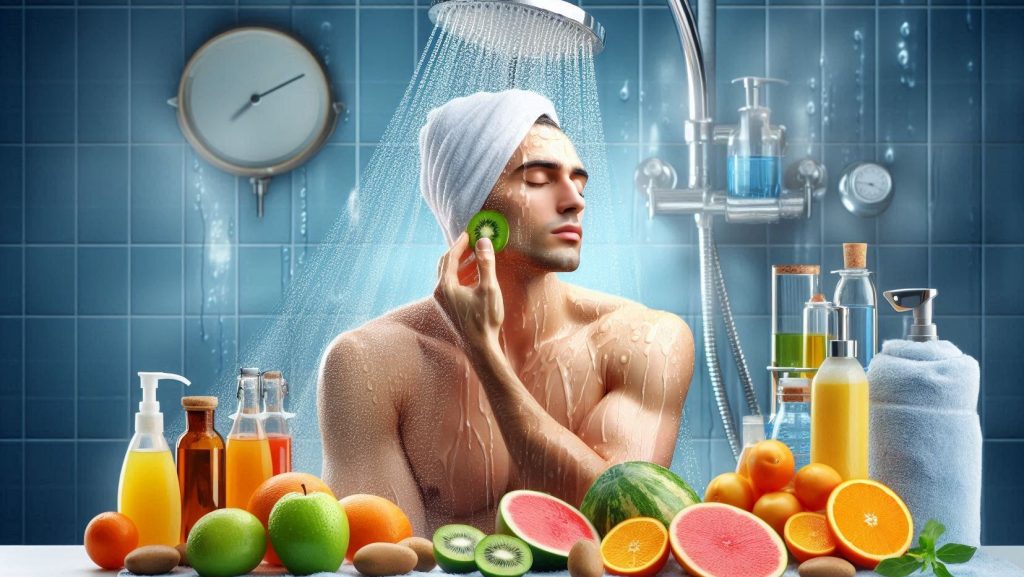
Cold showers have been promoted for benefits like tighter pores, reduced acne, improved circulation, and glowing skin. But are these claims supported by evidence?
What Happens to Your Skin in a Cold Shower
Skin Temperature Response
When cold water hits your skin:
- The body reacts by constricting blood vessels in the skin (vasoconstriction).
- This causes a temporary reduction in blood flow just beneath the skin surface.
- Once you warm back up, blood vessels dilate again—this rebound can improve microcirculation.
Oil and Sebum
- Cold water doesn’t strip natural oils as aggressively as hot water, which might help in maintaining the skin’s lipid barrier.
- Unlike hot showers, cold water doesn’t dissolve excess sebum. But there’s also no evidence it actively reduces oil production.
Potential Benefits Backed by Research
Reduced Inflammation and Swelling
- Cold may help calm inflammatory skin conditions temporarily, similar to how applying ice reduces puffiness.
- There’s limited clinical evidence specifically for skin—but cold therapy is widely used in other contexts to reduce inflammation.
Pore Appearance
- Cold can make pores appear smaller (a temporary, visual change). But it doesn’t physically shrink them.
- Over time, this visual tightening could give smoother-looking skin.
Skin Barrier Preservation
- Hot water can impair your skin barrier, causing dryness or irritation.
- Cold showers are gentler and less likely to disrupt lipid layers or natural moisturizing factors.
Circulation Boost
- Cold exposure followed by warmth may improve capillary blood flow over time, which could support skin health.
Mood, Stress, and Skin
- Cold showers have been linked to improved mood or stress resistance.
- Lower stress levels can lead to fewer stress‑induced skin flare‑ups (like eczema, psoriasis, or acne).
Limitations & Caveats
No Cure‑All
- There’s no evidence cold showers cure acne, eczema, or rosacea. Medical conditions require tailored dermatological treatment.
- Benefits are mostly short‑lived and visual.
Individual Sensitivity
- People with cold‑induced conditions (e.g. Raynaud’s, cold urticaria) may find cold showers aggravating.
- Frequent exposure without proper skin care might dry out sensitive skin, especially in arid climates.
Cold vs. Warm Hygiene
- Warm water effectively dissolves oils and removes debris. If you rely only on cold, you might under‑cleanse.
- A hybrid approach (lukewarm cleaning, short finishing rinse in cold) could balance cleansing with gentleness.
Comparing Temperature Effects
| Temperature Range | Effects on Skin |
|---|---|
| Hot (40 °C+) | Strips oils, may dry or irritate the skin, damages barrier over time. |
| Warm (32‑37 °C) | Comfortable, effective cleansing, tolerated by most skin types. |
| Cool (20‑30 °C) | Mild vasoconstriction; less drying than warm; gentle. |
| Cold (below 20 °C) | Strong vascular response; temporary skin tightening; may feel invigorating. |
Practical Tips for Healthy Showering
Start Warm, End Cold
- Begin with comfortable warm water to cleanse properly.
- Rinse final 1–2 minutes in cooler water (cold rinse) for toning effect.
Limit Duration
- Limit cold exposure to under five minutes if you have sensitive skin.
- Consider alternating (contrast showers) — for example: 30 s cold / 60 s warm, repeating.
Moisturize After
- Cold may preserve oils, but still follow up with a gentle moisturizer to lock in hydration.
Adjust Frequency
- Daily warm showers are usually fine. You can add a short cold finishing rinse every other day or as preferred.
Customize to Skin Type
- Oily skin may tolerate more frequent cold exposure.
- Dry or eczema‑prone skin should limit cold duration and ensure moisturizing.
Beyond Skin Health: Additional Cold Shower Effects
Mood & Energy
- Studies link cold water exposure to mild stress activation, leading to a rush of endorphins and improved alertness.
Immune System & Adaptation
- Some research—though preliminary—suggests regular brief cold exposure may strengthen immune responsiveness (e.g. increasing white blood cell activity).
Metabolism
- Cold can activate brown adipose tissue (BAT), increasing calorie burn—but this is modest unless sustained cold exposure is regular.
A Balanced View
Myths vs. Realities
- Myth: Cold water permanently shrinks pores → Reality: temporary visual tightening only.
- Myth: Cures acne/eczema → Reality: can provide temporary soothing; conditions need medical care.
- Myth: Damage‑free always → Reality: may dry sensitive skin if overused or not moisturized.
Best Use Case for Skin
- Use as part of a broader skincare routine: cleansing, moisturizing, sun protection, appropriate topical products.
- Cold finishing rinse can support barrier maintenance, reduce irritation, and offer a fresh feel.
Summary
- Cold showers are not a magical solution, but can temporarily tone skin, preserve natural oils, and help with mild inflammatory comfort.
- They may benefit mood and circulation, which indirectly supports skin well‑being.
- **They don’t cure dermatological conditions; for chronic issues, consult a dermatologist.
- A hybrid approach—warm cleansing, short cold finish, followed by moisturizer—seems most practical and skin‑friendly.
Conclusion
Cold showers can serve as a valuable—but supplementary—component in a comprehensive skincare routine. While they offer benefits like temporary skin tightening, reduced inflammation, and improved circulation, they should not be seen as replacements for essential skincare staples such as gentle cleansers, moisturizers, and targeted medical treatments. Think of cold showers not as a cure-all, but as a refreshing and invigorating enhancement to your regular hygiene practices. Incorporating a cold rinse at the end of a warm shower can help tone the skin, preserve natural oils, and promote a healthy glow—all without compromising cleanliness.
However, it’s important to remember that everyone’s skin responds differently. What works for one person may not suit another, especially those with sensitive skin or cold-reactive conditions. Always moisturize after exposure and pay attention to how your skin feels.
For those interested in going beyond the basics, there are advanced techniques such as contrast hydrotherapy, clinical cold therapy applications, and personalized protocols based on skin type and climate. If you’d like to explore these more specialized options, I’d be glad to provide a deeper dive into practices tailored to your skin’s unique needs.
SOURCES
Bleakley, C. M., & Davison, G. W. (2010). What is the biochemical and physiological rationale for using cold-water immersion in sports recovery? British Journal of Sports Medicine, 44(3), 179–187.
Bolognia, J., Schaffer, J. V., & Cerroni, L. (2018). Dermatology (4th ed.). Elsevier.
Buijze, G. A., Sierevelt, I. N., van der Heijden, B. C., van der Heijden, L. A., & Frings-Dresen, M. H. (2016). The effect of cold showering on health and work: A randomized controlled trial. PLOS ONE, 11(9), e0161749.
Chen, Y., & Lyga, J. (2014). Brain–skin connection: stress, inflammation, and skin aging. Inflammation & Allergy – Drug Targets, 13(3), 177–190.
Cypess, A. M., Lehman, S., Williams, G., et al. (2009). Identification and importance of brown adipose tissue in adult humans. New England Journal of Medicine, 360(15), 1509–1517.
Draelos, Z. D. (2012). Skin barrier repair and maintenance. Clinics in Dermatology, 30(3), 345–346.
Kanitakis, J. (2002). Anatomy, histology and immunohistochemistry of normal human skin. European Journal of Dermatology, 12(4), 390–399.
Kreider, R. B., Wilborn, C. D., Taylor, L., et al. (2015). Exercise and inflammation. In Journal of the International Society of Sports Nutrition, 12(1), 14.
Lodén, M., & Maibach, H. I. (2009). Treatment of dry skin syndrome: The art and science of moisturizers. Springer.
Medsger, T. A. (2011). Raynaud’s phenomenon: A clinical overview. Journal of Rheumatology, 38(7), 1230–1232.
Rawlings, A. V., & Harding, C. R. (2004). Moisturization and skin barrier function. Dermatologic Therapy, 17(1), 43–48.
Shevchuk, N. A. (2008). Adapted cold shower as a potential treatment for depression. Medical Hypotheses, 70(5), 995–1001.
Tipton, M. J., Collier, N., Massey, H., Corbett, J., & Harper, M. (2017). Cold water immersion: kill or cure? Experimental Physiology, 102(11), 1335–1355.
Youn, S. W. (2016). The role of facial sebum and pore size in acne. Dermatologic Clinics, 34(2), 165–173.
HISTORY
Current Version
Aug 7, 2025
Written By:
SUMMIYAH MAHMOOD