Introduction
In an increasingly globalized world, cultures continue to influence one another in countless ways—from music and fashion to cuisine and art. However, the fine line between cultural appreciation and cultural appropriation is frequently blurred, especially when it comes to hairstyles. Hair is more than just a stylistic choice; it holds deep cultural, spiritual, and historical significance in many communities around the world. For people of African, Indigenous, Asian, and other non-Western backgrounds, hair can symbolize identity, resistance, and tradition. Yet, when these styles are adopted without understanding or respect—often by individuals from dominant or privileged groups—they may be stripped of their context, reduced to a trend, and cause unintentional harm.
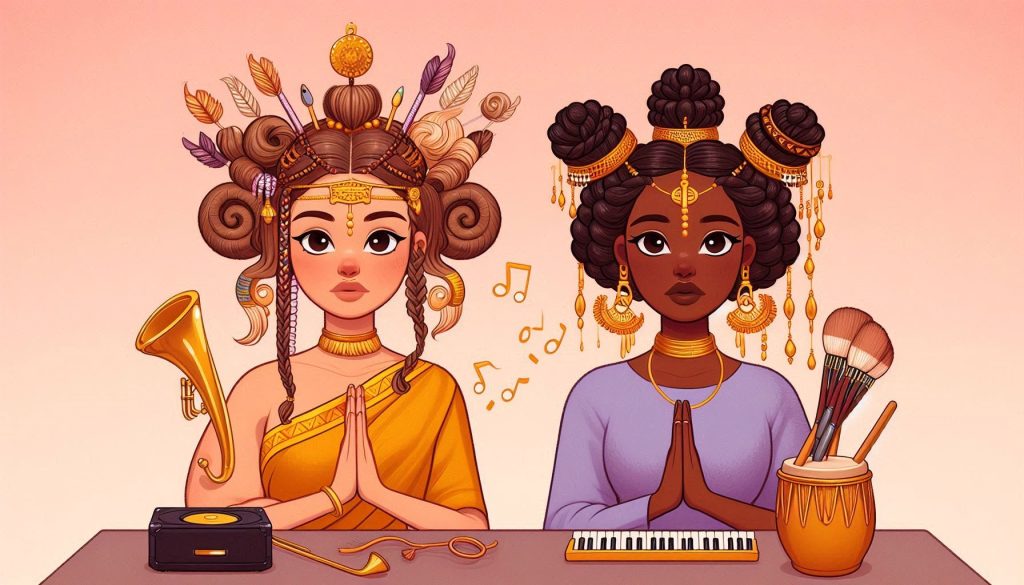
In this essay, we will explore the complex debate between cultural appropriation and cultural appreciation, focusing specifically on hairstyles. We will begin by defining both concepts and examining their origins. Then, we’ll delve into the historical and social significance of hair in marginalized cultures, followed by examples of controversial incidents and public reactions. Finally, we will look at ways individuals and societies can foster respectful cultural exchange, and how to distinguish genuine appreciation from exploitation or commodification.
1. Understanding the Terms: What Is Cultural Appropriation vs. Appreciation?
To navigate the conversation about hairstyles and culture, it’s crucial to first define and differentiate between cultural appropriation and cultural appreciation. Cultural appropriation occurs when elements of a marginalized culture are adopted by members of a dominant culture without permission, proper understanding, or respect for their original meaning. This can often lead to distortion, trivialization, or exploitation of cultural practices. In contrast, cultural appreciation involves respectful engagement with another culture, including efforts to understand its origins, acknowledge its significance, and honor its value.
When it comes to hairstyles, appropriation often manifests when people adopt traditionally Black or Indigenous hairstyles—such as cornrows, dreadlocks, bantu knots, or feathered headdresses—without acknowledging their cultural roots or the struggles faced by the communities who originated them. These same hairstyles, when worn by people of color, have historically led to discrimination, social exclusion, or even punishment in schools and workplaces.
On the other hand, appreciation can occur when someone outside a culture takes the time to learn about a hairstyle’s origins, seeks permission or guidance from community members, and gives credit where it’s due. This might also involve using a platform to amplify marginalized voices or advocating against the discrimination that people from those communities face for wearing their natural or traditional hair.
The power dynamics at play are what distinguish appropriation from appreciation. When cultural symbols are taken by those in power—often sanitized, monetized, or rebranded—they are no longer neutral or harmless. Instead, they become tools of oppression, even if unintentionally. Understanding this context is key to forming respectful cross-cultural relationships and avoiding harm.
2. The Historical Significance of Hairstyles in Marginalized Cultures
Hair has long held symbolic, spiritual, and communal importance across cultures—especially within African, Indigenous, and Asian societies. In these communities, hairstyles often convey a wide range of meanings, including social status, tribal affiliation, marital status, religious beliefs, and personal identity. Understanding this rich history is essential to grasp why cultural appropriation in hairstyles is more than a fashion faux pas—it is often a painful erasure of heritage.
In many African societies, for instance, hair has always been a reflection of identity. In pre-colonial Africa, different tribes had distinctive hairstyles that communicated information about an individual’s lineage, community, and even age. Hair was also a form of art, meticulously braided in styles that could take hours or even days to complete. During the transatlantic slave trade, enslaved Africans were often forced to shave their heads, stripping them of their cultural identity and dignity. Later, under colonialism and segregation, Eurocentric beauty standards were imposed, leading many Black people to straighten their hair to avoid persecution or fit into white-dominated spaces.
Similarly, Native American tribes used hair as a cultural marker. Long hair, often braided, was considered sacred and symbolized a deep spiritual connection to nature and ancestral roots. In many cases, the cutting of Indigenous hair was used as a tool of colonization, forced upon children in boarding schools as a way to assimilate them into Western culture and erase their heritage.
In South Asia, East Asia, and Polynesia, hair also plays a vital role in religious and cultural practices. For example, in Hindu traditions, the act of shaving one’s head can be a spiritual offering or a rite of passage. In Japan, the traditional chonmage topknot was once a symbol of samurai status. These practices are embedded in centuries of cultural meaning, not merely aesthetic choices.
Ignoring this history when adopting these styles can perpetuate systems of oppression and cultural erasure. When people from dominant cultures appropriate these hairstyles without recognizing their significance or advocating against the discrimination faced by their originators, they benefit from a style without enduring its burdens. This imbalance forms the core of the cultural appropriation critique.
3. Controversial Cases and Public Backlash: The Role of Media and Celebrity Influence
The tension between cultural appropriation and appreciation in hairstyles has played out repeatedly in the public eye, often igniting heated debates. Celebrities and influencers, given their massive platforms, are particularly scrutinized for how they engage with cultural styles. Their choices can either contribute to ongoing cycles of appropriation or help normalize and celebrate marginalized beauty standards—depending on the context and intent.
One of the most cited examples is the recurring trend of white celebrities wearing traditionally Black hairstyles. When Kim Kardashian posted photos of herself in cornrows—referring to them as “Bo Derek braids” (after the white actress who wore them in the 1979 film 10)—many in the Black community criticized her for erasing the African origins of the style. Critics pointed out that Black women have long been stigmatized for wearing similar hairstyles in professional and social settings, often being told they look “unprofessional” or “unkempt.”
Other instances include fashion runways where models sport dreadlocks, afros, or tribal-inspired hairpieces without any representation of the cultures they mimic. These moments are often orchestrated by brands or stylists who capitalize on the “edginess” or “exoticism” of non-Western styles, but fail to acknowledge or compensate the communities they draw from.
Social media has amplified public backlash against these practices. Platforms like Twitter, Instagram, and TikTok allow users to call out appropriation, share personal experiences, and demand accountability from public figures. Hashtags like #MyCultureIsNotYourCostume and #BlackHairMatters have sparked widespread conversations and led to apologies, learning moments, and sometimes even policy changes.
However, not all criticism is productive. Some argue that the outrage can become performative or overly punitive, especially when aimed at individuals who may be genuinely trying to learn. This is where education and dialogue become essential. The goal should not only be to criticize, but also to inform and promote better cultural understanding. Celebrities and influencers have a responsibility to use their platforms to uplift the voices of the communities they’re inspired by, and to challenge the systemic discrimination those communities face.
4. Navigating the Line: How to Appreciate Without Appropriating
Given how deeply intertwined hair is with identity and culture, it’s important for individuals—especially those from dominant groups—to approach other cultures with respect, sensitivity, and humility. Appreciating cultural hairstyles is possible, but it requires a conscious and ongoing effort to do so ethically and meaningfully.
The first step is education. Before adopting a hairstyle with cultural significance, take time to learn about its origins, meanings, and the struggles associated with it. Ask: Who created this style? What does it symbolize? Has this group faced discrimination for wearing it? Understanding this context is vital in showing that you value the culture behind the style—not just its aesthetic.
Acknowledgment and credit are also key. If you’re inspired by a particular hairstyle, mention its roots, uplift the creators, or link your appreciation to social advocacy. For example, if you’re a hairstylist incorporating cornrows into your work, credit the African roots of the style and recognize its cultural significance.
Another crucial factor is intent and power dynamics. If you’re adopting a cultural style simply because it’s trendy, edgy, or exotic, without any regard for its meaning, that leans toward appropriation. But if your intent is to honor, learn, and connect—while acknowledging your position of privilege—that can shift the interaction toward appreciation.
It’s also helpful to engage directly with the community whose culture you’re appreciating. Attend cultural events, listen to community members, and support businesses and artists from that culture. In the context of hair, this might mean going to a Black-owned salon, hiring Indigenous stylists, or purchasing products from creators within that culture.
Finally, be open to feedback and criticism. Even with good intentions, missteps can happen. If someone from the culture you’re appreciating expresses discomfort or calls out appropriation, listen respectfully, thank them for the perspective, and reflect on how you can do better. Growth and understanding require humility.
5. Legal and Institutional Responses to Hair Discrimination
One of the clearest signs that cultural appropriation in hairstyles is not just a matter of opinion—but a social justice issue—is the widespread legal and institutional discrimination faced by people of color for wearing their natural or traditional hair. While individuals from dominant cultures are often praised or seen as fashion-forward for adopting these styles, people from marginalized groups are often punished for the same choices. This disparity has led to policy reforms and legal movements worldwide aimed at addressing hair-based discrimination.
In the United States, the CROWN Act (Create a Respectful and Open World for Natural Hair) is a prominent example. First introduced in California in 2019, the CROWN Act aims to protect individuals—particularly Black people—from discrimination based on hair texture and protective hairstyles such as braids, locs, twists, and afros. Since its introduction, over 20 U.S. states have adopted similar legislation, and a federal version has been proposed to extend protection nationwide.
Educational institutions and workplaces are key battlegrounds for hair discrimination. Students have been suspended or reprimanded for wearing dreadlocks or braids, and professionals have lost job opportunities due to their natural hair. This legal struggle underscores the importance of understanding why cultural appropriation is more than imitation—it’s about privilege, power, and the freedom to express one’s identity without punishment.
Outside the U.S., countries like South Africa have also seen legal battles over hair. In 2016, the Pretoria Girls High School protests drew international attention when Black students protested against school policies that policed their afros and natural hair. These cases have spurred broader conversations about the lingering effects of colonialism, Eurocentric beauty standards, and institutional racism.
These legal actions highlight how the appropriation of hairstyles by privileged individuals can coexist with ongoing marginalization of the originators. This contrast makes it crucial for allies and admirers of different cultures to not just adopt styles, but actively support legal protections and challenge discriminatory practices.
6. Economic Exploitation and the Commercialization of Cultural Hairstyles
Cultural appropriation in hairstyles is not only about social recognition or aesthetics—it also involves economics. Many traditionally Black and Indigenous hairstyles have become lucrative trends in the fashion, beauty, and entertainment industries, but often without economic benefits flowing back to the communities that created them. This exploitation adds another layer of injustice to the appropriation debate.
From beauty salons to fashion runways, mainstream companies frequently profit from rebranded cultural styles. Braids become “festival hair,” dreadlocks are marketed as “boho chic,” and traditional headwraps are sold by high-end brands at marked-up prices with no reference to their cultural roots. Black-owned hair care businesses, meanwhile, often struggle for visibility and market access despite being pioneers in natural hair products and styling techniques.
One notorious example is the case of Marc Jacobs’ 2016 runway show, where white models wore pastel-colored dreadlocks. When called out, Jacobs responded dismissively, initially denying that appropriation had occurred. He later apologized, but the incident raised awareness about how fashion brands often use Black culture as a visual resource while sidelining Black voices and creators.
Influencers also play a significant role in this economy. Non-Black beauty bloggers and stylists who replicate cornrows, box braids, or edges may gain followers and brand deals, capitalizing on a style’s popularity. Meanwhile, Black creators are frequently shadowbanned or face racist backlash for posting similar content.
Economic justice requires more than just representation—it demands reinvestment and recognition. This includes supporting BIPOC-owned businesses, hiring culturally knowledgeable stylists, and giving credit to the innovators behind the styles. Brands must also move beyond token inclusion to build long-term partnerships with creators from the communities whose culture they’re drawing from.
Appreciation without exploitation means ensuring that cultural borrowing does not turn into economic theft.
7. The Role of Education: Shaping Cultural Awareness from a Young Age
Education plays a vital role in shaping how young people understand and engage with other cultures. When children and adolescents are taught about the significance of different hairstyles—along with the history of cultural oppression and resistance—society moves closer to fostering genuine appreciation rather than harmful appropriation.
Many schools, however, remain ill-equipped to teach cultural history in a nuanced and inclusive way. Eurocentric curricula often gloss over or ignore the contributions, struggles, and traditions of non-Western cultures. As a result, students may grow up viewing culturally significant hairstyles as exotic or strange—until they’re rebranded and popularized by mainstream influencers. This cycle contributes to the normalization of appropriation.
There have been promising movements toward more inclusive education. Some schools now incorporate lessons about African, Indigenous, and Asian cultures into their history and social studies programs. Documentaries like Good Hair (produced by Chris Rock) and curriculum tools from organizations like Teaching Tolerance help students examine the politics of hair in an age-appropriate and respectful manner.
Importantly, education is not just about formal classroom settings. Parents, media, libraries, and community centers all play a role. Conversations about cultural respect can begin at home, encouraging children to ask questions and value differences without resorting to stereotypes. In diverse classrooms, educators can celebrate multicultural identity through storytelling, art projects, and hair-positive discussions that validate every student’s background.
Educating young people about the roots of hairstyles—and the impact of appropriation—helps build empathy and cultural fluency. It empowers future generations to move beyond surface-level admiration and instead cultivate relationships based on respect, understanding, and justice.
8. Intersectionality: Gender, Race, and Class in the Hair Appropriation Debate
To fully understand the complexities of cultural appropriation in hairstyles, we must look through an intersectional lens. Coined by scholar Kimberlé Crenshaw, intersectionality refers to how different aspects of a person’s identity—such as race, gender, class, and sexuality—interact and compound experiences of discrimination or privilege. When it comes to hair, these intersections reveal deeper insights into who gets appropriated, who benefits, and who suffers.
Race is the most obvious factor. Black and Indigenous communities face the harshest consequences for wearing traditional hairstyles, while white individuals are more likely to be celebrated for adopting those same styles. But gender also plays a significant role. Black women, in particular, are disproportionately targeted for their hair. In schools and corporate environments, their hair is often viewed as “unprofessional,” “distracting,” or “unkempt.” This gendered scrutiny reinforces both racial and sexist beauty standards.
For Black men, hairstyles like dreadlocks or afros may be associated with criminality or rebellion in the public imagination—an image shaped by media stereotypes and systemic racism. Conversely, white men who wear locs or afros may be viewed as rebellious in a cool, bohemian way, revealing a double standard grounded in privilege.
Class and socioeconomic status also influence how people experience hair discrimination and cultural borrowing. Working-class individuals from marginalized communities may face employment barriers due to their natural hair, while wealthier people—regardless of race—often have more freedom to experiment with “ethnic” styles without consequences. Access to resources also determines who can afford high-quality hair care, protective styling, or salon services, all of which are relevant in how cultural hairstyles are perceived and maintained.
Sexuality and queerness further complicate the conversation. Many queer communities have reclaimed hair as a space of identity exploration, resistance, and self-expression. Queer Black and brown individuals have long innovated hair trends and challenged beauty norms. Yet, mainstream culture often adopts these innovations without acknowledging the queer pioneers behind them.
By using intersectionality as a framework, we can better recognize the layered nature of hair appropriation. It’s not just about one person copying another—it’s about how systems of power shape who gets policed and who gets praised. Addressing appropriation therefore requires not only cultural sensitivity but a commitment to broader social justice across race, gender, class, and identity.
9. Global Perspectives: Cultural Exchange vs. Cultural Erasure
While much of the cultural appropriation debate—particularly regarding hairstyles—centers on Western societies, it is important to acknowledge that these issues are global in scope. The tension between appreciation and appropriation exists in various forms across continents, often shaped by unique histories of colonization, migration, and cultural interaction. Understanding how different countries engage with cultural borrowing and hair politics helps us see appropriation as not just an interpersonal issue, but a global one.
In Asia, for example, the appropriation of Black hairstyles by K-pop idols has sparked considerable discussion. Many Korean and Japanese entertainers have worn box braids, cornrows, or dreadlocks in music videos or photo shoots—sometimes without acknowledging their cultural origins. While some fans defend these choices as innocent admiration, others point out that the global popularity of K-pop is built, in part, on the influence of Black American music and fashion, and that acknowledgment and respect are often lacking.
In Latin America, racial and cultural mixing (mestizaje) has led to both rich hybrid identities and the erasure of distinct Afro-Indigenous traditions. Afro-Brazilian hairstyles like trancinhas or natural afros are often marginalized, while straight hair remains idealized in media and society. As in the U.S., people of African descent in Latin America often face workplace and educational discrimination for wearing traditional styles.
In Europe, particularly countries like France and the UK, the appropriation of African hairstyles by white models and designers continues to stir controversy. France’s colonial past and its tensions around immigration create a fraught context in which North and West African communities face cultural invisibility and institutional exclusion, even while their aesthetics are adopted by high fashion.
Meanwhile, in Africa, the issue can be reversed. Some African countries experience pressure to conform to Western beauty ideals, leading to an undervaluing of traditional hairstyles. Natural hair movements in countries like Nigeria, Kenya, and South Africa are reclaiming ancestral hair practices and resisting post-colonial beauty norms.
Globally, the pattern is clear: appreciation of hairstyles becomes problematic when it coexists with cultural erasure, historical amnesia, and unequal access to platforms or economic gain. To foster authentic cultural exchange, it is crucial to center the voices and agency of the communities from whom these styles originate, rather than treating culture as a global marketplace for aesthetic consumption.
10. Moving Forward: Guidelines for Respectful Cultural Engagement
After exploring the many layers of cultural appropriation in hairstyles—from history and law to economics and intersectionality—the next logical question is: How do we move forward? How can individuals, institutions, and industries engage with other cultures in a way that honors rather than exploits?
Here are some guidelines for respectful cultural engagement, particularly when it comes to hairstyles:
a. Do Your Research
Before adopting a cultural hairstyle, learn about its origins, significance, and history. Read from sources within the community, watch documentaries, or listen to podcasts by cultural insiders. Understanding the background of a style adds meaning and helps avoid harmful stereotypes.
b. Give Credit and Elevate Voices
If you are inspired by a hairstyle rooted in a marginalized culture, credit that culture openly and frequently. Promote the voices of stylists, historians, and creators from that community. This helps to redistribute power and visibility.
c. Support Cultural Communities Economically
Buy products from BIPOC-owned businesses, get styled by people within the culture, or contribute to mutual aid funds that support hair education and small businesses in those communities. Appreciation without investment is hollow.
d. Challenge Discrimination Where You See It
Use your platform to call out hair-based discrimination in schools, workplaces, and media. If you benefit from wearing a style without stigma, stand in solidarity with those who are penalized for doing the same.
e. Understand the Context of Your Privilege
Wearing a cultural style isn’t just about intent; it’s about impact. Ask yourself whether your adoption of a hairstyle would carry the same meaning—or consequences—if you were from the community that created it. Be honest about how race, gender, and power affect perception.
f. Engage in Dialogue, Not Defensiveness
If someone from the culture calls you out or challenges your choice, listen. It’s not necessarily a personal attack—it’s often a plea for recognition, empathy, or justice. Defensiveness shuts down dialogue; openness fosters growth.
g. Celebrate, Don’t Imitate
There’s a difference between celebrating a culture and mimicking it for personal gain. If you love a style, use your appreciation as a gateway to learning about the people, stories, and struggles behind it.
Respectful cultural exchange is not about perfection—it’s about intention, humility, and continuous learning. With these principles in mind, we can move from appropriation toward genuine appreciation and allyship.
Conclusion:
The debate between cultural appropriation and cultural appreciation in hairstyles is not just about fashion or aesthetics—it is deeply tied to identity, history, and power. When members of dominant cultures adopt hairstyles from marginalized groups without understanding or honoring their significance, they risk perpetuating cycles of erasure, exploitation, and inequality. On the other hand, when done thoughtfully and respectfully, cultural appreciation can be a force for connection, celebration, and solidarity.
Hairstyles are not mere trends—they are living traditions, forms of resistance, and symbols of pride for millions of people across the globe. Recognizing this truth is the first step in building a world where all cultures are valued, not just for their aesthetics, but for their depth, resilience, and humanity.
In an era where cultures are increasingly interconnected, the challenge is not whether we should share traditions, but how we do so. Are we uplifting the people behind the practices, or merely extracting their beauty for personal or commercial gain? Are we aware of the histories of trauma and resistance embedded in these styles, or are we erasing them with each braid or twist?
As individuals, we have the power to make more conscious choices—rooted in research, humility, and justice. As societies, we must support legal protections against discrimination, promote inclusive education, and challenge systems that reward appropriation while punishing authenticity.
The conversation doesn’t end here. It continues in classrooms, salons, social media, workplaces, and homes. By approaching each cultural interaction with empathy and awareness, we can ensure that appreciation becomes a bridge—not a weapon—in the ongoing journey toward equity and respect.
SOURCES
Aubrey, E. (2016). Black students at Pretoria High School protest school’s code of conduct. NPR.
CROWN Coalition. (n.d.). The CROWN Act: Creating a Respectful and Open World for Natural Hair.
Crenshaw, K. (1989). Demarginalizing the intersection of race and sex: A Black feminist critique of antidiscrimination doctrine. University of Chicago Legal Forum, 1989(1), 139–167.
Craig, M. L. (2006). Race, beauty, and the tangled knot of a guilty pleasure. Feminist Theory, 7(2), 159–177.
hooks, b. (1992). Black looks: Race and representation. South End Press.
Johnson, T. A. (2020). Marc Jacobs apologizes for dreadlocks runway show after backlash. CNN.
Lester, N. A. (2010). Disney’s The Princess and the Frog: The pride, the pressure, and the politics of being a first. Journal of American Culture, 33(4), 294–308.
Patton, T. O. (2006). Hey girl, am I more than my hair?: African American women and their hair as a site of memory. Critical Studies in Media Communication, 23(3), 236–257.
Robinson, C. J. (2021). Hair story: Untangling the roots of Black hair in America (2nd ed.). St. Martin’s Griffin.
Rock, C. (Producer), & Stilson, J. (Director). (2009). Good Hair [Film]. HBO Documentary Films.
Tate, S. A. (2007). Black beauty: Shade, hair and anti-racist aesthetics. Ethnic and Racial Studies, 30(2), 300–319.
Thompson, C. (2009). Black women, beauty, and hair as a matter of being. Women’s Studies, 38(8), 831–856.
HISTORY
Current Version
AUG, 13, 2025
Written By
BARIRA MEHMOOD