Introduction
Modern hair care is no longer as simple as choosing between shampoo for “dry” or “oily” hair. With shelves lined with products boasting ingredients like “biotin-infused keratin complex” or “sulfate-free micellar technology,” the everyday consumer is expected to make informed decisions—often without any formal understanding of chemistry or cosmetic labeling. What’s more, marketers frequently blur the lines between science and trend, using buzzwords like “organic,” “natural,” “paraben-free,” or “clean” without standardized definitions. This creates a scenario where people trying to care for their hair are instead confronted with jargon, hype, and vague claims.
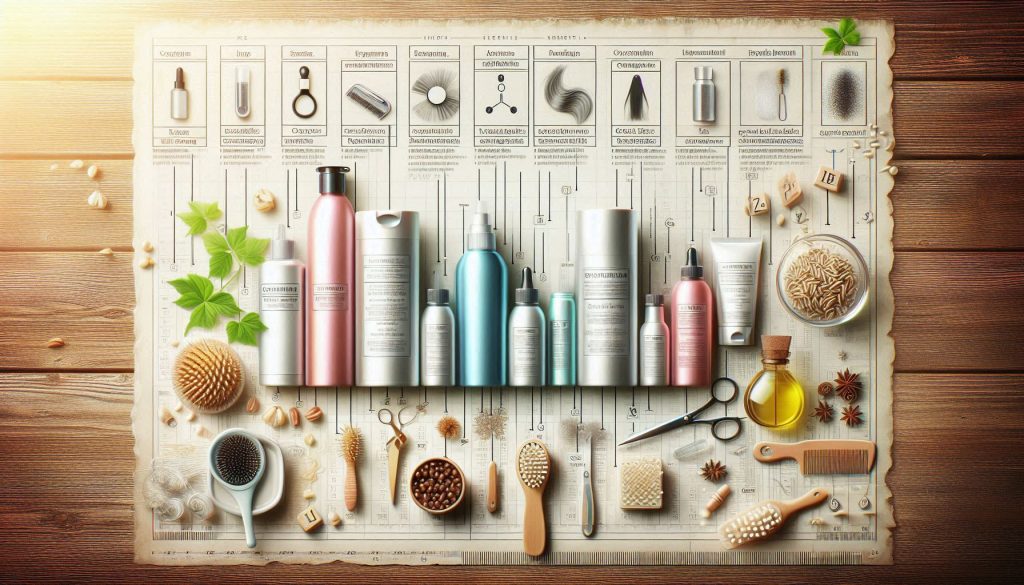
Understanding hair product labels isn’t just about choosing a product that smells nice or feels luxurious. It’s a step toward healthier hair, scalp well-being, and even ethical decision-making. For example, someone with a sensitive scalp might unknowingly buy a product with harsh sulfates or allergens disguised under scientific names. Likewise, someone embracing natural curls may be misled by “moisturizing” products that contain drying alcohols or heavy silicones.
Labels list ingredients according to the INCI system (International Nomenclature of Cosmetic Ingredients), a globally recognized standard. But while it ensures consistency, it also brings with it the challenge of decoding complex chemical names that most consumers don’t recognize. For example, Butyrospermum parkii butter is simply shea butter, and Tocopheryl acetate is vitamin E. Beyond just identifying ingredients, it’s important to understand how they function—what roles they play in the formula, how much is actually present, and whether they are beneficial or problematic for specific hair types or goals.
This essay aims to demystify hair product labels by breaking down the structure and meaning of ingredient lists. We’ll explore the science behind common ingredient categories, explain which components support hair health and which may cause harm, and discuss how informed consumers can make smarter choices. The ultimate goal is to empower readers with the knowledge to read between the lines—so that a shampoo bottle becomes less of a mystery and more of a meaningful decision.
1. Understanding Hair Product Labels: Order and INCI Naming System
Every hair product label follows a specific structure, governed by the INCI system. This internationally accepted standard was created to harmonize cosmetic labeling across different markets. The system uses Latin, scientific, and English terms to identify each ingredient, so that a consumer in Brazil sees the same label format as one in Canada or Japan. While this improves transparency globally, it can confuse consumers unfamiliar with the terminology.
According to INCI rules, ingredients are listed in descending order of concentration, starting with the ingredient that is present in the highest amount. Typically, water (aqua) is listed first in most shampoos and conditioners, indicating that the product is water-based. Ingredients used at concentrations of less than 1% may appear in any order after the first few major components.
For example, a label that starts with Aqua, Sodium Laureth Sulfate, Cocamidopropyl Betaine tells us that water is the base, followed by two cleansing agents. Ingredients like Butyrospermum parkii butter (shea butter) or Argania spinosa kernel oil (argan oil) appearing far down the list may sound impressive in marketing but exist in only trace amounts.
It’s important to remember that not all “long chemical names” are harmful. Some are vitamins, plant extracts, or emollients. Conversely, not all “natural-sounding” ingredients are safe or effective. Knowing the function behind each name is what allows for a truly informed decision. Reading ingredient lists with an eye for structure—while also cross-referencing with product claims—helps avoid falling into marketing traps.
2. Functional Categories: What Do These Ingredients Actually Do?
Hair product formulations are a carefully balanced mix of ingredients, each serving a specific functional purpose. Rather than being random additions, ingredients are chosen to fulfill roles such as cleansing, moisturizing, preserving, styling, or enhancing sensory appeal. Understanding these categories is key to decoding any label.
- Cleansing agents (surfactants): These remove dirt, oil, and product build-up. Common examples include sodium lauryl sulfate (SLS) and sodium laureth sulfate (SLES). These are effective but often harsh, potentially stripping natural oils and irritating sensitive skin. Gentler surfactants like cocamidopropyl betaine or sodium cocoyl isethionate are often used in sulfate-free formulas, especially for curly or color-treated hair.
- Conditioning agents: These include fatty alcohols (like cetyl and stearyl alcohol), silicones (like dimethicone), and quaternary compounds (like polyquaternium-10). They coat the hair to improve manageability, shine, and detangling. While silicones provide a sleek feel, they can also cause buildup over time.
- Humectants: Ingredients like glycerin, propylene glycol, and hyaluronic acid draw moisture from the environment into the hair. These are especially beneficial for dry or curly hair, but their effectiveness can depend on climate—too much moisture in humid air can lead to frizz.
- Preservatives: Products need to remain stable and safe, especially those exposed to water. Preservatives like parabens, phenoxyethanol, and sodium benzoate prevent bacteria, mold, and yeast from growing in your shampoo or conditioner. While parabens are controversial, they are highly effective and used in tiny concentrations.
- Emulsifiers and stabilizers: These keep oil and water from separating. Ingredients like glyceryl stearate or cetyl alcohol help maintain texture and consistency in creamy products.
- Fragrance and colorants: Usually listed as parfum or fragrance, these make products more appealing. However, they can be irritating to sensitive scalps, and full disclosure of what’s in a fragrance blend is often lacking.
Each ingredient group plays a vital role in the product’s performance. Consumers should choose products that balance these components based on their individual hair needs—whether it’s cleansing without over-drying, moisturizing curls, or preserving dyed hair color.
3. Controversial Ingredients: Separating Hype from Harm
Some hair product ingredients have gained notoriety due to health or environmental concerns, while others are misunderstood due to misinformation. It’s important to evaluate these ingredients based on scientific consensus and context of use.
- Sulfates: While sulfates are effective cleansers, they can strip the scalp of natural oils, particularly in those with sensitive skin or curly hair. For many, especially people with scalp conditions or chemically treated hair, sulfate-free products offer a gentler alternative. However, not all sulfates are equal—sodium lauryl sulfate (SLS) is harsher than sodium cocoyl isethionate or disodium laureth sulfosuccinate, which are gentler and still effective.
- Silicones: These provide immediate shine and smoothness by forming a film around the hair shaft. Some silicones are water-soluble (like dimethicone copolyol) and easier to wash out, while others (like dimethicone) can cause buildup over time. Critics argue they mask damage instead of repairing it, but many stylists believe they’re useful when used correctly and clarified occasionally.
- Parabens: Used for decades as preservatives, parabens like methylparaben and propylparaben have come under scrutiny for potential hormone-disrupting effects. While research is inconclusive at the levels found in cosmetics, many brands now avoid parabens to meet consumer demand for “clean beauty.”
- Alcohols: Not all alcohols are drying. Short-chain alcohols like ethanol or isopropyl alcohol can dry hair, while fatty alcohols like cetyl and stearyl alcohol are moisturizing. Understanding the difference prevents unnecessary ingredient avoidance.
- Formaldehyde donors: Ingredients like DMDM hydantoin or imidazolidinyl urea release small amounts of formaldehyde to preserve products. They are increasingly avoided due to potential allergenic effects, especially for sensitive individuals.
When evaluating controversial ingredients, the key is balance. Trace levels of a preservative or occasional use of a silicone-based serum is not inherently dangerous—but using harsh products daily or ignoring buildup may cause long-term issues.
4. Natural vs. Synthetic: Marketing or Meaningful?
The beauty industry often markets hair products using words like “natural,” “organic,” “clean,” and “plant-based.” However, these terms are not regulated in many countries, and their use often prioritizes consumer appeal over scientific accuracy.
- Natural doesn’t always mean safer. For example, essential oils like peppermint or tea tree oil are plant-based but can irritate the scalp or trigger allergic reactions in some people. Likewise, coconut oil is widely praised for its moisturizing properties but may cause buildup or clog follicles if not washed properly.
- Synthetic doesn’t always mean harmful. Ingredients like synthetic panthenol (pro-vitamin B5) or lab-made ceramides are structurally identical to those found in nature but are more stable and effective in controlled formulations.
- Greenwashing is the practice of making a product seem more eco-friendly or health-conscious than it really is. A product labeled “botanical” may contain only a tiny amount of plant extract, with the rest of the formula made up of synthetics.
- Consumers seeking truly natural products should look for third-party certifications such as COSMOS, USDA Organic, or EWG Verified. Reading the entire ingredient list—not just the claims—is essential.
- Ultimately, the debate isn’t natural vs. synthetic, but function vs. fluff. A good product, whether plant-derived or lab-created, delivers safe and effective results without misleading the consumer.
Conclusion
Decoding hair product labels is no longer an optional skill—it’s a form of self-advocacy in a beauty industry filled with marketing buzzwords and ambiguous ingredient lists. As this essay has shown, the power to choose the right hair products lies not in the flashy front labels or influencer endorsements, but in the INCI list printed on the back of the bottle.
From understanding ingredient order and functional categories to evaluating products based on hair type and debunking marketing claims, consumers can take a more science-based, personalized approach to hair care. Recognizing controversial ingredients, understanding how ingredients interact, and staying up to date with evolving trends—like AI-based ingredient checkers and sustainable sourcing—equips consumers with the tools they need to make decisions that are not only effective but aligned with their values.
The shift toward transparency, minimalist formulations, and education reflects a broader cultural movement: people want to know what they’re using, why it works, and how it impacts their health and the environment. Whether it’s choosing a sulfate-free shampoo for curly hair, avoiding allergens, or opting for a silicone-free conditioner for buildup-prone strands, label literacy is key to unlocking your healthiest hair.
In an era of information overload, ingredient literacy cuts through the noise. Hair products shouldn’t be a gamble—and with the knowledge to decode the label, they no longer have to be.
SOURCES
Alvarez, M. (2020). Hair chemistry and product formulation: An in-depth guide. Cosmetic Science Press.
Brown, T. & Singh, L. (2019). Cosmetic regulation and consumer safety: A global overview. Journal of Dermatological Research, 14(3), 121–138.
Chen, R. (2021). Silicones in hair care: Function, fallout, and formulation. Journal of Cosmetic Science, 72(1), 45–61.
Dawson, E. & Fields, J. (2022). The role of surfactants in modern shampoos. International Journal of Cosmetic Chemistry, 38(2), 212–228.
Garcia, L. (2018). Label deception: How marketing shapes consumer perception in personal care products. Marketing and Ethics Journal, 26(4), 301–317.
Hill, M. E. (2019). Scalp deep: Race, hair, and identity politics online. NYU Press.
Jones, F. (2020). Ingredient synergy in hair product formulations. Cosmetic Chemistry Today, 31(5), 340–356.
Kumar, N. & Yadav, R. (2017). Parabens, sulfates, and the natural label: What does it all mean? Consumer Health Review, 22(1), 66–74.
Lee, A. & Tran, K. (2021). The rise of AI and apps in cosmetic ingredient analysis. Digital Beauty Journal, 11(3), 198–215.
Mitchell, P. (2022). Humectants and emollients: Balancing moisture in hair care. Hair Science Quarterly, 19(2), 89–104.
Noble, S. U. (2018). Algorithms of oppression: How search engines reinforce racism. NYU Press.
Peters, D. & Hamilton, R. (2020). Cosmetic labeling laws and international standards. Global Regulatory Science, 16(4), 251–267.
Smith, H. (2021). Cosmetic chemistry for curly hair: Ingredient breakdown and formulation. Texture Science Review, 8(1), 117–133.
Thompson, C. (2016). Black women, beauty, and the politics of hair. Feminist Media Studies, 16(3), 552–568.
White, J. (2023). From plant-based to greenwashed: A study of hair care claims. Eco Beauty Journal, 7(2), 145–160.
HISTORY
Current Version
AUG, 13, 2025
Written By
BARIRA MEHMOOD