Introduction
Hair has long been a symbol of identity, beauty, spirituality, and cultural pride across the globe. From ancient traditions passed down through generations to modern adaptations influenced by globalization, hair care rituals reflect the unique customs and values of diverse communities. Whether it’s the use of natural oils in India, the significance of braiding patterns in Africa, or herbal infusions in Indigenous American practices, hair rituals often go beyond aesthetics—they are deeply embedded in history, health, and heritage.
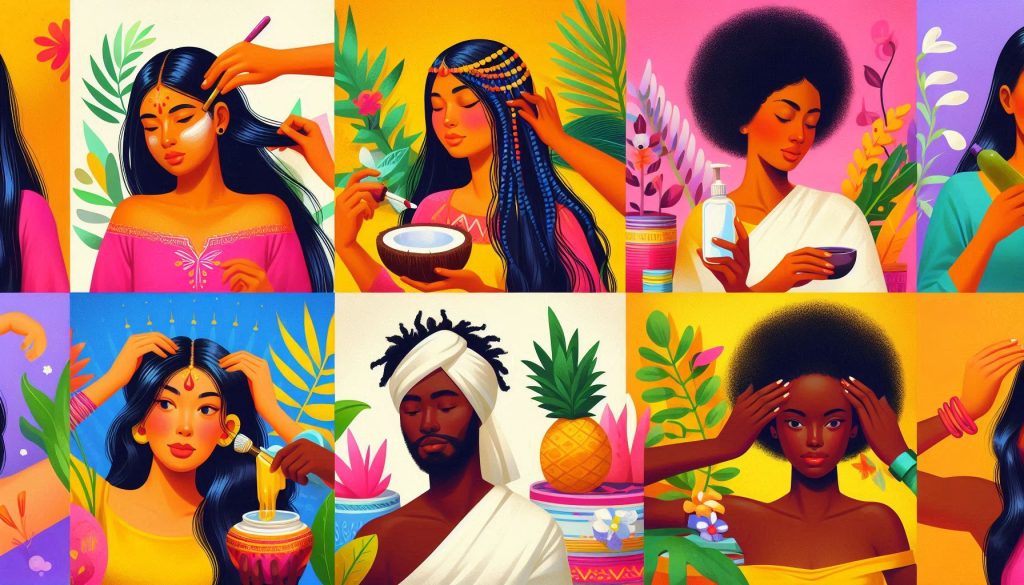
This essay explores hair care rituals from various cultures, examining the practices, ingredients, and spiritual meanings behind them. The aim is to celebrate global diversity in hair traditions and appreciate the wisdom and science within these often-overlooked customs. We begin by looking at African hair rituals, then move through Asia, Europe, and the Middle East to understand how different societies nurture and honor their hair.
1. African Hair Care Rituals: Braiding, Butter, and Ancestral Heritage
African hair care rituals are among the most culturally rich and symbolically significant in the world. Hair in many African societies has never been just about appearance—it’s a form of communication, identity, and spiritual expression. From the intricate braiding techniques of the Yoruba people to the protective styles of the Himba tribe, hair care has historically been both a social and sacred practice.
One of the most prominent features of African hair care is braiding. In West Africa, particularly among the Yoruba, Fulani, and Wolof people, hair braiding was (and still is) used to indicate marital status, age group, religion, and even social ranking. Girls learned the art of braiding from a young age, often treating it as a bonding activity with mothers and elders. These hairstyles could take hours or days to complete, emphasizing patience, skill, and tradition.
Natural ingredients play a critical role in African hair rituals. Shea butter, extracted from the nuts of the shea tree native to West Africa, is widely used for its moisturizing properties. Combined with coconut oil, castor oil, or baobab oil, it is massaged into the scalp to promote growth and strengthen the hair. The Himba women of Namibia, known for their vibrant red-tinted hair, use a unique paste called otjize, made from butterfat and red ochre, to protect their hair and skin from the harsh desert climate while also symbolizing fertility and life.
Hair rituals are also deeply spiritual. In some African belief systems, the hair is seen as a conduit for divine energy. Cutting or shaving the hair may be part of a mourning process, while specific styles might be worn for ceremonies, rites of passage, or initiation rituals. These practices remain strong today, both on the continent and within the African diaspora, where hair care continues to serve as a powerful link to ancestral heritage and cultural pride.
2. Indian Hair Rituals: Oiling, Ayurveda, and the Sacredness of Hair
In India, hair care is intertwined with Ayurvedic medicine, religion, and generational knowledge. Hair is considered a reflection of inner health, and the rituals surrounding it are holistic, aiming to balance the body’s doshas (energy types) and promote spiritual well-being.
One of the most revered practices in Indian hair care is oil massage, known as champi. Traditionally performed by mothers and grandmothers, this ritual involves gently massaging coconut oil, amla (Indian gooseberry) oil, bhringraj oil, or sesame oil into the scalp to stimulate blood circulation, strengthen roots, and promote calmness. This weekly or bi-weekly practice is not only nourishing but also deeply emotional, serving as a bonding moment between generations.
Many Indian women grow their hair long and thick, a result not just of genetics, but of centuries of herbal care. Ayurvedic herbs like shikakai, hibiscus, neem, and fenugreek are often used in homemade pastes or infused in oils. These herbs serve as natural cleansers, conditioners, and anti-fungal treatments, long before commercial shampoos became available.
Hair also has spiritual importance in India. In Hinduism, shaving the head (known as mundan) is a significant rite of passage for children, symbolizing a fresh start in life. In temples such as Tirumala, devotees offer their hair as a sacrifice to deities, a practice known as tonsure, signifying surrender and humility.
These deeply ingrained practices are still observed across Indian households today, often blended with modern products but maintaining the heart of tradition. The spiritual, therapeutic, and social aspects of hair care in India make it one of the most well-rounded and meaningful global rituals.
3. East Asian Hair Rituals: Simplicity, Symbolism, and Herbal Wisdom
Hair rituals in East Asia are marked by elegance, minimalism, and ancient wisdom. Countries like China, Japan, and Korea have long histories of hair symbolism and care, often reflecting social order, Confucian values, and holistic health. While the methods are typically subtle, they are deeply symbolic and rooted in herbal tradition.
In China, hair has long been seen as an extension of one’s identity and moral character. Under Confucian principles, maintaining hair was seen as a way of honoring one’s parents, since the body was considered a gift from them. Ancient Chinese women used herbal rinses made from fermented rice water, ginseng, and black sesame seeds to maintain thick, shiny hair. The Yao women of the Huangluo village are known for their floor-length hair, which they credit to fermented rice water—a practice now popularized globally for its hair-strengthening properties.
In Japan, traditional hairstyles such as the chonmage (samurai topknot) and nihongami (classical geisha hairstyle) reflected societal roles and aesthetic ideals. Japanese hair care has emphasized simplicity and scalp health, with traditional use of camellia oil (tsubaki) for shine and moisture. In modern times, the Japanese approach still favors minimal but high-quality care, including regular scalp massages and pH-balanced shampoos derived from natural ingredients.
In Korea, the beauty culture has always prized soft, silky, and healthy hair. Historically, grooming rituals included herbal infusions made from ingredients like green tea, mugwort, and bamboo. Today, Korean hair care incorporates fermented ingredients and gentle scalp exfoliators, a continuation of the tradition of prioritizing hair and skin harmony.
Throughout East Asia, hair rituals are about balance—between health and beauty, tradition and modernity, self-care and respect for heritage. The enduring popularity of these methods proves that cultural wisdom continues to influence global beauty standards today.
4. Middle Eastern Hair Care: Oils, Aromatics, and Cultural Rituals
Hair care in the Middle East is a luxurious and deeply cultural experience that reflects the region’s love for natural beauty and ancient remedies. From the deserts of the Arabian Peninsula to the Mediterranean coast, traditional hair care rituals use aromatic oils, herbs, and spiritual practices that date back thousands of years.
Perhaps the most iconic hair ingredient from the region is argan oil, native to Morocco. Rich in vitamin E and fatty acids, it has been used for generations to moisturize the scalp, soften hair, and add shine. Moroccan women often use argan oil as part of a post-bath ritual, combing it through wet hair and letting it dry naturally under a scarf or wrap to retain moisture and enhance elasticity.
Another common Middle Eastern hair care practice is the use of henna—a natural dye made from the Lawsonia inermis plant. Besides being used to color hair and skin, henna has antimicrobial properties and is used to cool the scalp and strengthen hair. In countries like Egypt, Iran, and the Gulf states, henna ceremonies also accompany life milestones such as weddings, symbolizing purification and good fortune.
Black seed oil (Nigella sativa) is another traditional staple, often called the “seed of blessing.” This oil is known for its anti-inflammatory and antioxidant properties, making it a key ingredient in scalp treatments for dandruff, hair thinning, and breakage.
In some Middle Eastern traditions, hair rituals are closely linked with hospitality and femininity. For example, weekly hair oiling and wrapping ceremonies are common in women’s gatherings, especially in the Levant and Gulf countries. These moments serve as both personal care and social bonding, echoing the importance of community in beauty practices.
Modern Middle Eastern hair routines often blend Western hair care tools with ancestral ingredients, but the reverence for natural oils, fragrance, and feminine ritual remains central to the region’s hair culture.
5. European Hair Traditions: Herbal Lore and Social Identity
European hair care rituals have evolved significantly over the centuries, reflecting changing beauty standards, religious influences, and evolving science. Historically, European hair care combined herbal remedies, spiritual symbolism, and social status markers. From the elaborate powdered wigs of 18th-century France to the folk remedies of Eastern Europe, the continent holds a wide variety of hair-related practices.
In ancient Greece and Rome, hair was associated with status, gender roles, and power. Men and women oiled their hair with olive oil and scented it with herbs like rosemary and lavender. Roman women often dyed their hair using natural ingredients like saffron or henna, while upper-class citizens had slaves or attendants style their hair in ornate designs.
In medieval Europe, especially during the Christian Middle Ages, hair became a subject of religious modesty. Married women often kept their hair covered, and hair washing was infrequent, associated more with necessity than ritual. However, women in rural areas maintained local folk traditions, using herbal rinses made from nettle, chamomile, or calendula to maintain scalp health and hair brightness.
Eastern European countries like Poland, Romania, and Ukraine have retained more of their ancient hair traditions. In Slavic folklore, long hair was linked with spiritual power and femininity. Brides would often grow their hair long in preparation for marriage, and symbolic hair-cutting rituals were part of wedding ceremonies. Traditional rinses using birch water, vinegar, or infusions from linden flowers were used for shine and softness.
In the Viking cultures of Scandinavia, contrary to modern myths, both men and women valued grooming and cleanliness. Combs, made from bone or wood, were commonly carried, and animal fats, ashes, and herbal oils were used to condition the hair and beard.
Today, European countries still cherish natural products in hair care—especially in Germany, Switzerland, and France, where herbalism and clean beauty movements are strong. Traditional ingredients like rosemary, beer rinses, and egg yolk masks are still used in home remedies passed down through generations.
6. Latin American Hair Rituals: From Amazon Remedies to Afro-Latin Pride
Latin America is a region of immense cultural diversity, and its hair care rituals reflect a blend of Indigenous, African, and European influences. From the jungles of the Amazon to the mountains of the Andes and the Caribbean coasts, hair has always held spiritual, medicinal, and cultural value.
In many Indigenous Amazonian communities, hair is considered a direct extension of the spirit. Shamans and elders often prepare herbal infusions and plant-based oils for scalp care and ritual cleansing. Plants like guava leaves, yucca root, aloe vera, and copaiba oil are used for washing and strengthening hair. These ingredients are often gathered sustainably and prepared communally, reflecting a deep connection to the Earth.
In the Andes region, women in Peru and Bolivia traditionally use quinoa water to cleanse hair, known for its protein content that strengthens strands. In rural areas, avocado, egg yolk, and corn husk infusions are common hair masks used for nourishment and shine.
The Afro-Latin communities, especially in countries like Brazil, Colombia, and the Dominican Republic, have maintained strong traditions of protective styling, natural hair oils, and pride in texture. For centuries, African-descended communities faced discrimination for their natural curls and kinks, but recent decades have seen a powerful resurgence of Black pride and natural hair movements across the region.
In Brazil, traditional cabelos crespos (curly/kinky hair) care often includes babassu oil, murumuru butter, and cupuaçu butter—all rich, native emollients from the rainforest. Meanwhile, in Cuba and the Caribbean, coconut oil and castor oil are used regularly in scalp massages to encourage growth and resilience.
Hair salons in Latin America also serve as important social spaces, particularly for women. Weekly visits for hair washing, blowouts (alaciado or peluquería), or braiding are part of the cultural rhythm, combining beauty with community.
7. Indigenous Hair Rituals: Sacred Strands and Earth-Based Practices
For many Indigenous peoples around the world, hair is not merely physical—it is sacred. It represents memory, connection to ancestors, and spiritual strength. Indigenous hair rituals are closely tied to the land, with ingredients and techniques passed down through oral tradition and ceremonial practice.
Among many Native American tribes, long hair is worn with pride and is considered a source of power. For the Lakota, Navajo (Diné), and Cherokee nations, hair is often braided as a spiritual act, with each strand representing mind, body, and spirit. Hair is rarely cut except in times of mourning, symbolizing loss and transition. Ceremonial practices may include the use of sweetgrass smoke, sage washes, and bear grease to anoint the hair.
In Māori culture of Aotearoa (New Zealand), hair (known as huruhuru) holds deep tapu (sacred) significance. Historically, only close kin were allowed to touch a person’s hair, and styling was often done with great care and ceremony. Similarly, Aboriginal Australian groups regard hair as part of spiritual identity, and certain rituals involve hair string belts, which are woven from cut hair and used in rites of passage.
In Indigenous Arctic communities, such as the Inuit, hair care practices had to adapt to the extreme cold. Seal oil and caribou fat were used not only to moisturize skin but also to condition hair and prevent scalp dryness. Hair was often wrapped or braided for protection during long winters.
In South America, Quechua and Mapuche women use local herbs like muña and rica-rica in their hair washing routines. These plants are believed to promote both scalp health and spiritual clarity.
Across these cultures, the underlying message is consistent: hair is sacred, and its care is both physical and spiritual. The rituals reflect not just hygiene, but a deep relationship with land, ancestors, and identity.
8. Contemporary Global Hair Movements: Blending Tradition with Innovation
In today’s interconnected world, hair care has become a vibrant blend of ancient rituals and modern innovation. The global beauty market draws heavily from traditional knowledge, yet social media and technology have reshaped how people access and perform hair rituals. There is also a growing movement toward natural, sustainable, and culturally conscious hair care.
The rise of the natural hair movement, particularly among Black communities in North America, the Caribbean, and Europe, has sparked global conversations about texture pride, representation, and cultural ownership. People are rediscovering ancestral practices, rejecting chemical straighteners, and embracing ingredients like aloe vera, flaxseed gel, and ayurvedic powders.
In the wellness and clean beauty movements, ingredients such as fermented rice water (from China), hibiscus (from India), and argan oil (from Morocco) have become mainstream in hair products. What was once a family remedy is now mass-produced and marketed globally—sometimes respectfully, and sometimes without acknowledgment of its roots.
Social media platforms like YouTube, TikTok, and Instagram have democratized beauty knowledge. Hair tutorials featuring braiding techniques from Ghana, DIY hair masks from the Andes, or Japanese scalp massage methods are now accessible to millions. This exchange of information has helped many people reconnect with their heritage and learn to care for their hair in new, personalized ways.
However, this globalization has also raised concerns about cultural appropriation, especially when traditional hair practices are commodified without credit or respect. For example, cornrows or bantu knots may be praised as trendy on non-Black influencers but criticized or deemed “unprofessional” on Black women.
To navigate this complex space, many brands and consumers are adopting a more ethical approach—supporting Indigenous and BIPOC-owned brands, citing cultural origins, and encouraging representation behind the scenes (e.g., stylists, researchers, product developers).
As the world moves forward, hair care is becoming more inclusive, sustainable, and mindful. The beauty of today’s global hair movement lies in its potential to honor ancient wisdom while embracing new knowledge, fostering both self-expression and cultural respect.
9. Spiritual and Ceremonial Significance of Hair Across Cultures
Hair has long carried spiritual and ceremonial weight in many societies, functioning as more than a biological feature—it is often seen as a spiritual extension of the self, a vessel of energy, or a symbol of transformation. The act of caring for, cutting, or styling hair is frequently tied to religion, rites of passage, mourning, rebirth, and devotion.
In many Indigenous cultures, hair is sacred. For example, among Native American tribes, hair is often considered a living extension of a person’s spirit and wisdom. Ceremonial hair cutting occurs only in specific moments—such as during mourning, when letting go of emotional weight, or to mark a personal rebirth. Similarly, in Australian Aboriginal spirituality, hair from loved ones is sometimes woven into ceremonial items or belts, further signifying connection and memory.
In Hinduism, hair is connected to spiritual surrender. The act of shaving one’s head (tonsure) is practiced at temples like Tirumala Venkateswara in India, where devotees offer their hair as a form of devotion, humility, and purification. It is believed that offering hair to God removes ego and worldly attachments. Many children also undergo a mundan ceremony, a ritual head-shaving that symbolizes cleansing and the beginning of spiritual life.
Among Sikh practitioners, the uncut hair (kesh) is one of the five articles of faith (the Five Ks). It is a mark of devotion and respect for the perfection of God’s creation. Sikhs tie their long hair into a bun and cover it with a turban, a practice deeply connected with both spiritual identity and cultural pride.
In Buddhism, monks and nuns shave their heads as a symbol of renunciation. The act represents detachment from worldly desire and ego, aligning with the path of enlightenment. Similarly, Christian monastic traditions historically required nuns and monks to cut or cover their hair as an act of humility and piety.
Hair rituals also mark transitional life stages in many societies. In Jewish tradition, boys receive their first haircut at age three in a ritual called Upsherin, symbolizing the beginning of formal religious education. In Japan, the historical genpuku ceremony involved young men having their forelocks cut as a sign of coming of age.
Across the globe, hair is more than style—it’s a powerful spiritual signifier. Whether honored through growth, shaved in mourning, or braided with intention, hair continues to play a vital role in how individuals and communities relate to the divine, the self, and one another.
10. The Future of Global Hair Rituals: Sustainability, Identity, and Revival
As the world becomes increasingly interconnected, the future of global hair rituals is being shaped by technology, sustainability, cultural revival, and political identity. Traditional knowledge is being rediscovered and adapted in innovative ways, while communities push back against the commercial erasure of their practices.
One major trend shaping the future is eco-conscious and holistic hair care. As consumers grow more aware of harmful ingredients and environmental impacts, there is a return to natural oils, plant-based treatments, and DIY regimens inspired by ancestral traditions. For example, herbal rinses from Europe, fermented rice water from Asia, or shea butter from Africa are being incorporated into global product lines—often by BIPOC-owned brands seeking to reclaim their heritage while serving modern needs.
Digital platforms are also facilitating the sharing and revival of rituals. Young people around the world are reconnecting with their cultural roots via TikTok tutorials, YouTube documentaries, and Instagram reels. A Quechua woman may demonstrate how to make a quinoa hair rinse; a Ghanaian stylist might share the cultural story behind Fulani braids. These platforms allow for both education and empowerment, ensuring that traditional hair care is not lost but transformed and elevated.
At the same time, hair continues to be a site of political and cultural resistance. Movements like #BlackHairMatters, #StopCulturalAppropriation, and #ProtectiveStyles reflect ongoing fights for hair freedom and authenticity in schools, workplaces, and media. Legislation such as the CROWN Act in the U.S. and anti-discrimination laws in South Africa are pushing institutions to recognize that natural and cultural hairstyles are a human right.
Furthermore, there is a shift toward inclusive and diverse representation in hair marketing and beauty campaigns. Brands are featuring models with natural curls, coils, afros, braids, hijabs, and turbans—breaking free from eurocentric beauty standards and embracing a more global vision of beauty.
Looking ahead, the future of hair rituals lies in balance—between old and new, tradition and science, cultural preservation and innovation. As people reclaim their roots and redefine beauty on their own terms, hair will continue to serve as a powerful symbol of identity, resilience, and heritage.
Conclusion:
From the villages of West Africa to the mountains of the Andes, from bustling Korean cities to remote Arctic communities, hair rituals have stood the test of time. They are more than grooming routines—they are acts of cultural memory, spiritual reverence, social connection, and self-expression.
Across the globe, hair has served as a canvas for tradition, pride, and resistance. It has been used to signal life transitions, show devotion, affirm identity, and bring communities together. Whether it’s the use of herbs passed down by grandmothers, ceremonial braiding before a wedding, or modern social media tutorials reviving ancestral knowledge, hair rituals remain living, breathing reflections of the people who practice them.
This exploration has revealed a shared truth: while hair types and rituals differ by region, language, and belief, the emotional, cultural, and spiritual importance of hair is universal. In a world that is often fragmented, hair care can serve as a bridge—connecting people across continents through common values of care, beauty, and identity.
As we move forward into a future shaped by cultural exchange, technology, and global consciousness, honoring and preserving hair rituals matters more than ever. They offer not just physical care, but also the healing and grounding that comes from knowing who you are and where you come from.
In the end, to care for hair is to care for history. It is to touch the past, live in the present, and shape the future—with every braid, strand, and ritual.
SOURCES
Adeyemi, A. A., & Adeyinka, O. A. (2018). Traditional African hair care practices and cultural identity. Journal of Ethnobiology and Ethnomedicine, 14(1), 45–59.
Chen, L., & Zhang, X. (2020). The cultural significance of hair in East Asian societies: Rituals, symbolism, and modern adaptations. Asian Folklore Studies, 79(2), 213–236.
Gómez, R. M. (2019). Hair and identity: Afro-Latinx hair care traditions and cultural resilience. Latin American Cultural Studies, 28(3), 412–428.
Hassan, S. (2017). Oils and rituals: The role of argan oil and henna in Middle Eastern hair care traditions. Middle Eastern Studies Review, 29(4), 301–317.
Kaur, S., & Singh, J. (2021). Ayurvedic hair care: The ancient science of oiling and herbal treatments. Journal of Ayurveda and Integrative Medicine, 12(4), 327–335.
Lopez, M., & Martinez, F. (2018). Indigenous hair care practices and spiritual significance in Native American communities. Journal of Indigenous Studies, 22(1), 75–89.
Müller, H. (2016). Herbal hair care in European folk traditions: A historical overview. European Journal of Ethnobotany, 11(2), 144–159.
Nakamura, Y. (2015). Traditional Japanese hair rituals and their cultural meanings. Japanese Cultural Studies Quarterly, 37(3), 188–205.
O’Connell, T. (2022). Hair as spiritual expression: The symbolism of hair in world religions. Journal of Religious Anthropology, 43(1), 55–71.
Rodriguez, J., & Torres, L. (2023). Global hair movements: The intersection of tradition, identity, and modern beauty standards. International Journal of Cultural Studies, 40(2), 196–213.
Smith, A. L. (2019). Indigenous hair care and its connection to land and spirituality. American Indian Culture and Research Journal, 43(4), 295–314.
HISTORY
Current Version
AUG, 13, 2025
Written By
BARIRA MEHMOOD