Introduction
Hair has long been a significant marker of identity, culture, and self-expression, particularly within Black and Afro-descendant communities. However, in professional environments historically shaped by Eurocentric standards, natural hair and culturally specific hairstyles—such as Afros, dreadlocks, braids, bantu knots, and twists—have often been viewed as unprofessional or inappropriate. This has resulted in a pervasive but often unspoken form of bias known as hair discrimination, where individuals are judged, penalized, or excluded in the workplace based on their natural hair texture or styling choices. Hair discrimination is not simply about personal preference or workplace grooming policies; it reflects deeper systemic inequalities related to race, culture, and power.
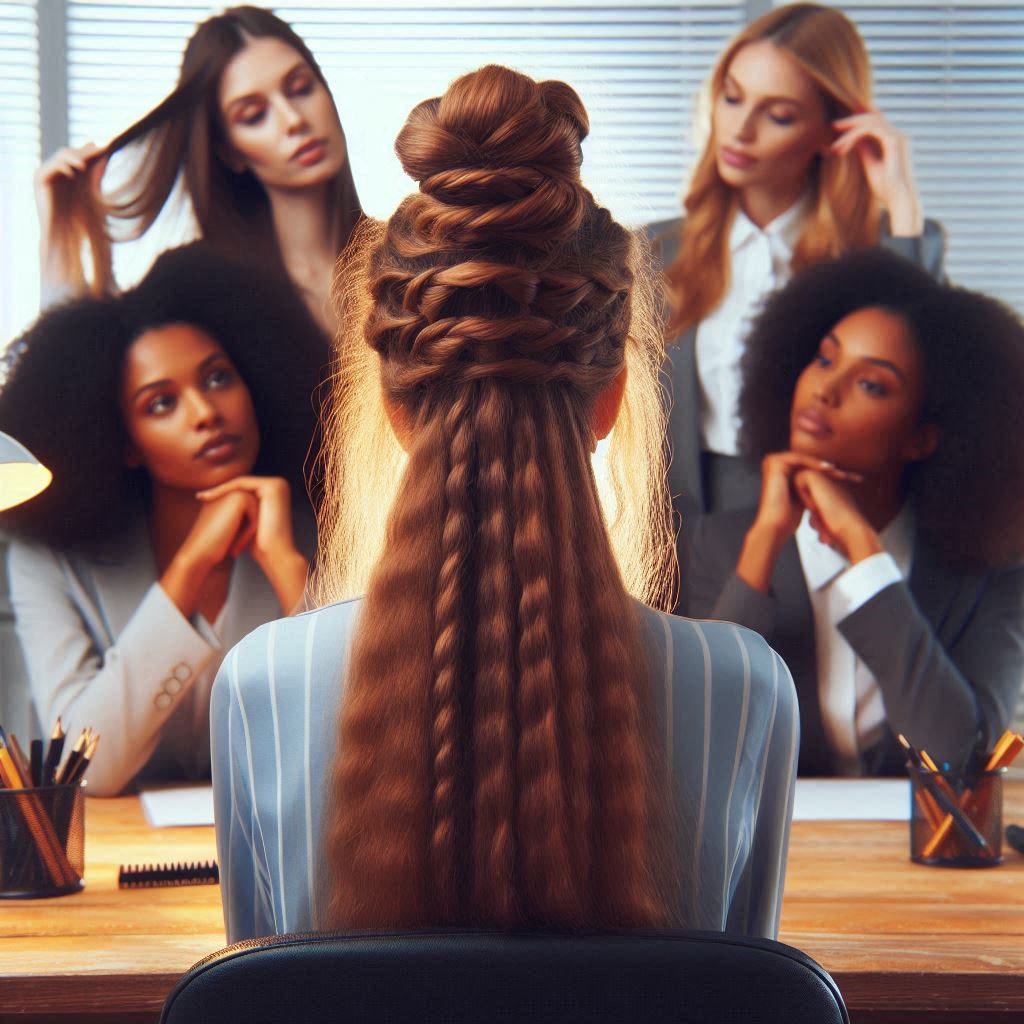
While conversations around race-based discrimination have gained greater visibility in recent years, the specific issue of hair discrimination remains insufficiently addressed in many regions. In some countries, including the United States, advocacy groups and lawmakers have begun pushing for legal reforms such as the CROWN Act to protect against such biases. However, hair-based discrimination continues to impact hiring practices, career advancement, and professional identity, especially for Black women and men. This essay examines the legal and social implications of hair discrimination in the workplace. It explores its historical roots, contemporary manifestations, psychological and economic impacts, and the evolving legal frameworks attempting to address this pervasive issue.
1. Historical Foundations of Hair Bias in Employment
The roots of hair discrimination are deeply embedded in colonial histories and racial hierarchies that privileged Eurocentric features as superior. During the transatlantic slave trade and subsequent centuries of enslavement and segregation, African hairstyles were often stigmatized as “unkempt,” “wild,” or “inferior.” This legacy continued into the post-slavery era, where straightened hair became a social necessity for upward mobility and survival in a white-dominated society. Hair straightening tools like hot combs, perms, and chemical relaxers became not just cosmetic options, but tools of assimilation for Black individuals seeking access to education, employment, and broader societal acceptance.
In professional environments shaped by white norms, neatness and professionalism were often defined in relation to straight hair. As the Western business world developed during the 20th century, corporate grooming standards frequently excluded non-European hair textures and styles from being considered appropriate. Black employees who wore natural hair or traditional hairstyles were either overtly penalized or subtly discouraged from doing so. This was not merely a matter of aesthetic preference but reflected institutionalized racism that equated “natural” Blackness with a lack of discipline, decorum, or reliability.
The psychological and economic pressure to conform to these standards led many Black professionals to alter their hair through painful and expensive processes, sometimes at the expense of their scalp and hair health. The legacy of these discriminatory standards continues to influence corporate culture today, where professional norms often remain implicitly biased, demanding conformity to whiteness as the baseline of acceptability. Understanding these historical underpinnings is crucial to comprehending the contemporary landscape of hair discrimination and why it persists in modern employment settings.
2. Contemporary Forms of Hair Discrimination
Hair discrimination in the modern workplace manifests in both overt and covert ways. On the surface, it may appear as strict dress codes or grooming policies that claim neutrality but disproportionately impact individuals with Afro-textured hair. These policies might prohibit “extreme” hairstyles, which are vaguely defined but often include locs, cornrows, or large Afros—styles commonly worn by Black employees. In interviews and promotion decisions, candidates with natural hairstyles may be passed over based on perceived lack of “professionalism,” “neatness,” or “cultural fit,” even when their performance or credentials are equivalent to their peers.
One infamous example includes the 2010 case of Chastity Jones, an African American woman who was offered a job by an Alabama company but had the offer rescinded after refusing to cut off her dreadlocks. The company claimed that dreadlocks “tend to get messy,” despite having no hygiene or performance concerns. The case sparked national attention but ultimately failed in the courts, which ruled that hair, unlike skin color, was not a protected characteristic under federal anti-discrimination law. This ruling illuminated the legal gap in protecting against race-based grooming biases and underscored how hair discrimination is often invisible within current legal definitions of racial bias.
Discrimination can also be more subtle, manifesting in microaggressions—such as inappropriate comments, unsolicited touching, or backhanded compliments—that make individuals feel scrutinized or alienated for their natural appearance. In predominantly white workplaces, Black employees may feel pressure to straighten their hair or wear wigs and weaves to avoid negative attention or to be considered for leadership roles. Such behavioral modifications, while often invisible to outsiders, reflect the profound social and psychological cost of hair bias.
Beyond the Black community, other ethnic groups also face hair-related challenges. For example, South Asian, Indigenous, or Latinx individuals with long or curly hair may face similar prejudices. However, Black hair remains the most politicized and heavily scrutinized in professional settings due to its historical association with resistance, nonconformity, and racial identity. Thus, the modern workplace remains a battleground where hair continues to symbolize not just personal style, but structural inequality.
3. Psychological and Professional Consequences
The psychological burden of hair discrimination is profound and often underestimated. Being forced to alter one’s natural hair to comply with biased norms can lead to identity suppression and a sense of disconnection from one’s culture. This internal conflict is especially acute for Black women, who are socialized to navigate a tightrope between expressing cultural authenticity and conforming to white-centric norms of professionalism. The constant negotiation between these two worlds can result in emotional exhaustion, stress, and decreased job satisfaction.
Research has shown that Black women who wear their natural hair at work are often viewed as less competent, less professional, or less likely to be hired or promoted. A 2020 study by the Perception Institute found that Black women with natural hairstyles were rated as less ready for job interviews than their peers with straightened hair. These stereotypes not only limit career opportunities but also undermine confidence and self-worth, fostering an environment where Black individuals feel that their authentic selves are unwelcome or penalized.
The professional impact of hair discrimination is not limited to hiring; it extends into salary disparities, leadership representation, and career longevity. In many fields—particularly law, finance, and corporate leadership—Black professionals feel compelled to adopt Eurocentric grooming to be taken seriously. This pressure limits self-expression and reinforces workplace homogeneity, depriving organizations of diverse perspectives and undermining their stated diversity, equity, and inclusion (DEI) goals.
Moreover, the psychological effects extend into adolescence and early career development. Young Black students and interns often enter the workforce with anxiety about how their hair will be perceived, leading them to preemptively change their appearance. This premature policing of identity can shape their self-image for years and discourage them from pursuing leadership roles or careers in certain industries. The cumulative impact of these biases is not only personal but structural, reinforcing racial disparities in employment outcomes across generations.
4. Legal Responses and the Emergence of the CROWN Act
In response to growing public awareness and activism around hair-based discrimination, legal efforts have emerged to address these gaps in civil rights protections. One of the most significant legal developments in this space is the introduction of the CROWN Act, which stands for “Creating a Respectful and Open World for Natural Hair.” First introduced in California in 2019, the CROWN Act explicitly prohibits race-based hair discrimination in schools and workplaces. It extends the legal definition of race under anti-discrimination laws to include hair texture and protective hairstyles associated with race, such as locs, braids, twists, and Afros.
The law was a result of collaborative efforts by state legislators, civil rights organizations, and companies such as Dove, which co-founded the CROWN Coalition. Since its introduction, multiple U.S. states including New York, New Jersey, Colorado, Virginia, and Washington have passed similar legislation. Federally, the U.S. House of Representatives passed a version of the CROWN Act in 2022, but the bill has faced challenges in the Senate. Nevertheless, the growing momentum around the act reflects a significant shift in how lawmakers and society understand the intersection of race, identity, and workplace equity.
Despite these advances, there remains a patchwork of protections, with many states and countries lacking explicit legal safeguards against hair discrimination. In regions without such laws, employers retain broad discretion over grooming standards, which can be weaponized against racial minorities. Even where legislation exists, enforcement remains inconsistent, and affected individuals may still face barriers in proving discriminatory intent.
Internationally, the legal recognition of hair discrimination is even less developed. In the United Kingdom, for instance, while the Equality Act 2010 prohibits discrimination based on race, cases involving hair are often dismissed or misunderstood unless they are clearly tied to religious practices. In other parts of the world, such as Canada or Australia, legal frameworks are slowly catching up to the evolving understanding of how grooming policies can reinforce systemic inequality.
The emergence of the CROWN Act represents a critical step in addressing the legal invisibility of hair discrimination. It sets a precedent for broader reforms and affirms the principle that professional appearance standards must not come at the cost of racial identity and self-expression. However, legislation alone is not enough; legal recognition must be paired with education, corporate policy reform, and cultural change to meaningfully address the deep-seated biases that fuel hair discrimination.
5. Corporate Responsibility and Policy Reform
As the public becomes increasingly aware of racial inequities in the workplace, businesses are under growing pressure to address and prevent hair discrimination through comprehensive policy reform. Corporate responsibility now extends beyond avoiding legal liability; it involves actively cultivating inclusive environments where diverse expressions of identity—including natural hair—are not only tolerated but valued. Companies must move beyond vague grooming policies that uphold Eurocentric standards and instead implement clear, equitable guidelines that recognize and respect cultural diversity in appearance.
Human resources departments and organizational leadership play a critical role in setting the tone for workplace inclusivity. This includes auditing existing dress codes and grooming policies for implicit bias and revising them to eliminate discriminatory language that targets or excludes natural hairstyles. Training programs on unconscious bias should incorporate discussions about hair-related microaggressions and educate employees at all levels on the historical and cultural significance of Black hair. Without this level of awareness, even well-meaning individuals may perpetuate exclusionary norms.
Moreover, representation in leadership positions is key. When companies promote individuals who wear natural or cultural hairstyles to visible roles, it signals to employees and the public that authenticity is not a barrier to success. On the other hand, when employees feel compelled to hide aspects of their identity to advance in their careers, it reinforces toxic workplace hierarchies and undermines any stated commitments to diversity, equity, and inclusion (DEI). Corporate support must be reflected not only in policy but also in practice—through mentorship, promotion pathways, and public accountability.
Some progressive companies have already taken initiative. Tech companies, fashion brands, and large retailers such as Sephora and Unilever have revised their grooming standards and launched campaigns that celebrate natural beauty and individuality. These efforts, when authentic, demonstrate the powerful role corporations can play in reshaping societal norms. However, token gestures or superficial campaigns without policy change may come across as performative and can do more harm than good. Thus, corporate accountability must be ongoing, transparent, and grounded in real structural change.
6. Media Representation and Cultural Narratives
The role of media in shaping public perceptions of professionalism and beauty is substantial. For decades, mainstream media—including film, television, advertising, and fashion—has overwhelmingly favored Eurocentric features and straight hair as the ideal standard. This has normalized the marginalization of natural Black hairstyles and perpetuated the idea that they are inappropriate for formal or professional contexts. Media, therefore, has a responsibility in dismantling harmful stereotypes and creating space for broader definitions of professionalism and beauty.
In recent years, there has been a noticeable shift toward more inclusive representation. Television shows like Insecure, Queen Sugar, and Black-ish have portrayed Black women wearing their natural hair unapologetically in a variety of roles—from executives to creatives—challenging outdated notions of what professionalism looks like. Documentaries such as Good Hair (2009), produced by Chris Rock, and The Hair Tales (2022), hosted by Tracee Ellis Ross, have explored the emotional and cultural complexities of Black hair, contributing to public dialogue and education.
Social media platforms have further democratized representation. Black influencers, natural hair bloggers, and YouTubers have built massive followings by sharing hair care tutorials, product reviews, and personal stories. Hashtags like #BlackGirlMagic, #NaturalHair, and #ProfessionalWithLocs have helped normalize and celebrate natural hair across digital spaces. These online movements have not only challenged the dominance of mainstream media narratives but have also created community and support systems for people navigating hair-based discrimination.
Nonetheless, media representation is still inconsistent and often shaped by commercial interests. While there are more inclusive campaigns, many advertisements continue to reinforce narrow ideals or tokenize diversity without addressing underlying biases. The natural hair movement in the media must be rooted in authenticity and cultural respect to contribute meaningfully to changing societal perceptions. By showcasing diverse hair textures and styles in professional and aspirational contexts, media can help to disrupt the association between whiteness and professionalism and support a more inclusive vision of workplace identity.
7. Intersectionality: Gender, Class, and Cultural Identity
Hair discrimination does not occur in isolation; it is deeply intersectional, shaped by overlapping factors such as gender, class, and cultural identity. While both Black men and women experience bias related to hair, Black women often face compounded discrimination due to societal expectations around femininity, beauty, and professionalism. Historically, Black women have been pressured to conform to white beauty norms in order to be considered respectable or employable, and hair has been a central site for this negotiation. Wearing natural hair or protective styles in professional settings can thus be seen not only as a racial statement but also as a feminist act of defiance against both racism and sexism.
The intersection of class also plays a significant role. The ability to maintain certain hairstyles, particularly in professional settings, can be cost-prohibitive. Natural hair requires specific products and maintenance routines that are not always affordable or accessible. Furthermore, protective styles like braids or locs may require hours in a salon and hundreds of dollars in service fees. Low-income individuals may face additional barriers in expressing themselves through their hair, especially if their employment is contingent upon adhering to rigid grooming standards.
Cultural identity is another key factor. Hairstyles are not merely fashion choices; they are often expressions of ethnic, tribal, or familial heritage. In some African cultures, for example, braiding patterns signify one’s lineage, marital status, or social role. When employers dismiss these styles as “unprofessional,” they are not only disregarding personal aesthetics but also erasing cultural significance. For immigrant communities or individuals of mixed heritage, hair can become a site of cultural negotiation, where they feel pressure to choose between authenticity and assimilation.
Understanding the intersectional nature of hair discrimination is essential for developing inclusive policies and social change. Without this awareness, efforts to address hair bias risk overlooking the specific experiences of those who are most marginalized. Intersectionality ensures that the conversation around hair in the workplace remains nuanced, inclusive, and reflective of real-world complexity.
8. Toward Lasting Change: Education, Advocacy, and Cultural Shift
Addressing hair discrimination in the workplace requires a multifaceted approach that includes legal protections, corporate responsibility, and cultural transformation. However, at the foundation of all these efforts lies education. Schools, workplaces, and public institutions must engage in honest, critical conversations about race, identity, and bias. Educators and HR professionals should be trained to understand how grooming codes and social expectations disproportionately impact certain racial and cultural groups. Curriculum and diversity training must incorporate the history and politics of Black hair as a legitimate and important topic of study.
Advocacy remains crucial. Activists, lawmakers, and community leaders must continue to push for legislation like the CROWN Act at national and international levels. Grassroots organizations should be supported in their efforts to raise awareness and provide resources to individuals facing discrimination. Storytelling—through books, films, social media, and public speaking—can play a powerful role in humanizing these experiences and shifting public opinion.
On a broader level, society must reckon with the implicit biases that underpin our understanding of professionalism and beauty. We must move away from narrow, Eurocentric ideals and embrace a pluralistic vision of the workplace—one that honors authenticity, self-expression, and cultural diversity. Such a shift benefits not only those directly impacted by hair discrimination but also fosters more dynamic, innovative, and inclusive workplaces.
Ultimately, the fight against hair discrimination is about more than aesthetics—it is about dignity, equity, and the right to exist in professional spaces without compromising one’s identity. As the movement continues to grow, the hope is that future generations will not have to choose between their careers and their culture, their ambition and their authenticity. True equity in the workplace means creating environments where all individuals are free to show up as their whole selves—hair and all.
Conclusion
Hair discrimination in the workplace is a complex, deeply rooted issue that reflects the intersection of race, identity, culture, and professionalism. What may appear to be minor or aesthetic preferences in grooming standards actually perpetuate structural inequalities and reinforce Eurocentric norms that marginalize individuals, particularly those from Black and Afro-descendant communities. The consequences of these biases are not limited to individual self-esteem or career mobility; they are systemic, contributing to racial disparities in employment, leadership representation, and economic empowerment.
While progress has been made through legislation like the CROWN Act and corporate DEI initiatives, these steps must be supported by deeper cultural shifts and educational efforts. True inclusion requires reevaluating long-held assumptions about professionalism and embracing diversity in its full expression, including natural hair and cultural hairstyles. Media, employers, policymakers, and educators all have a role to play in dismantling hair-based discrimination and affirming the right of every person to show up as their authentic self in the workplace.
As the global conversation around identity and equity continues to evolve, hair must be recognized not as a trivial concern, but as a powerful expression of self and culture. A more equitable future will only be possible when we create professional environments that respect and celebrate all aspects of human diversity—hair included.
SOURCES
Banks, I. (2000). Hair matters: Beauty, power, and Black women’s consciousness. New York University Press.
Byrd, A. D., & Tharps, L. L. (2014). Hair story: Untangling the roots of Black hair in America. St. Martin’s Press.
Craig, M. L. (2006). Race, beauty, and the tangled knot of a guilty pleasure. Feminist Theory, 7(2), 159–177.
Emery, K. (2021). The natural hair movement and consumer culture: A critical analysis. Journal of Consumer Culture, 21(4), 523–540.
Opie, T. (2020). Natural hair bias in the workplace. Harvard Business Review, 98(4), 22–25.
Perception Institute. (2017). The “Good Hair” study: Explicit and implicit attitudes toward Black women’s hair. Perception Institute.
Robinson, C. (2019). Creating a Respectful and Open World for Natural Hair (CROWN): Legislative approaches to combat hair discrimination. Columbia Human Rights Law Review, 51(1), 143–165.
Thompson, C. L., & Keith, V. M. (2001). The Blacker the berry: Gender, skin tone, self-esteem, and self-efficacy. Gender & Society, 15(3), 336–357.
HISTORY
Current Version
AUG, 12, 2025
Written By
BARIRA MEHMOOD