Introduction
Heat styling has become an integral part of modern hair care routines, enabling individuals to alter their hair texture and shape temporarily or permanently. Tools such as flat irons, curling wands, and blow dryers are commonly used to create sleek, straight looks or voluminous curls. However, the convenience and aesthetic appeal of heat styling come with significant risks to hair health, particularly at the microscopic and molecular levels. Hair is composed primarily of keratin proteins arranged in a complex, hierarchical structure that confers strength, elasticity, and resilience. When exposed to elevated temperatures, these proteins undergo structural changes that can lead to weakening, breakage, and irreversible damage. Understanding the protein-level effects of heat styling is essential for hair care professionals, consumers, and researchers aiming to minimize damage while maximizing style.
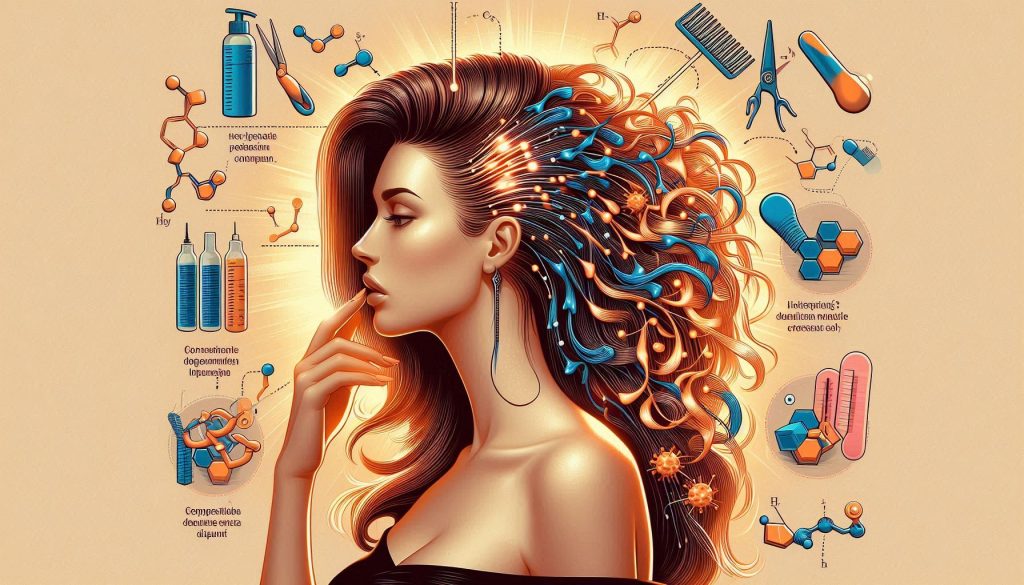
1. Hair Structure and the Role of Keratin Proteins
Human hair is a complex biological fiber primarily made up of keratin, a fibrous structural protein that provides mechanical strength and protection. Each hair strand consists of three layers: the medulla, cortex, and cuticle. The medulla, the innermost core, may be absent in fine hairs but serves as a central channel in thicker hair. Surrounding the medulla is the cortex, which accounts for most of the hair’s mass and contains tightly packed keratin filaments embedded in a protein matrix. These keratin filaments are made of alpha-keratin, composed of polypeptide chains rich in the sulfur-containing amino acid cysteine. The abundance of cysteine allows the formation of strong disulfide bonds, which crosslink keratin chains and confer rigidity and shape to hair fibers. The outermost layer, the cuticle, consists of overlapping keratinized cells arranged like shingles on a roof, serving as a protective barrier against physical and chemical insults. The integrity of these keratin proteins and their crosslinking bonds is fundamental to healthy hair. Damage to these proteins compromises hair strength, elasticity, and overall appearance.
2. Types of Chemical Bonds in Hair Proteins
The structural stability and functionality of hair keratin depend on several types of chemical bonds, each playing a distinct role in maintaining hair shape and resilience:
- Disulfide Bonds (Covalent Bonds): These are strong covalent linkages between cysteine residues in adjacent keratin polypeptides. Disulfide bonds stabilize the three-dimensional structure of keratin and are largely responsible for hair’s mechanical strength and resistance to deformation. Permanent hair treatments like perms and relaxers chemically alter these bonds to change hair shape.
- Hydrogen Bonds: These weaker, non-covalent bonds form between peptide backbones and side chains in keratin proteins and with water molecules in the hair fiber. Hydrogen bonds are crucial for temporary hair shaping and flexibility. They break when hair is wet or heated and reform upon drying or cooling, allowing hair to regain its shape.
- Salt Bonds (Ionic Bonds): These bonds arise from electrostatic attractions between oppositely charged amino acid side chains. Salt bonds contribute to the overall stability of keratin but are more sensitive to changes in pH and ionic strength.
The balance and integrity of these bonds determine hair’s physical properties. Heat styling primarily targets hydrogen and disulfide bonds, causing structural alterations with both reversible and irreversible consequences.
3. The Effect of Heat on Hydrogen Bonds in Hair
Hydrogen bonds within keratin proteins are highly sensitive to heat and moisture changes, making them a primary target during heat styling. When hair is exposed to elevated temperatures, hydrogen bonds break as thermal energy overcomes the relatively weak forces holding the keratin chains together. This bond disruption allows the hair fiber to be reshaped temporarily, which is why hair can be straightened or curled with heat. However, the breaking of hydrogen bonds also temporarily weakens hair’s mechanical integrity, increasing its susceptibility to damage during styling.
Upon cooling and rehydration, these hydrogen bonds can reform, which is why styled hair retains its shape until exposed to moisture or mechanical stress. While hydrogen bond disruption is generally reversible, repeated heat exposure without adequate protection can lead to cumulative damage by making the hair fiber more fragile and prone to cuticle damage. Maintaining optimal hydration and using heat protectants can help preserve hydrogen bond networks and reduce heat-induced brittleness.
4. Heat-Induced Damage to Disulfide Bonds
Disulfide bonds are much stronger than hydrogen bonds and contribute to the permanent structure and strength of hair keratin. Unlike hydrogen bonds, disulfide bonds do not readily break under moderate heat. However, when hair is exposed to excessive temperatures, especially above 200°C (392°F), these covalent bonds can begin to cleave, leading to irreversible changes in hair protein structure.
The cleavage of disulfide bonds results in the weakening of keratin filaments and the breakdown of the crosslinked network that provides tensile strength. This damage manifests as reduced elasticity, increased fragility, and an inability for hair to maintain its original shape. Over time, the loss of disulfide bonds accumulates, causing permanent changes such as split ends, breakage, and a rough hair surface. Excessive heat also makes hair more susceptible to chemical damage and environmental insults by weakening the protein matrix.
Preventing disulfide bond damage involves controlling heat exposure, using protective formulations, and avoiding frequent or prolonged contact with high-temperature styling tools.
5. Protein Denaturation: Unfolding the Keratin Structure
One of the most damaging effects of heat styling at the molecular level is protein denaturation—a process in which keratin loses its native, three-dimensional structure. Keratin is a highly ordered protein stabilized by internal hydrogen bonding, disulfide linkages, and hydrophobic interactions. When exposed to high temperatures (especially above 150°C or 302°F), thermal energy disrupts these stabilizing forces, causing the protein chains to unfold and lose their functional shape. This structural change is irreversible; once denatured, keratin cannot return to its original configuration.
Denatured keratin results in a loss of elasticity, increased stiffness, and reduced tensile strength in the hair fiber. Furthermore, the exposed hydrophobic regions of unfolded proteins can lead to aggregation or clumping within the hair cortex, making hair more brittle. Unlike temporary changes caused by hydrogen bond disruption, denaturation leads to permanent structural damage. Over time, repeated styling accelerates cumulative denaturation, contributing to progressive weakening of the hair shaft. This is why chronically heat-styled hair often appears dry, rough, and prone to snapping.
6. Oxidative Stress and Free Radical Damage
In addition to physical alterations of protein structures, heat styling can cause oxidative stress—a biochemical process involving the production of reactive oxygen species (ROS). These unstable molecules are generated when high temperatures interact with atmospheric oxygen, water vapor, or hair care products containing alcohols or peroxides. ROS such as hydroxyl radicals and superoxide anions can chemically attack amino acid side chains in keratin proteins, particularly cysteine, tyrosine, and tryptophan.
Oxidative modifications to keratin lead to fragmentation of protein chains, cross-linking, and loss of disulfide bonds, all of which degrade the hair’s structural integrity. For instance, oxidation of cysteine can convert disulfide bonds into cysteic acid, a transformation that weakens hair and increases porosity. This process not only breaks bonds but also interferes with the hair’s ability to retain moisture and resist mechanical damage. Over time, oxidative stress contributes to color fading, dullness, and structural decay, particularly in dyed or chemically treated hair. Antioxidant-rich hair products and thermal protectants containing UV filters and silicone-based agents can reduce ROS formation and buffer hair against oxidative injury.
7. Heat and Moisture Dynamics: The Role of Water in Protein Damage
Water is an essential component of hair, accounting for approximately 10–15% of its weight under normal conditions. It plays a critical role in maintaining the flexibility and shape of keratin through its involvement in hydrogen bonding. However, during heat styling, the rapid heating of water within the hair shaft leads to vaporization, which can generate internal steam pressure. This sudden expansion of water molecules within the cortex and medulla can cause bubble formation, micro-cracks, and delamination of the cuticle—phenomena often seen under scanning electron microscopes in damaged hair.
Moreover, high heat causes thermal dehydration, stripping both surface and bound water from the hair fiber. Dehydrated keratin becomes more brittle and loses its ability to resist tensile forces. This is particularly problematic in porous hair, which absorbs and loses moisture rapidly. Repeated drying cycles weaken hydrogen bonds and alter protein hydration shells, resulting in long-term structural fatigue.
Additionally, heat-dehydrated hair loses its plasticity, becoming less elastic and more likely to split or break during styling or combing. Moisturizing products that restore water content and create humidity barriers—such as humectants, emollients, and film-forming agents—are essential in maintaining hair health and mitigating this type of protein stress.
8. Cuticle and Cortex Damage: How Protein Structure is Exposed
The cuticle, the hair’s outermost protective layer, plays a critical role in shielding the inner cortex from heat and environmental aggression. This layer is composed of overlapping, scale-like cells rich in keratin and lipids, functioning like shingles on a roof. However, repeated heat exposure causes the cuticle to lift, crack, or even flake off completely. Once the cuticle is compromised, the cortex—the protein-dense inner layer—is exposed and becomes highly vulnerable.
When the cortex is exposed, heat can penetrate more deeply, exacerbating damage to keratin filaments and matrix proteins. This leads to microstructural breakdown, which manifests as split ends, internal fractures, and overall fiber thinning. In this weakened state, the cortex loses its ability to maintain moisture balance and support the tensile strength of the hair. Over time, the exposed protein structures suffer denaturation, oxidation, and fragmentation, accelerating degradation.
Furthermore, the roughened, damaged cuticle surface increases friction between hair strands, leading to tangling and mechanical wear. This contributes to a dull appearance and an uneven texture. Heat protectants that form a protective layer over the cuticle, along with conditioners that restore lipid barriers, can delay or reduce this kind of protein exposure and damage.
9. The Cumulative Effect of Repeated Heat Exposure
One-time heat styling may cause only minor and often invisible changes at the molecular level. However, with repeated and frequent use, the damage to keratin proteins becomes cumulative. Each session weakens hydrogen and disulfide bonds, gradually leading to irreversible structural degradation. The compounding of small denaturation events over time results in progressive breakdown of keratin chains, particularly in the cortex, where hair’s strength originates.
With every exposure, the protective cuticle becomes thinner and more porous, allowing further penetration of heat and environmental contaminants. As a result, even moderate temperatures that once had minimal effect begin to cause greater harm, due to reduced resistance and impaired structural defense. Microscopically, one might observe increasing cortical fractures, disrupted cuticle layering, and widened gaps between protein fibers.
Cumulatively damaged hair becomes more porous, less elastic, more prone to breakage, and harder to style. This gradual breakdown is often mistaken for “dryness” or “frizz,” but in reality, it stems from protein-level exhaustion—where keratin no longer maintains its original integrity or functionality. The only long-term solution once this stage is reached is often to trim the hair or cut it off entirely, reinforcing the importance of early intervention and protective care.
10. Damage Differences by Hair Type and Texture
Heat damage at the protein level can vary significantly depending on hair type, curl pattern, and porosity. Fine or light-colored hair typically has a thinner cuticle and a smaller cortex, making it more susceptible to rapid keratin denaturation and breakage under heat. In contrast, coarse or dark hair may withstand slightly higher temperatures before showing signs of visible damage, but still suffers protein-level changes internally.
Curly and coily hair, in particular, are more vulnerable to heat-induced damage due to their unique protein structure. The bends and twists in curly hair mean the cuticle layers are not uniformly aligned, making certain areas thinner and more exposed. When heat is applied, these weak points are the first to suffer protein denaturation and structural collapse. Once damaged, curls often lose their pattern, appearing limp or undefined—a phenomenon known as heat training or, in severe cases, heat straightening damage.
Additionally, chemically treated or color-processed hair is already compromised at the protein level. The prior breakdown of disulfide bonds from relaxers or dyes weakens the keratin structure, lowering the temperature threshold for further damage. For these hair types, even moderate heat styling can cause significant protein degradation, necessitating extra caution and the use of thermal protectants and reparative treatments.
11. Heat Protectants and Protein Shielding Technologies
One of the most effective strategies for preserving keratin protein structure during heat styling is the use of thermal protectants. These products function as a barrier between the heat source and the hair fiber, minimizing thermal penetration and controlling moisture loss. The most effective protectants contain ingredients such as silicones (e.g., dimethicone, cyclopentasiloxane), polymers, and proteins (like hydrolyzed keratin or silk protein).
Silicones, for example, form a lightweight coating that smooths the cuticle, reduces direct heat contact, and helps retain internal moisture. Hydrolyzed proteins, due to their low molecular weight, penetrate the cortex and bind to damaged sites, filling gaps and temporarily reinforcing the keratin network. Some heat protectants also contain film-forming agents like polyquaterniums, which create a flexible matrix around the hair shaft to deflect heat and preserve elasticity.
Emerging technologies include nanoparticle-based protectants and phase-change materials (PCMs), which absorb excess thermal energy and release it slowly, preventing sharp thermal spikes that denature proteins. While no product can fully prevent heat damage, these formulations can significantly reduce the extent of keratin degradation, especially when combined with lower temperature settings and controlled exposure time.
12. Prevention and Recovery: Supporting Hair Protein Integrity
While prevention is always preferable to repair, understanding how to support keratin recovery and limit damage is essential for individuals who regularly use heat styling tools. The first step is to limit the frequency and intensity of heat application. Using tools with adjustable temperature settings and opting for lower heat levels (ideally below 180°C or 356°F) can dramatically reduce the risk of protein denaturation and bond cleavage.
Incorporating protein-repair treatments is another vital strategy. Products that contain hydrolyzed keratin, collagen, wheat protein, or amino acids can temporarily restore tensile strength by binding to weakened areas of the cortex and cuticle. While these effects are not permanent, they can reinforce the protein matrix between styling sessions and prevent further weakening.
Moisture-protein balance is also crucial. Overuse of protein without adequate hydration can lead to stiffness and breakage, while excessive moisture without structural support can cause stretchiness and weakness. Maintaining this balance through alternating moisturizing masks and protein treatments helps hair stay resilient and flexible.
Finally, minimizing mechanical stress—such as brushing when wet, aggressive towel drying, or tight hairstyles—can reduce the cumulative impact on already heat-stressed protein structures. Recovery is possible to an extent, but once protein structures are denatured beyond repair, the only viable long-term solution is cutting and allowing for healthy regrowth supported by gentle care and protective styling practices.
Conclusion
Heat styling has become a ubiquitous tool in personal grooming and beauty routines, offering immediate and transformative aesthetic results. However, the scientific evidence is clear: regular and excessive exposure to high temperatures causes progressive and often irreversible damage to the hair’s protein structure, particularly keratin. From the disruption of hydrogen and disulfide bonds to the denaturation and oxidation of amino acids, heat styling undermines the very architecture that gives hair its strength, elasticity, and resilience.
The cumulative nature of this damage means that even occasional high-heat styling, if not managed properly, can contribute to long-term protein breakdown. This is especially concerning for individuals with curly, fine, color-treated, or chemically processed hair, as these hair types are inherently more vulnerable to thermal stress.
Preventive strategies—such as using thermal protectants, controlling heat exposure, and maintaining moisture-protein balance—are critical in mitigating damage. Additionally, scientific advancements in protein-based treatments and thermal shielding technologies offer promising avenues for protecting and partially restoring hair protein integrity.
Ultimately, awareness and education are the most powerful tools. By understanding the biochemical effects of heat on hair proteins, individuals can make informed choices that align style goals with long-term hair health. The path to beautiful hair is not just about appearance but about sustaining its molecular strength and biological vitality.
SOURCES
Al-Refu, K. (2013). Hair shaft abnormalities in patients with hair loss: A study using light and scanning electron microscopy. International Journal of Trichology, 5(3), 113–117.
Al’Abadie, M. S., & Messenger, A. G. (1996). Psychological effects of alopecia areata. British Journal of Dermatology, 134(3), 480–485.
Bailey, L., & Schlievert, P. M. (2018). Hair and hair care. In Cosmetic Dermatology (pp. 151–174). McGraw-Hill.
Bolduc, C., & Shapiro, J. (2001). Hair shaft abnormalities. Clinics in Dermatology, 19(2), 139–150.
Curry, J. R., & Schwartz, R. A. (2006). Hair loss in women. Journal of the American Academy of Dermatology, 45(3), S70–S80.
Dawber, R. P. R., & Van Neste, D. (1994). Hair and scalp disorders: Common presenting signs, differential diagnosis, and therapy. Taylor & Francis.
Giesen, M., & Traupe, H. (2001). Cuticular damage caused by cosmetic treatments: A scanning electron microscopic study. Journal of the Society of Cosmetic Chemists, 52(4), 135–144.
Koch, S. L., & Reichert, D. (2017). Thermal degradation of human hair keratin. Polymer Degradation and Stability, 139, 129–135.
Lee, W. S., & Lee, H. J. (2015). Characteristics of hair shaft damage induced by heat. Journal of Cosmetic Dermatology, 14(1), 35–42.
Lipkin, S. M., & Burnett, J. W. (2001). Heat-induced hair damage and protection with silicones. Dermatologic Clinics, 19(3), 499–510.
Robbins, C. R. (2012). Chemical and physical behavior of human hair (5th ed.). Springer.
Wolfram, L. J. (2003). Human hair: A unique physicochemical composite. Journal of the American Academy of Dermatology, 48(6), S106–S114.
HISTORY
Current Version
AUG, 09, 2025
Written By
BARIRA MEHMOOD