Introduction
Healthy hair is often the result of a delicate balance between two critical components: protein and moisture. These two elements play distinct yet interconnected roles in maintaining hair’s strength, elasticity, shine, and overall health. Protein provides the structural foundation that gives hair its resilience, while moisture ensures softness, flexibility, and manageability. An imbalance—either too much protein or too much moisture—can lead to a range of hair problems, including breakage, dryness, limpness, or excessive frizz.
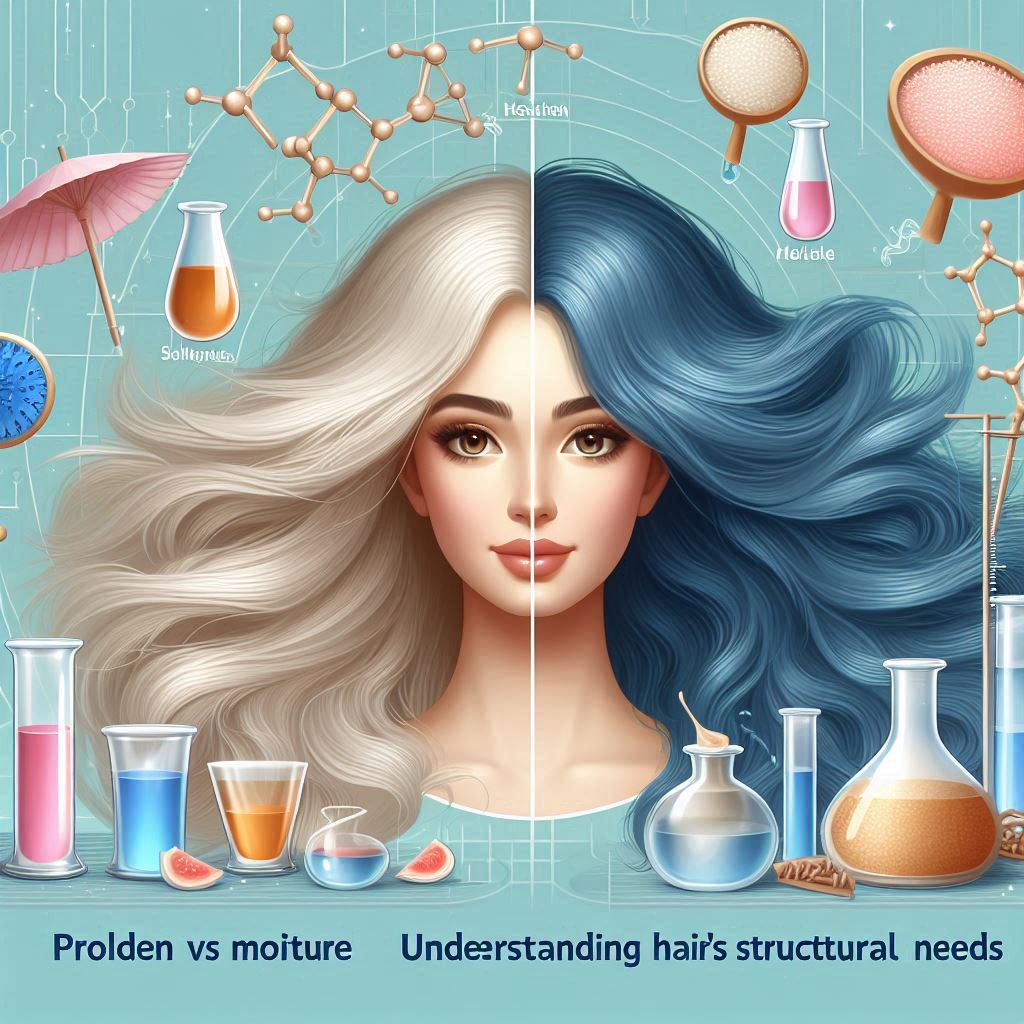
Understanding the difference between protein and moisture, how they interact with hair’s biology, and how to identify when your hair needs one or the other is essential for effective hair care. This knowledge helps in selecting appropriate products, customizing routines, and avoiding damage caused by misapplication of treatments.
This article explores the science behind protein and moisture in hair, explains their roles, symptoms of imbalance, and practical ways to maintain optimal hair health through balancing these two vital components. We will also examine factors influencing hair’s structural needs, including hair type, porosity, environmental influences, and damage from styling or chemical treatments.
1. The Biological Composition of Hair: Keratin and Water
Hair is primarily made of keratin, a fibrous protein that forms the cortex—the core of the hair shaft—and provides strength and structure. The cuticle, the protective outer layer, consists of overlapping scales of flattened keratinized cells, which guard the inner layers from damage and regulate moisture movement. Water, or moisture, is not a structural component of hair but is essential for maintaining flexibility and softness.
The cortex’s keratin proteins are held together by various bonds—hydrogen bonds, salt bonds, and disulfide bonds—that maintain hair’s shape and elasticity. Hydrogen bonds, in particular, are sensitive to moisture and heat, allowing hair to change shape when wet and reset when dry.
Water molecules penetrate the hair shaft and temporarily disrupt hydrogen bonds, increasing hair’s pliability. However, hair cannot retain water indefinitely; it requires a balance of internal moisture content to stay elastic without becoming overly soft or brittle.
2. Role of Protein in Hair Structure
Protein serves as the fundamental building block of hair. Each hair strand contains approximately 90% keratin protein, which provides tensile strength and elasticity. Protein molecules create a framework that holds hair together and allows it to withstand daily wear and tear from combing, brushing, styling, and environmental stressors.
Protein treatments often involve hydrolyzed proteins—smaller protein fragments that penetrate the hair shaft and temporarily fill gaps or reinforce damaged areas. These treatments can improve hair strength, reduce breakage, and restore the cuticle’s smoothness.
However, overuse of protein can cause hair to become stiff, dry, and brittle, as excessive protein creates a rigid structure with insufficient moisture. This condition, known as protein overload, leads to hair that snaps easily under tension.
3. Role of Moisture in Hair Health
Moisture is critical for maintaining hair’s flexibility and softness. Hair needs an adequate amount of water to prevent dryness, brittleness, and static. Moisture helps keep the cuticle smooth, reducing friction between hair strands and minimizing tangling and breakage.
Moisturizing treatments often include humectants (ingredients that attract water) such as glycerin, aloe vera, and honey, as well as occlusives like oils and butters that seal moisture into the hair. Proper moisture levels maintain hair’s elasticity, preventing it from snapping when stretched.
However, excessive moisture without enough protein can weaken the hair structure, causing it to become overly soft, limp, and prone to damage—an issue often called moisture overload or hygral fatigue.
4. Signs of Protein Deficiency vs. Moisture Deficiency
Identifying whether hair needs protein or moisture is crucial for targeted care. Hair that lacks protein typically feels limp, mushy, or overly stretchy when wet and is prone to breakage or excessive shedding. Such hair may appear dull, frizzy, or lifeless. A common test for protein deficiency is the “stretch test”: wet hair that stretches more than 20% of its length and then breaks likely needs protein.
On the other hand, moisture-deficient hair feels dry, rough, and brittle, often with split ends and a straw-like texture. It tends to be frizzy and difficult to manage. When stretched, dry hair snaps quickly without much elongation.
5. Causes and Effects of Protein Overload and Protein Deficiency
Protein overload occurs when hair receives excessive amounts of protein without adequate moisture to maintain balance. This condition results in hair that feels dry, stiff, and brittle, lacking elasticity. Overloaded hair is prone to breakage because the rigid protein structure cannot flex under tension, making strands more susceptible to snapping during styling or combing. Causes of protein overload include frequent use of protein-rich treatments, such as keratin masks or protein-infused conditioners, combined with insufficient moisturizing products.
Conversely, protein deficiency weakens the hair shaft’s structural integrity. Hair lacking protein loses strength and elasticity, leading to limp, mushy strands that stretch excessively when wet and break easily. This deficiency often arises from chemical treatments like bleaching, relaxing, or frequent heat styling, which degrade keratin fibers. Environmental stressors, such as UV radiation and pollution, also contribute by breaking down protein bonds in the hair.
Both protein overload and deficiency negatively affect hair health but manifest differently. Protein overload results in hair that feels rough and brittle, while protein deficiency leads to fragile, weak hair that lacks resilience. Achieving a proper protein balance is essential to avoid these extremes and maintain hair strength and flexibility.
6. Causes and Effects of Moisture Overload and Moisture Deficiency
Moisture deficiency is a common hair problem characterized by dryness, brittleness, and increased static. It occurs when hair lacks sufficient water content, making strands fragile and prone to split ends and breakage. Causes include environmental factors such as dry weather, sun exposure, and frequent heat styling without protective products. Additionally, harsh shampoos that strip natural oils contribute to moisture loss.
Moisture overload, or hygral fatigue, happens when hair absorbs too much water repeatedly without proper protein support. This condition causes the hair’s cortex to swell excessively, weakening internal bonds and leading to limp, mushy hair that loses its natural shape and resilience. Hygral fatigue is common in people who over-condition or frequently deep-condition hair without balancing treatments. The symptoms include elasticity loss, excessive tangling, and a gummy texture.
Both extremes—too little or too much moisture—compromise hair health. Proper hydration is vital, but it must be balanced with protein to maintain hair’s structure and function.
7. The Interplay Between Protein and Moisture in Maintaining Hair Health
Protein and moisture work synergistically to keep hair strong, flexible, and healthy. Protein provides the foundational structure, while moisture maintains elasticity and softness. When balanced, these components support each other: protein rebuilds damaged areas, and moisture prevents hair from becoming brittle.
The interaction between protein and moisture is particularly important in repairing damaged hair. For example, after chemical treatments or heat styling, hair often loses protein and moisture. Protein treatments can help rebuild keratin bonds, but without adequate moisture, the hair becomes stiff and prone to breakage. Conversely, moisturizing alone on protein-deficient hair can exacerbate limpness and damage.
Understanding this interplay helps guide hair care routines. A regimen that cycles between protein and moisture treatments based on hair needs promotes optimum hair health, preventing issues like breakage, dryness, or limpness. Many experts recommend alternating protein and moisture days and observing hair’s response to determine the correct balance.
8. Identifying Your Hair’s Protein and Moisture Needs
Accurately assessing whether hair requires protein, moisture, or both is key to effective hair care. Several practical methods can help individuals identify their hair’s current needs.
One common approach is the stretch test: take a clean, wet strand of hair and gently stretch it. If it stretches excessively (more than 20%) and breaks, it indicates protein deficiency. If it stretches minimally and breaks quickly, moisture deficiency is likely.
Another method involves observing how hair feels after washing and styling. Hair that feels limp, mushy, or overly soft usually needs protein, while hair that feels dry, brittle, or rough requires moisture. Product response also gives clues: hair that improves after protein treatments suggests a protein deficit; hair that benefits from added hydration points to moisture deficiency.
Keeping a hair diary to track treatments and hair condition over time can help identify patterns and fine-tune care routines. Consulting with a professional stylist or trichologist can provide personalized assessment and recommendations based on hair type, texture, and damage level.
9. Protein Treatments: Types, Benefits, and Application
Protein treatments are designed to replenish and strengthen the hair’s keratin structure by infusing hydrolyzed proteins or amino acids that temporarily patch damage and reinforce the cuticle. Common protein sources include keratin, collagen, silk, wheat, and soy proteins, which vary in molecular size and penetration ability. Smaller hydrolyzed proteins penetrate deeper into the cortex, while larger proteins primarily coat the hair surface.
Benefits of protein treatments include increased tensile strength, reduced breakage, improved elasticity, and smoother hair texture. They are particularly beneficial for chemically treated, heat-damaged, or highly porous hair that has lost protein integrity.
Proper application is critical to avoid protein overload. Protein treatments should be used according to hair’s porosity and condition, often once every 2–4 weeks. Applying protein treatments on damp, clean hair allows better absorption. Overuse or heavy formulations can cause hair to feel dry and brittle, so it’s important to alternate with moisturizing treatments and observe hair’s response.
10. Moisturizing Treatments: Ingredients, Benefits, and Usage
Moisturizing treatments focus on hydrating the hair shaft and sealing in moisture to maintain softness, elasticity, and manageability. Key moisturizing ingredients include humectants like glycerin, aloe vera, honey, and panthenol, which attract water from the environment into the hair. Occlusives such as natural oils (argan, jojoba, coconut) and butters (shea, cocoa) create a protective barrier that prevents moisture loss.
These treatments help prevent dryness, frizz, and breakage by maintaining optimal hydration levels. They are especially important for low-porosity or dry hair types that struggle to retain moisture naturally.
Usage recommendations vary but generally involve applying moisturizing conditioners or leave-in products regularly—after washing or between washes—to replenish hydration. Deep conditioning treatments with moisturizing properties can be used weekly or biweekly for intensive hydration.
11. Hair Type and Porosity: How They Influence Protein and Moisture Needs
Hair type (straight, wavy, curly, coily) and porosity significantly affect the balance between protein and moisture needed. Curly and coily hair types tend to be drier and more porous due to their structure, requiring more frequent moisturizing to combat dryness and frizz. However, their raised cuticles also make them more prone to protein loss, making protein treatments beneficial but best used sparingly.
Low-porosity hair has tightly bound cuticles that resist moisture and product penetration but retains protein well. Such hair benefits from lighter moisturizing treatments and occasional heat to open the cuticle, while protein treatments should be used cautiously to avoid buildup.
Medium-porosity hair generally maintains a good balance of moisture and protein naturally and requires maintenance treatments to sustain health.
High-porosity hair has damaged cuticles that absorb moisture quickly but also lose it fast, making it prone to dryness despite frequent hydration. Protein treatments help rebuild the cuticle, but moisturizing remains critical to seal the hair shaft and retain hydration.
Understanding how hair type and porosity influence care helps customize protein and moisture routines for optimal results.
12. The Role of Lifestyle and Environmental Factors in Hair Protein and Moisture Balance
Lifestyle habits and environmental exposures profoundly affect hair’s protein and moisture balance. Frequent use of heat styling tools such as flat irons, curling wands, and blow dryers can denature hair proteins and evaporate moisture, leading to increased damage and dryness. Chemical treatments like coloring, relaxing, and bleaching disrupt keratin bonds and strip natural oils, increasing protein loss and moisture deficiency.
Environmental factors such as sun exposure, wind, pollution, and hard water exacerbate hair damage by degrading protein and accelerating moisture loss. Chlorinated pool water and saltwater are particularly harsh, stripping oils and proteins from hair strands.
Diet and hydration also play essential roles. A diet rich in protein, vitamins (especially biotin, vitamins A, C, and E), and minerals supports keratin synthesis and overall hair health. Drinking adequate water helps maintain systemic hydration, which indirectly benefits hair moisture levels.
Adopting protective measures—using heat protectants, wearing hats outdoors, choosing gentle hair care products, and maintaining a nutritious diet—can preserve hair’s protein and moisture balance, reducing damage and promoting healthy hair growth.
Conclusion
Understanding the balance between protein and moisture is crucial for maintaining healthy, resilient hair. Protein forms the structural backbone of hair, providing strength and elasticity, while moisture keeps hair soft, flexible, and manageable. Both are indispensable, yet too much or too little of either can lead to damage, breakage, or poor hair texture.
Recognizing the signs of protein and moisture imbalance enables individuals to tailor their hair care routines effectively, selecting treatments that restore harmony. Hair type, porosity, environmental exposures, and lifestyle choices all influence these needs, making personalized care essential. Alternating between protein and moisturizing treatments, using the right products, and protecting hair from damaging factors supports optimal hair health.
Ultimately, embracing the science behind protein and moisture empowers people to care for their hair with greater insight and success, enhancing not only appearance but the fundamental integrity of each strand.
SOURCES
Baumann, L. (2009). Cosmetic dermatology: Principles and practice (2nd ed.). McGraw-Hill Medical.
Draelos, Z. D. (2015). Hair care: An illustrated dermatologic handbook (2nd ed.). CRC Press.
Foley, P., & Zito, P. M. (2023). Physiology, hair. In StatPearls. StatPearls Publishing.
Madnani, N., & Nayak, C. (2016). Trichoptilosis (split ends): A common hair complaint. Indian Journal of Dermatology, 61(4), 438.
Robbins, C. R. (2012). Chemical and physical behavior of human hair (5th ed.). Springer.
Saitoh, M., Imayama, S., & Yamashita, T. (2001). Observation of split ends by electron microscopy. Journal of Cosmetic Science, 52(3), 149–159.
Tosti, A., & Duque-Estrada, B. (2009). Special considerations for hair cosmetic procedures in ethnic hair. Dermatologic Clinics, 27(3), 365–372.
Van Neste, D., & Rushton, D. H. (2006). The biology of hair and scalp. In R. E. Trueb (Ed.), Hair growth and disorders (pp. 13–31). Springer.
HISTORY
Current Version
AUG, 05, 2025
Written By
BARIRA MEHMOOD