Introduction
Stress-induced hair loss, particularly in the form of telogen effluvium, is a prevalent condition that affects individuals worldwide. This type of hair loss occurs when stress disrupts the natural hair growth cycle, pushing a significant number of hair follicles into a resting phase, leading to increased shedding. While various treatments exist, adaptogens—natural substances that help the body adapt to stress—have garnered attention for their potential role in mitigating stress-related hair loss.
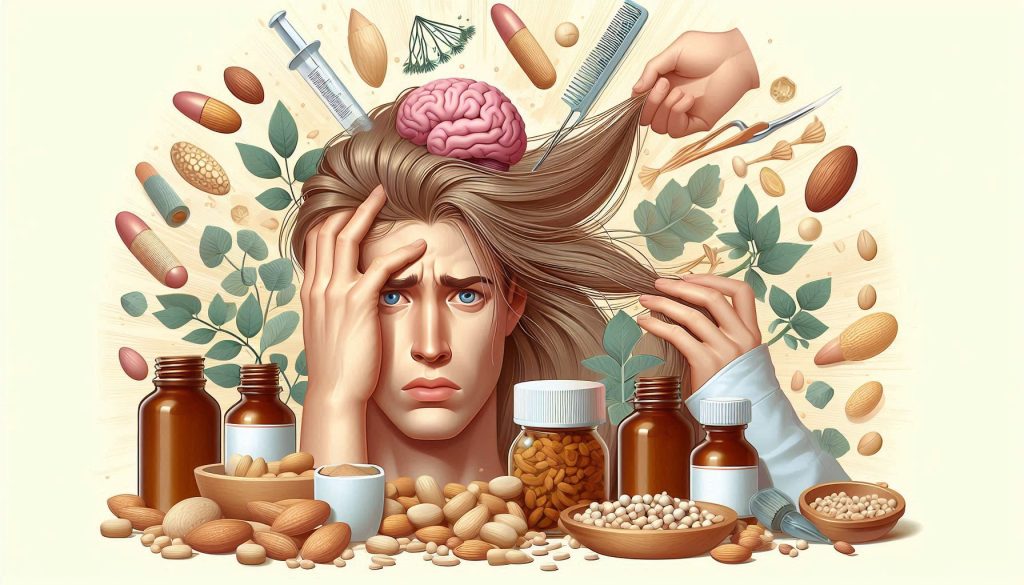
Adaptogens, such as ashwagandha, rhodiola rosea, and ginseng, have been traditionally used in herbal medicine to enhance the body’s resilience to stress. Recent scientific studies have begun to explore their efficacy in promoting hair health and preventing stress-induced hair loss. This article delves into the mechanisms by which adaptogens may influence hair growth, examines clinical evidence supporting their use, and discusses practical considerations for incorporating them into hair care regimens.
1. Ashwagandha (Withania somnifera)
Ashwagandha, an adaptogenic herb rooted in Ayurvedic medicine, is renowned for its ability to combat stress and promote overall well-being. Its active compounds, particularly withanolides, are believed to modulate cortisol levels, the body’s primary stress hormone. Elevated cortisol can disrupt the hair growth cycle, leading to conditions like telogen effluvium, where hair prematurely enters the shedding phase.
A 2023 study published in the Journal of Cosmetic Dermatology investigated the effects of a topical ashwagandha root extract serum on hair health. Over a 75-day period, participants applying the serum experienced significant improvements in hair density, growth, and thickness compared to a placebo group. Specifically, the ashwagandha group showed a 7.3-fold increase in hair density, a 21.7-fold increase in hair growth, and a 1.8-fold increase in hair thickness. These findings suggest that ashwagandha may support hair health by reducing stress-induced hair loss and promoting follicular activity.
2. Rhodiola Rosea
Rhodiola rosea, another potent adaptogen, is known for its ability to enhance the body’s resistance to stress and fatigue. It contains compounds like rosavin and salidroside, which are believed to influence the hypothalamic-pituitary-adrenal (HPA) axis, thereby regulating cortisol production.
While direct studies linking rhodiola to hair growth are limited, its stress-reducing properties may indirectly benefit hair health. Chronic stress is a well-known contributor to hair loss, and by mitigating stress responses, rhodiola could help maintain a healthy hair growth cycle. However, more targeted research is needed to establish a direct connection between rhodiola and hair growth.
3. Ginseng (Panax ginseng)
Ginseng, particularly red ginseng, has been utilized for centuries in traditional medicine to enhance vitality and combat fatigue. The active compounds, known as ginsenosides, are thought to stimulate dermal papilla cells in hair follicles, promoting hair growth.
A 2019 study published in The Journal of Ginseng Research examined the effects of a gintonin-enriched fraction (GEF) derived from ginseng on hair growth. The study found that GEF induced the proliferation of human hair follicle dermal papilla cells and promoted hair growth in mice. Histological analysis revealed an increase in the number of hair follicles and hair weight, suggesting that ginseng may enhance hair growth through cellular proliferation mechanisms.
Furthermore, ginseng’s antioxidant properties help combat oxidative stress, a factor that can damage hair follicles and impede growth. By protecting hair follicles from oxidative damage, ginseng may contribute to healthier hair growth.
4. Holy Basil (Ocimum sanctum)
Holy Basil, also known as tulsi, is a revered herb in Ayurvedic medicine for its adaptogenic and anti-inflammatory properties. It contains compounds like eugenol and ursolic acid, which are believed to influence cortisol levels and reduce inflammation.
While specific studies on holy basil’s direct impact on hair growth are limited, its ability to modulate stress responses and reduce inflammation suggests potential benefits for hair health. Chronic inflammation and elevated cortisol levels are associated with hair loss, and by addressing these factors, holy basil may support the maintenance of a healthy hair growth cycle.
5. Rhodiola Rosea
Rhodiola rosea, an adaptogen well-regarded in traditional Siberian and Chinese medicine, is prized for its ability to reduce fatigue, improve mood, and support mental resilience under stress HealthVerywell Mind. While research specifically targeting Rhodiola’s effects on hair isn’t yet robust, its capacity to modulate stress—particularly hormones like cortisol—suggests indirect benefits for hair health. Chronic stress frequently triggers or exacerbates hair loss conditions like telogen effluvium by accelerating the transition of hair follicles into resting phases. By attenuating stress responses, Rhodiola may help preserve the normal hair-growth cycle. Though promising, more targeted clinical studies are needed to definitively connect Rhodiola to improved hair outcomes.
6. Ginseng (Panax ginseng)
Ginseng, particularly varieties like red ginseng, has long been utilized as a cornerstone of traditional medicine. Modern scientific investigations have revealed that its active constituents, ginsenosides, promote hair growth through multiple pathways. These include stimulating dermal papilla cell proliferation, enhancing scalp blood circulation, countering oxidative stress, and even inhibiting 5-alpha-reductase—an enzyme linked to androgen-driven hair loss PMC+2PMC+2MDPINew York Post.
A notable in vitro and in vivo study using a gintonin-enriched fraction (GEF) from ginseng demonstrated accelerated hair growth in mice and human follicle cells. This effect occurred via activation of lysophosphatidic acid (LPA) receptors and stimulation of growth factors like VEGF ∥minoxidil was used for comparison∥ PubMedPMC. These findings support ginseng’s multi-pronged potential: fostering follicular proliferation, vascular support, growth factor expression, and protection against follicle-damaging oxidative stress.
7. Holy Basil (Ocimum sanctum)
Holy Basil, or Tulsi, holds revered status in Ayurveda, appreciated for its anti-inflammatory, antioxidant, and adaptogenic properties. Laboratory studies in albino rats have shown that topical applications of Holy Basil extract can enhance hair growth—evidenced by shorter growth initiation times and greater strand thickness—indicating beneficial effects on follicle function and scalp health Phyto Journal. While human trials are lacking, its rich content of compounds like eugenol, ursolic acid, and rosmarinic acid—and its potential to reduce inflammation and modulate stress pathways—make it a compelling natural candidate for supporting hair under stress.
8. Summary and Safety Considerations
All four adaptogens—Ashwagandha, Rhodiola rosea, Ginseng, and Holy Basil—offer complementary mechanisms that could mitigate stress-related hair loss by interacting with hormonal, cellular, inflammatory, and cellular-signaling pathways.
- Ashwagandha has demonstrated clinical efficacy in a 75-day double-blind study, significantly improving hair shedding, density, growth, thickness, and quality of life metrics compared to placebo PubMed.
- Rhodiola rosea has established adaptogenic and mood-balancing benefits that can indirectly benefit the hair growth cycle by reducing stress-induced follicular disruption.
- Ginseng (especially via ginsenosides and gintonin) promotes follicle proliferation, growth factor activity, oxidative defense, and possible androgen inhibition—supported by cellular and animal models.
- Holy Basil shows preclinical potential in promoting hair growth, likely via anti-inflammatory and antioxidant effects in the follicle environment.
Safety Notes & Considerations
Despite promising findings, adaptogens are not universal remedies—and some individuals may experience adverse effects. For example, anecdotal reports note possible hair thinning or thyroid-axis changes linked to long-term Ashwagandha use Reddit+1. Additionally, general commentary underscores that evidence for adaptogen use remains preliminary and sometimes inconsistent SELFVerywell Health. Therefore, anyone considering adaptogen use—especially for hair health—should seek supplements from reputable sources, start with conservative dosing, monitor outcomes closely, and ideally consult a healthcare provider.
9. Clinical Trial on Topical Ashwagandha Serum
One of the most compelling studies in this field was a prospective, double-blind, randomized, placebo-controlled trial investigating the effects of a topical ashwagandha (Withania somnifera) root extract serum on hair health in adults experiencing mild to moderate hair loss. Over a 75-day period, participants who used the ashwagandha serum showed significantly greater improvements than the placebo group in key metrics: hair density (7.3 vs. 2.8), hair growth (21.7 vs. 4.2), and hair thickness (1.8 vs. 0.9) PubMedPMC. The study also noted a meaningful drop in hair shedding and an enhanced quality of life score (–17.3 vs. –6.1) PubMedPMC. These findings suggest that topical ashwagandha may be both effective and safe for improving hair health, offering promise as an alternative treatment option for certain types of alopecia.
10. Oral Ashwagandha and Short-Term Stress Reduction
Beyond topical applications, oral ashwagandha is well-supported for its stress-lowering properties, which indirectly support hair health. A double-blind, placebo-controlled trial in healthy, stressed adults showed that oral supplementation of ashwagandha for eight weeks significantly reduced perceived stress levels and serum cortisol concentrations ResearchGate. Given that elevated cortisol can interrupt the hair growth cycle—often pushing follicles into the resting phase (telogen)—these findings support the notion that ashwagandha’s adaptogenic action may help mitigate stress-related shedding and support healthier hair for those dealing with telogen effluvium or similar conditions.
11. Risks, Side Effects, and User Reports
While adaptogens like ashwagandha have therapeutic potential, they are not without risks. Authorities caution about limited clinical evidence when it comes to hair-specific benefits and highlight potential side effects such as gastrointestinal issues, drowsiness, headaches—and contraindications during pregnancy Byrdie+1. Additionally, anecdotal reports raise concerns: several users on Reddit reported hair thinning or hypothyroid-like symptoms possibly linked to ashwagandha use. One user noted elevated TSH levels, while others observed hair shedding that halted upon discontinuation Reddit+1. These stories underscore the importance of caution—adaptogens can affect individuals differently, especially regarding hormonal or thyroid function—and emphasize the value of consulting healthcare professionals before use.
12. Summary of Adaptogens’ Potential and Precautions
In summary, adaptogens like ashwagandha offer a multifaceted path to addressing stress-related hair loss. Topical use has shown promising improvements in hair density, growth, thickness, and quality of life. Oral supplementation demonstrates cortisol-lowering effects that may help prevent stress-induced hair shedding. However, these benefits must be weighed against limited evidence, potential side effects, and individual variability—as evidenced by user experiences signaling possible thyroid complications or hair thinning.
Thus, while adaptogens present an exciting, natural avenue for supporting hair health under stress, the path forward should involve personalized use, evidence-based expectations, and professional guidance to ensure both efficacy and safety.
Conclusion
Stress is a well-established trigger for a common form of shedding known as telogen effluvium, where elevated cortisol levels cause hair follicles to prematurely enter the resting phase. Adaptogens, particularly ashwagandha, offer a promising avenue to counteract this process by moderating stress responses at the hormonal level and supporting scalp health. In controlled trials, topical ashwagandha root extract significantly improved hair density, growth, thickness, and reduced shedding—with users also reporting enhanced quality of life compared to placebo.
Beyond topical effects, systemic studies consistently show that ashwagandha effectively lowers cortisol levels in stressed individuals—by up to ~30% with regular supplementation—which may help preserve the natural hair growth cycle PMC+1. This hormonal regulation, combined with anti-inflammatory and antioxidant properties, positions ashwagandha as an attractive, natural adjunct for managing stress-related hair concerns.
However, it’s crucial to approach adaptogens with both optimism and caution. The scientific definition of “adaptogen” remains controversial and unsupported by pharmacological authorities Wikipedia. Clinical evidence, while promising, remains limited—particularly for long-term safety and efficacy in diverse populations. Anecdotal reports have highlighted potential side effects, including elevated thyroid-stimulating hormone (TSH) levels and hair thinning in select individuals Reddit+1. Such findings reinforce the need for careful product selection, appropriate dosing, and medical consultation—especially for individuals with underlying endocrine or thyroid conditions.
In summary, adaptogens like ashwagandha may play a valuable role in mitigating stress-related hair loss by calming cortisol-driven disruptions and reinforcing follicle resilience. Yet, due to variability in individual responses and the current limitations of research, they should be integrated thoughtfully into a broader, individualized hair health strategy—in conjunction with stress management, scalp care, and professional medical advice.
SOURCES
Yerram, C., Jillella, A., & Reddy, V. (2023). Effects of Withania somnifera root extract serum application on hair health in healthy adults: A prospective, double‑blind, randomized, parallel, placebo‑controlled study. Journal of Ayurveda and Integrative Medicine, 14(6), 100817. PubMed
Jówko, E., Sadowski, J., Długołęcka, B., Gierczuk, D., Opaszowski, B., & Cieśliński, I. (2016). Effects of Rhodiola rosea supplementation on mental performance, physical capacity, and oxidative stress biomarkers in healthy men. Journal of Sport and Health Science, 7(4), 473–480. PubMedPMC
Byrdie Staff. (2021, April 28). Ashwagandha: Benefits and Side Effects, According to Experts. Byrdie. Byrdie
Bannister, T. (2020, October 2). Can Ashwagandha Treat Hair Loss? Here’s What Derms Say. Byrdie.
HISTORY
Current Version
AUG, 07, 2025
Written By
BARIRA MEHMOOD