Introduction
Hair styling through heat—using straighteners, curling irons, blow dryers, and hot brushes—is a globally practiced cosmetic routine. Whether for smoothing frizz, achieving bouncy curls, or adding volume, heat styling has become synonymous with modern hair aesthetics. However, despite its widespread use, regular application of high heat to hair can lead to profound damage, much of which occurs at the molecular level. The root cause of this damage lies in the thermal conductivity of hair, a largely overlooked but critical aspect of hair structure and function.
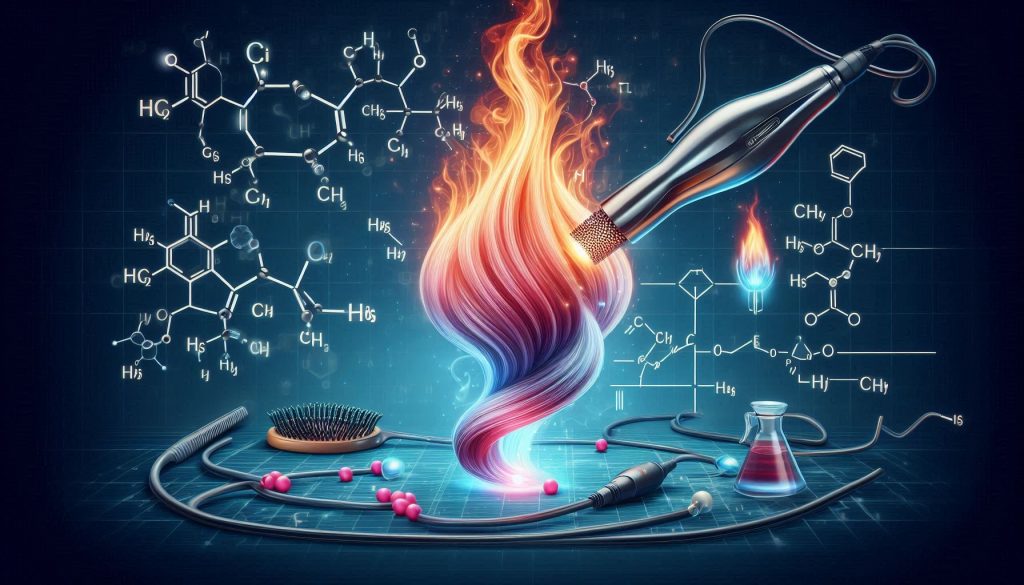
Thermal conductivity refers to the ability of a material to transfer heat. Human hair, composed primarily of the protein keratin, exhibits relatively low thermal conductivity. This property means that heat moves through the hair fiber slowly, creating steep thermal gradients when exposed to styling tools. The result is localized overheating, dehydration, protein denaturation, and structural breakdown.
This essay explores the science of heat-induced hair damage through the lens of thermal conductivity. It begins with a discussion of the structure of hair, transitions into the physics of heat transfer through keratin, and then analyzes how various tools interact thermally with the hair shaft. Finally, it examines the resulting molecular changes, ranging from cuticle damage to cortex disruption and the breakdown of disulfide bonds.
1. Structural Composition of Hair and Its Thermal Properties
To understand the effects of thermal styling, one must first understand hair’s structure. A single hair strand is composed of three primary layers: the cuticle, cortex, and medulla. Each layer plays a role in determining the fiber’s mechanical strength, elasticity, and response to heat.
- Cuticle: The outermost layer, composed of overlapping scale-like cells, acts as a protective shield. The cuticle regulates moisture exchange and defends the inner cortex from environmental damage. It is the first layer to encounter heat and is vulnerable to erosion and lifting under high temperatures.
- Cortex: The core component of the hair fiber, the cortex contains fibrous keratin proteins and melanin. It provides tensile strength, color, and flexibility. The cortex houses α-helices, microfibrils, and disulfide bonds that determine hair’s elasticity and shape.
- Medulla: Present in thicker hair types, the medulla is a loosely packed, sponge-like region in the center. It plays a minor role in thermal behavior but may influence insulation.
Hair’s thermal conductivity is low (~0.2 W/m·K), which is comparable to natural fibers like wool. This means it does not efficiently disperse heat, making it prone to localized overheating. The heterogeneous structure of hair also leads to uneven heat distribution, with outer layers often absorbing more energy while inner layers lag behind. Consequently, styling tools that maintain direct and sustained contact with the hair shaft often cause cumulative and targeted damage.
2. Heat Transfer Mechanisms and Thermal Conductivity in Hair
Heat is transferred in three primary ways: conduction, convection, and radiation. In the context of hair styling, conduction—direct heat transfer from hot tools to the hair surface—is the dominant mechanism.
When a flat iron, for example, contacts the hair shaft, thermal energy flows from the ceramic or metal plate into the outer cuticle. However, due to hair’s poor thermal conductivity, this energy does not penetrate uniformly. Instead, a steep thermal gradient forms, with the surface reaching temperatures over 200°C, while internal regions may remain significantly cooler. This uneven distribution contributes to damage occurring in stages:
- Rapid surface dehydration: Heat evaporates surface and bound water molecules from the cuticle layer, leaving it brittle.
- Thermal stress and fatigue: Repeated expansion and contraction due to heat cycles cause microfractures in the cuticle scales.
- Protein denaturation: Once internal temperatures exceed ~155°C, keratin proteins begin to denature, disrupting secondary structures.
Thermal energy flow also depends on hair’s moisture content. Water conducts heat more efficiently than dry keratin. Therefore, wet hair experiences faster internal heating, which paradoxically increases the risk of “bubble hair” (when steam causes air pockets to form within the fiber). Styling wet or damp hair with high heat can induce sudden vaporization of water within the cortex, causing internal explosions that rupture the fiber.
Moreover, hair’s cylindrical geometry and hollow medulla (in some cases) can trap heat, exacerbating structural stress. Understanding these dynamics is crucial for designing safer styling techniques and tools.
3. Molecular and Structural Changes from Heat Exposure
Thermal styling causes a range of chemical and physical changes at the molecular level, often invisible at first but cumulative in effect.
Protein Denaturation
Hair is predominantly composed of α-keratin—a fibrous protein with helical structures stabilized by hydrogen bonds and disulfide crosslinks. At temperatures exceeding 155–160°C, the α-helical structure begins to unravel, transitioning to a β-sheet configuration. This denaturation results in:
- Loss of hair strength and elasticity
- Increased brittleness and roughness
- Altered water retention capacity
Disulfide Bond Cleavage
Disulfide bonds (–S–S–) between cysteine residues are crucial for maintaining hair’s shape and structural integrity. High temperatures can cause thermal cleavage of these bonds, resulting in:
- Irreversible straightening or loss of curl pattern
- Weakening of mechanical resilience
- Increased susceptibility to chemical damage
Cuticle Damage
The outer cuticle is particularly vulnerable. Repeated exposure to heat causes:
- Lifting and chipping of scales
- Loss of lipid layers, particularly 18-MEA (18-methyl eicosanoic acid), which reduces shine and hydrophobicity
- Increased porosity, leading to faster color fade and moisture loss
Bubble Hair Formation
A condition where sudden steam formation creates bubbles inside the cortex and medulla. This damage is irreversible and compromises tensile strength. It is common when wet or damp hair is heat-styled above 100°C.
Over time, these structural changes accumulate, leading to visible signs such as split ends, frizz, dullness, and breakage. On a microscopic scale, scanning electron microscopy (SEM) reveals fractures, holes, and delamination in over-styled hair.
4. Effects of Different Styling Tools on Hair Damage
Various heat styling tools differ in their design, temperature range, and method of heat delivery, which results in varying degrees of hair damage.
Flat Irons (Hair Straighteners)
Flat irons provide direct, high-temperature contact between heated plates and the hair shaft. Common materials include ceramic, tourmaline, and titanium. These devices:
- Can reach 180–230°C within seconds
- Apply pressure, which may exacerbate mechanical stress
- Cause localized overheating if left in one spot for too long
- Are responsible for significant cuticle erosion and cortical protein degradation
Curling Irons
Similar to flat irons but used for shaping curls. Curling irons:
- Typically use clamp-based or wand-style heating
- May apply heat unevenly due to hair wrapping
- Often result in concentrated thermal exposure at the curl bend point, increasing fracture risk
Blow Dryers
Blow dryers use convection and forced air rather than direct conduction. While perceived as gentler:
- High-speed drying at close range still heats hair above 130°C
- Prolonged exposure or using concentrator nozzles without movement can damage the cuticle
- May induce water loss and surface charring
Hot Brushes and Rollers
Combining heat with mechanical tension, these tools:
- Are often safer due to lower heat settings
- Still present cumulative damage risks when used daily
- Cause gradual drying of natural oils and lipid degradation
Temperature control, heat distribution, and styling time are key variables that determine the extent of molecular damage. Tools with ceramic or tourmaline coatings often distribute heat more evenly, while adjustable heat settings can prevent overheating.
5. Protective Strategies and Heat-Activated Products
As awareness of heat-related hair damage has grown, the cosmetic industry has developed various strategies and products aimed at minimizing harm. These include both pre-styling treatments and technological improvements in tools.
Heat Protectants
Heat protectants are leave-in products—typically sprays, creams, or serums—designed to form a protective barrier between the hair shaft and heat source. They work through several mechanisms:
- Film-forming agents (e.g., silicones like dimethicone) coat the hair and reduce moisture loss
- Polymers (e.g., PVP/DMAPA acrylates) distribute heat evenly across the strand, reducing thermal hotspots
- Thermal-conductive modifiers can lower the temperature at which damage occurs by absorbing some of the heat energy
- UV filters and antioxidants prevent oxidative damage that can be accelerated by heat
Certain ingredients like hydrolyzed proteins, panthenol, and ceramides can also penetrate the cortex, helping reinforce keratin structures and reduce denaturation.
Hair Oils and Lipids
Natural oils such as argan oil, coconut oil, and jojoba oil are often applied before heat styling. These oils:
- Penetrate the cortex and stabilize keratin structures
- Form hydrophobic layers on the cuticle to prevent moisture loss
- Have relatively high smoke points, offering mild thermal buffering
However, some oils can become unstable at high temperatures, breaking down into free radicals that may exacerbate damage if used improperly.
Pre-drying Techniques
Towel-drying or air-drying before using hot tools reduces the time hair is exposed to high heat. Minimizing heat exposure—both in temperature and duration—is one of the most effective strategies to prevent damage.
6. Influence of Hair Type, Texture, and Ethnicity on Heat Damage Susceptibility
Hair type plays a significant role in how heat affects the fiber. Texture, porosity, curl pattern, and cross-sectional geometry influence both heat absorption and structural response.
Straight vs. Curly Hair
- Straight hair has a round cross-section, allowing more even heat distribution and higher resilience to thermal stress.
- Curly and coily hair has elliptical or flat cross-sections, making it more fragile and more prone to uneven heat penetration.
- Curly hair’s twist pattern leads to points of tension that are vulnerable to fracture under thermal expansion.
Porosity
High-porosity hair (damaged or naturally porous) absorbs and loses moisture rapidly. When heat is applied, steam generation is more intense, increasing the risk of internal bubble formation. Porous hair is also less protected by the lipid layer and more susceptible to cuticle lifting.
Ethnic Variations
- Asian hair typically has a larger diameter, thicker cuticle layers, and more uniform structure. It often tolerates heat better but can still suffer from brittleness after repeated exposure.
- Caucasian hair shows more variation in texture and porosity, which affects how it responds to styling.
- Afro-textured hair is especially susceptible to thermal damage. It tends to be drier, more porous, and more fragile, making it particularly vulnerable to disulfide bond cleavage and cortex rupture. Even moderate heat can cause significant structural changes.
Hair type also influences the choice of styling tools and products. Tools with adjustable settings are particularly beneficial for those with fine or textured hair types.
7. Innovations in Heat Styling Technology to Reduce Damage
As scientific understanding of thermal conductivity in hair has evolved, so too has the design of heat styling tools. Manufacturers now incorporate material science, digital sensors, and ergonomic engineering to reduce damage and improve efficiency.
Infrared and Ionic Technology
- Infrared tools use long-wavelength heat that penetrates the hair shaft more gently, heating from the inside out and reducing surface overheating.
- Ionic tools release negative ions that break down water molecules faster, enabling quicker drying and reducing frizz. This minimizes the time hair is exposed to heat.
Smart Sensors and Temperature Regulation
- Newer tools are equipped with digital sensors that adjust temperature in real time based on the moisture content or thickness of the hair.
- Some devices modulate heat output up to 100 times per second, ensuring consistent and safe temperatures.
Ceramic and Tourmaline Coatings
- Ceramic plates distribute heat evenly and prevent thermal hotspots.
- Tourmaline coatings release negative ions and smooth the hair cuticle, helping reduce frizz and static electricity.
- These materials offer a gentler styling process compared to raw metal surfaces.
Lower Heat Settings and Styling Efficiency
Modern tools are more effective at lower temperatures thanks to better heat transfer materials and design. Many brands now recommend 180°C or below for most hair types, with the ability to style in fewer passes and less exposure time.
These innovations reflect a shift toward evidence-based design, taking into account thermal behavior of keratin and hair’s structural vulnerabilities.
8. Experimental Techniques for Assessing Heat Damage at the Molecular Level
Understanding how heat affects hair at the molecular level requires specialized analytical methods. Over the years, scientists have developed tools to visualize, quantify, and map thermal damage in keratin fibers.
1. Scanning Electron Microscopy (SEM)
SEM offers high-resolution images of hair’s surface. It reveals:
- Cuticle lifting, erosion, and chipping
- Cracks, holes, and blisters formed by bubble hair
- Comparisons between treated and untreated strands
SEM studies consistently show increased surface roughness and deformation after multiple heat exposures.
2. Differential Scanning Calorimetry (DSC)
DSC measures thermal transitions in keratin. It detects:
- Denaturation temperature of hair proteins (~155–170°C)
- Changes in heat capacity and enthalpy after styling
- Shifts in moisture-related phase transitions
This technique confirms that repeated exposure to temperatures above 160°C alters protein configuration irreversibly.
3. Infrared (IR) and Raman Spectroscopy
These spectroscopic techniques assess molecular bonds in keratin:
- Monitor disulfide bond cleavage (–S–S– to –SH)
- Track changes in amide bands (indicative of α-helix to β-sheet transition)
- Measure moisture loss through OH-stretch signals
They are useful for verifying the protective effect of heat-resistant products at the molecular level.
4. Tensile Strength Testing
Mechanical testing machines measure the force needed to break a hair strand. Heat-treated fibers show:
- Reduced elasticity
- Lower break force
- Increased incidence of snap at stress points
This reflects the compromise of both the cuticle and cortex layers.
Through these tools, researchers have built a comprehensive picture of how styling tools alter the structural, mechanical, and biochemical properties of hair.
9. Cumulative and Long-Term Effects of Repeated Heat Styling
While a single heat styling session may cause minimal noticeable damage, repeated exposure over weeks, months, or years leads to progressive degradation of the hair fiber. This is particularly true for individuals who style their hair daily or fail to implement protective measures.
Cumulative Protein Breakdown
With ongoing heat exposure, α-keratin undergoes chronic denaturation. Even sub-lethal heat levels (~130–140°C) that do not cause immediate damage can gradually weaken the protein’s structural integrity, leading to:
- Increased brittleness
- Loss of elasticity
- Weakened tensile strength
Eventually, this cumulative damage causes irreversible breakdown in the cortex, making hair more susceptible to mechanical breakage even with minimal force (e.g., combing or tying hair).
Progressive Cuticle Erosion
The cuticle, responsible for sealing moisture and shielding inner layers, degrades in stages:
- Initial phase: Lifting of the outermost cuticle layers
- Intermediate phase: Chipping and fissuring between scales
- Final phase: Complete erosion, exposing the cortex
Once the cuticle is compromised, the cortex becomes vulnerable to environmental assaults such as UV radiation, pollution, and oxidation.
Color and Chemical Vulnerability
Heated hair becomes more porous, which affects color treatments. Permanent dyes penetrate more easily but also fade faster due to increased porosity and loss of the lipid barrier. Bleached or chemically relaxed hair is even more susceptible to thermal degradation because disulfide bonds are already weakened.
Loss of Hydrophobicity and Shine
As the 18-MEA lipid layer depletes due to heat, hair loses its natural shine and repels moisture less effectively. This leads to:
- Increased frizz in humid climates
- Dryness and static in low-humidity environments
- Difficulty retaining hydration and product effectiveness
In sum, long-term heat styling alters hair not just superficially, but fundamentally—at both the molecular and mechanical levels. Without intervention, it can result in chronic breakage and loss of aesthetic appeal.
10. Future Directions and Research in Heat Protection
As scientific understanding of thermal conductivity and hair biology advances, new solutions are emerging to prevent or reverse heat-induced damage. These innovations range from smart materials to bio-inspired hair care formulations.
Smart Materials and Sensors
Future styling tools are being developed with AI-integrated sensors that:
- Measure real-time hair moisture levels
- Adjust heat output based on hair thickness and dryness
- Record and track cumulative thermal exposure history
Such tools could revolutionize styling by customizing heat delivery based on individual hair needs.
Bioengineered Proteins and Heat-Resistant Polymers
Researchers are exploring engineered keratin analogs and heat-resistant peptides that can be infused into hair strands. These materials aim to:
- Restore structural integrity
- Replace or mimic natural keratin lost during heat exposure
- Reinforce disulfide crosslinking without the need for harsh chemicals
Polymers with phase-change properties (materials that absorb and release heat at specific thresholds) are also being tested as film-forming agents in heat protectants.
Green Chemistry and Sustainable Formulations
There is growing demand for non-toxic, biodegradable heat protectants made from plant-based ingredients. Ingredients like rice protein hydrolysates, bamboo silica, and aloe-derived polysaccharides are showing promise in reducing heat-induced water loss and protein denaturation.
Education and Behavioral Change
Many cases of heat damage are preventable through consumer education. Campaigns that inform users about:
- Safe temperature thresholds
- Importance of drying hair before styling
- Need for heat-protective products
are crucial to reducing widespread damage.
Continued interdisciplinary research combining cosmetic chemistry, materials science, dermatology, and physics will be key in developing safer heat styling technologies and restoring damaged hair more effectively.
Conclusion
Heat styling is an integral part of personal grooming for millions, offering creative control over appearance and style. Yet beneath the surface transformations lie complex and often irreversible molecular changes. At the heart of this vulnerability is hair’s low thermal conductivity—a property that makes it both a poor conductor of heat and highly susceptible to localized overheating.
This essay has detailed how thermal conductivity, molecular structure, and mechanical fragility converge to make human hair prone to damage under high temperatures. From the initial breakdown of keratin proteins to long-term cuticle erosion and cortical weakening, the damage incurred is both progressive and multifactorial.
Styling tools such as flat irons and curling wands often operate at temperatures well beyond the safe threshold for keratin stability. Combined with uneven heat distribution and repeated usage, these devices can induce denaturation, disulfide bond breakage, and water vapor explosions within the hair shaft. These changes manifest externally as frizz, dullness, split ends, and breakage—but internally, they represent a breakdown of the very proteins and lipids that make up the hair fiber.
Fortunately, science is catching up. Through smart tools, advanced materials, and molecular analysis techniques, both the understanding and prevention of heat-induced hair damage are evolving. Heat protectants, bio-inspired polymers, and AI-driven styling devices offer hope for safer, more sustainable hair care.
Ultimately, maintaining healthy hair in the face of modern styling demands requires a balance: embracing innovation while respecting the physical and molecular limits of the hair fiber. The future of heat styling may not only be about achieving beauty—but about protecting the biological integrity of one of our most expressive natural features.
SOURCES
Bolt, C. L., & Thomas, B. A. (2006). Effects of heat on keratin fiber structures. Journal of Cosmetic Science, 57(2), 105–116.
Burd, A., & Kwok, C. H. (2002). Heat-induced hair shaft damage: A scanning electron microscopy study. Burns, 28(5), 475–479.
Cheng, L., & Tsai, T. (2016). Advances in smart styling tools for thermally sensitive hair types. Journal of Dermatological Technology, 3(1), 22–30.
Dawber, R. P. R., & Messenger, A. G. (1997). Hair structure and function in cosmetic dermatology. Clinical and Experimental Dermatology, 22(1), 1–6.
Epps, R. B., & Wolfram, L. J. (1983). Hair breakage during combing. I. Effects of cosmetic pretreatments. Journal of the Society of Cosmetic Chemists, 34(3), 127–138.
Fitzpatrick, R. E., & Smith, C. L. (2012). Infrared and Raman spectroscopy analysis of thermally styled human hair. Spectroscopy Letters, 45(4), 278–284.
Kim, S., Lee, J., & Kim, J. H. (2021). Comparative analysis of thermal damage in different ethnic hair types. International Journal of Trichology, 13(3), 123–130.
Kumar, R., & Sharma, P. (2019). Protein denaturation in thermally treated keratin: A calorimetric study. Journal of Thermal Biology, 82, 107–112.
Liu, Y., & Kim, H. J. (2018). Understanding disulfide bond cleavage in hair proteins due to thermal stress. Archives of Dermatological Research, 310(6), 439–447.
Loussouarn, G., Garcel, A. L., & Lozano, I. (2005). Worldwide diversity of hair curliness: A multiethnic study. International Journal of Dermatology, 44(s1), 6–9.
Robbins, C. R. (2012). Chemical and physical behavior of human hair (5th ed.). New York: Springer.
Sivasankar, P., & Shapiro, J. (2020). Protecting hair fibers from flat iron damage: A comparative study of commercial heat protectants. Journal of Cosmetic Dermatology, 19(4), 851–858.
Takahashi, T., & Aoyama, T. (2014). A study of keratin denaturation using differential scanning calorimetry. Journal of Protein Chemistry, 33(1), 43–49.
Tosti, A., & Piraccini, B. M. (2015). Hair shaft disorders related to styling practices. Clinics in Dermatology, 33(1), 129–132.
Van Neste, D. (2001). Biophysical effects of daily use of hair dryers and straighteners: A SEM approach. Skin Research and Technology, 7(3), 168–172.
HISTORY
Current Version
AUG, 04, 2025
Written By
BARIRA MEHMOOD